


Classical Revival Figurine
A classical revival figurine brings ancient history into the nineteenth-century drawing room through miniature bronze, marble, and alabaster sculpture.

Classical Revival Figurine
A classical revival figurine translates ancient mythology, literature, and sculpture into smaller domestic formats popular during the Victorian period. These pieces frequently draw upon archaeological discoveries and Grand Tour souvenirs from Italy.
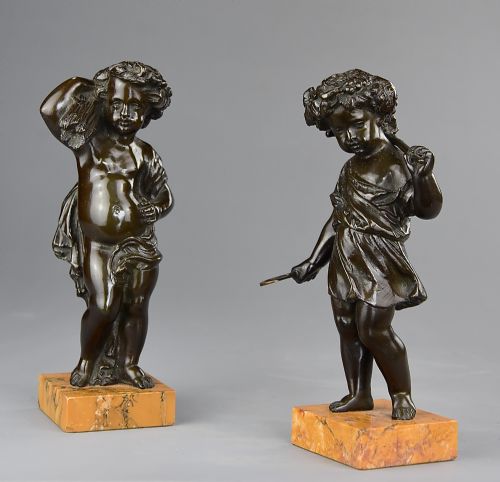
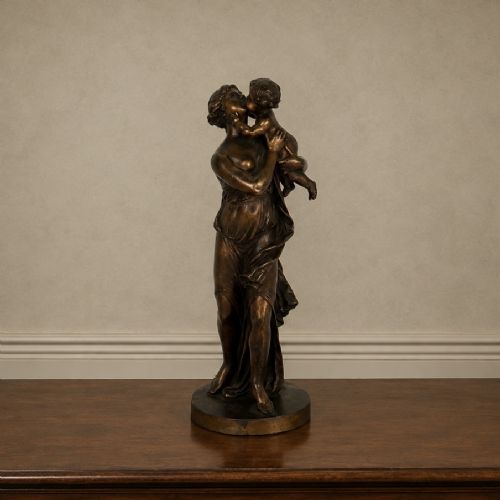
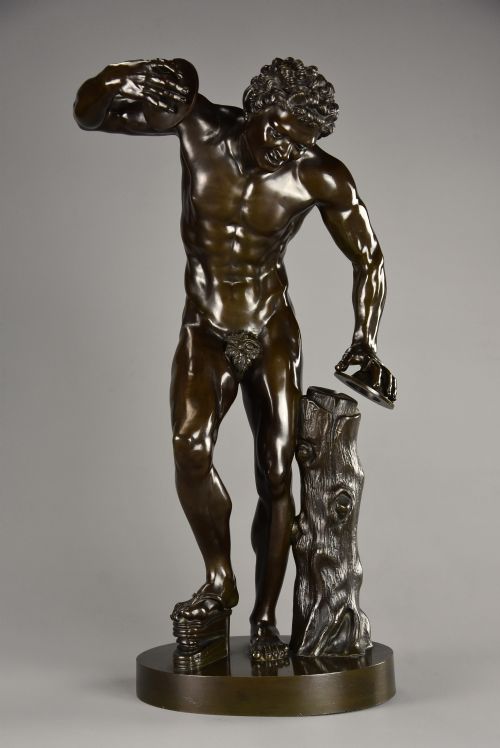
The objects on this page span the nineteenth century and into the mid twentieth century, covering various forms such as statuettes, allegorical figures, and reductions of famous antiquities. Subjects range from mythological figures like Bacchus and the Dancing Faun to historical rulers and literary characters.
Makers and foundries across England, France, and Germany produced these works in bronze, marble, alabaster, and porcelain. The execution often relies on classical proportions and poses derived directly from ancient Greek and Roman originals.
Markers of quality and execution
The refinement of the casting and the crispness of the chase work separate ordinary cabinet pieces from exceptional studio output. Foundry stamps, such as those from Barbedienne or Duchemin, often indicate a higher standard of production.
Material selection and base construction reveal the ambition of the piece, with dense marbles and multi-part patinated bronzes representing the upper end of nineteenth-century manufacture. Anatomy and facial expression remain critical indicators of the sculptor's skill after the antique.
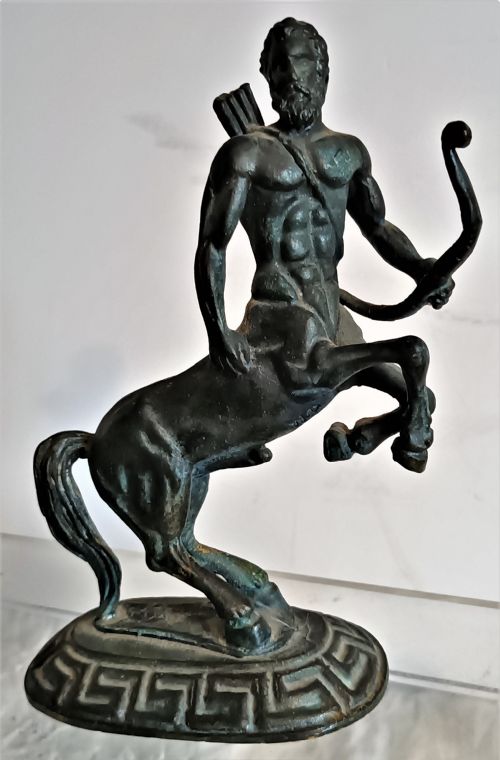
Ajax the Great and a bronze cat do not appear together, but a centaur, a sphinx, and a Roman gladiator share the exact same room.
Claude Michael Clodion·Barbedienne·Eden Antony Paul Noel·Volkstedt
The Classical Revival Figurine Glossary
- Grand Tour
- A traditional trip through Europe undertaken by upper-class young men to absorb classical art and culture. Souvenirs from these journeys included miniature bronzes and marble carvings.
- Patinated bronze
- A metal sculpture treated with chemical solutions to produce a controlled surface colour or dark tone. This finish protects the metal and highlights the modeled contours.
- Reduction
- A scaled-down copy of a large monumental sculpture, frequently produced as an Italian souvenir after famous museum pieces. These allowed collectors to own miniature versions of canonical antiquities.
- Ormolu
- Gilded bronze mounted onto decorative objects or sculptures. The technique involves applying a gold amalgam to the bronze surface before heating.
Classical Revival Figurine: Frequently Asked Questions
What is a Grand Tour figurine?
A Grand Tour figurine is a small souvenir bought by travellers visiting classical sites in Italy during the nineteenth century. These reductions copied famous museum sculptures in bronze or marble.
Collectors displayed them on desks or bookshelves as evidence of education and travel. They capture the era's fascination with classical antiquity.
How do I identify a bronze reduction?
A bronze reduction is a scaled-down copy of a large public statue or ancient artefact. You will often see them labeled after specific antique originals like the Farnese Hercules.
Foundries made these to fit domestic spaces while retaining the accurate proportions of the monumental source. Many bear foundry marks or artist stamps on the base.
What materials were used for these figures?
The most common material in these listings is bronze, frequently patinated to achieve dark brown or green tones. Other pieces utilise white marble, alabaster, or porcelain.
Some examples combine materials, placing a bronze figure upon a heavy marble stand or incorporating gilded elements. Each medium was chosen to suit the specific scale and subject.
Who made these nineteenth century sculptures?
Production was divided between named European foundries, factory studios, and independent sculptors working in the classical tradition. French and Italian workshops produced many of the finest bronze casts.
German porcelain factories also contributed allegorical figures to the market. Signatures or stamps on the metal or ceramic surface help identify the origin.