


Classical Religious Canvas Art
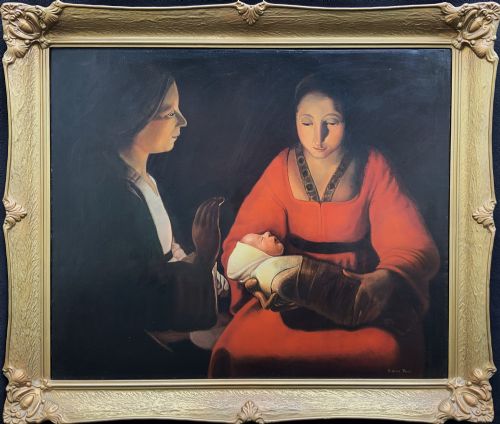
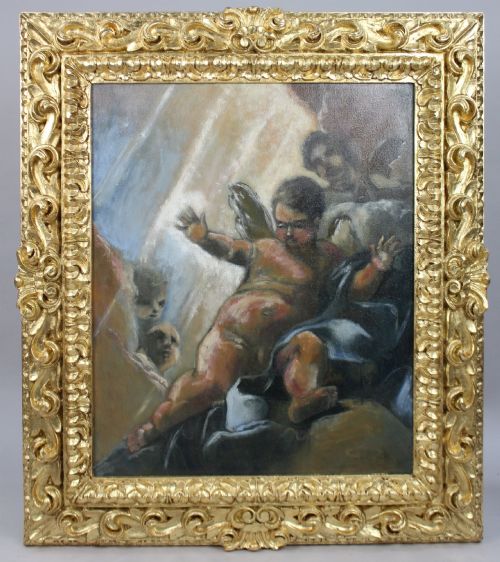
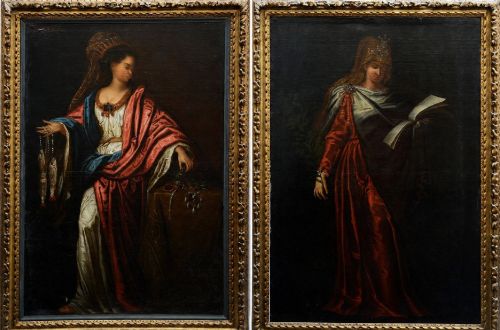
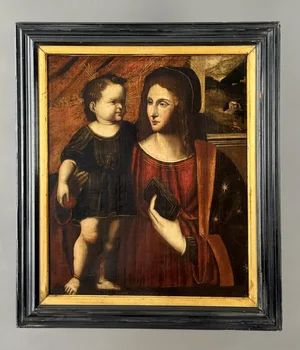
Classical religious canvas art brings centuries of sacred iconography into focus, offering devotional works executed in oil on canvas.
Classical Religious Canvas Art
Classical religious canvas art encompasses oil paintings on canvas that depict sacred figures and biblical scenes, drawing heavily from Italian Renaissance, Baroque, and subsequent revival styles.
Buyers encounter works spanning from the sixteenth century through to the mid-twentieth century, including period originals, follower pieces, and later interpretations after masters such as Raphael and Correggio.
The subjects frequently centre on the Madonna and Child, holy families, and repentant saints like Mary Magdalene, often framed in carved giltwood.
Materials and Techniques
These works are executed primarily in oil paint applied to woven canvas supports, allowing for rich colour depth, subtle blending of tones, and luminous glazing.
Many canvases are housed within elaborate wooden frames enhanced with gold leaf or gilt finishes to complement the devotional nature of the imagery.
Listings span from sixteenth-century Venetian and Genoese schools to Edwardian and mid-twentieth-century interpretations in oil on canvas.
Assessing Quality in Canvas Art
Quality rests upon the execution of the brushwork and the anatomical confidence displayed in rendering sacred figures, distinguishing master studio output from routine copies.
The depth of the oil pigments and the preservation of the canvas surface dictate the visual impact and integrity of the composition.
Georges de La Tour·Bernardino Luini·Raphael·Scipione Pulzone·Gian Lorenzo Bertolotto·Guido Reni·Pompeo Batoni·Bartolomé Murillo
The Classical Religious Canvas Art Glossary
- Oil on Canvas
- A painting medium where pigments bound in oil are applied to a stretched fabric support. This technique allows for rich colour saturation and gradual tonal transitions.
- Giltwood
- Wood that has been coated with gold leaf or a gold-coloured finish. This material is traditional for framing classical artworks.
- Renaissance Style
- An artistic approach reviving the classical forms, perspective, and proportions associated with the fifteenth and sixteenth centuries. It emphasises harmony and human proportion.
- Baroque
- A dynamic artistic style characterised by theatrical lighting, dramatic movement, and deep emotional intensity. It developed in late sixteenth-century Italy and spread across Europe.
- Follower
- An artist whose work closely imitates the style and technique of a master painter without necessarily being a direct student. These works date from the period or shortly after.
Classical Religious Canvas Art: Frequently Asked Questions
How can I identify the period?
Dating relies upon examining the canvas preparation, the ageing of the oil paint, and the stylistic characteristics of the frame and brushwork. Sixteenth and seventeenth-century works show distinct layering compared to later nineteenth-century revivals.
Secondary clues include stretcher construction, canvas weave, and any historical inscriptions or attribution notes recorded on the reverse.
Are these original period pieces?
The selection includes both period works created in the sixteenth through seventeenth centuries and later nineteenth-century interpretations or copies after earlier masters. Each listing specifies the school or era indicated by the style and materials.
Works attributed to followers or circles offer insight into the enduring influence of major artistic workshops across subsequent generations.
How should I display them?
These works require placement away from direct sunlight and excessive humidity to protect the oil paint and canvas support. Maintaining stable indoor temperatures preserves the integrity of both the painting and its giltwood frame.
Displaying them against neutral walls allows the rich pigments and carved frames to act as focal points within a room.