





Classical Pastoral Landscape Painting
Classical pastoral landscape painting captures idealised scenes of rustic tranquility and classical ruins, offering a romantic window into ancient countryside life.
Classical Pastoral Landscape Painting
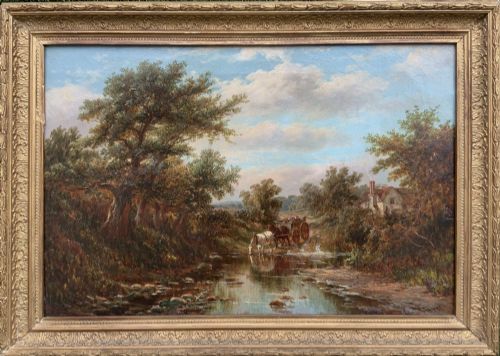
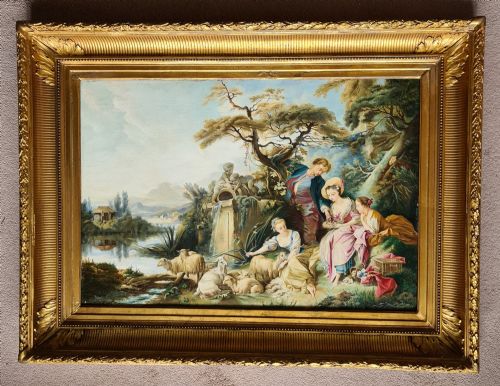
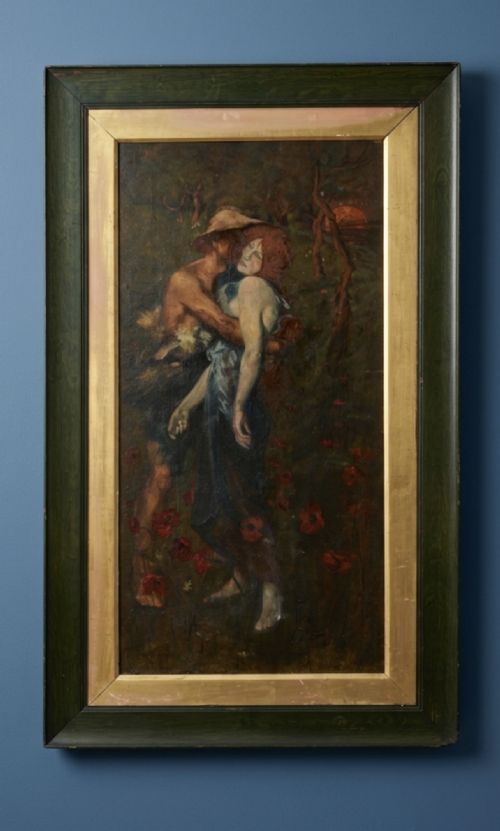
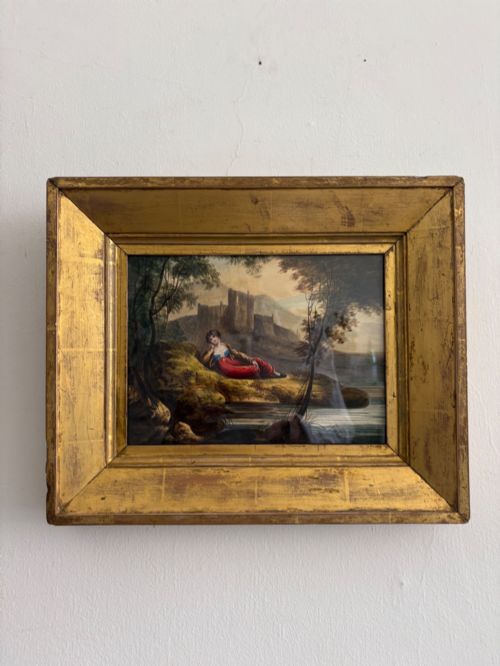
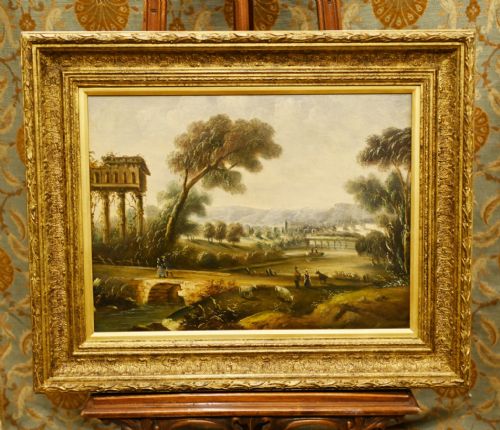
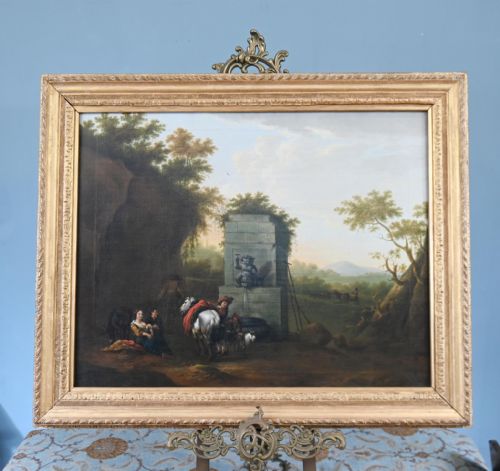
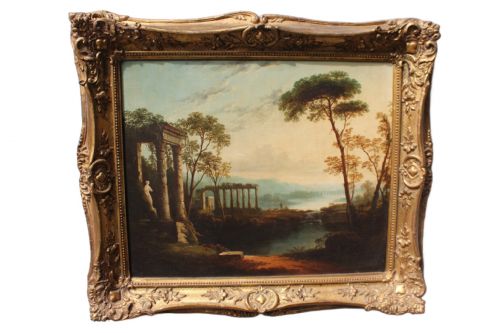
A classical pastoral landscape painting portrays idealised rural views, frequently featuring herdsmen, classical architecture, and tranquil rivers under soft light. These works draw heavily upon Italianate scenery and mythological themes, reflecting a romanticised view of antiquity.
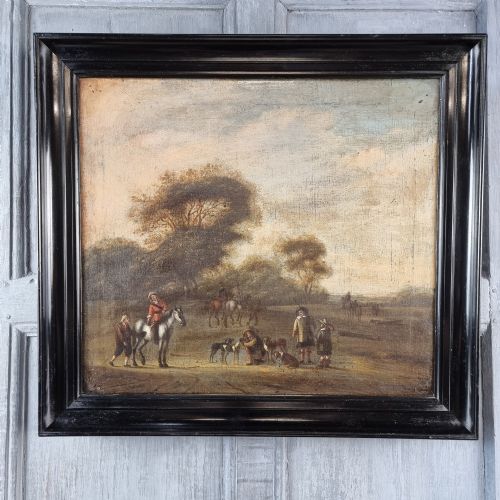
The selections available here range from seventeenth-century works to mid-twentieth-century canvases, including both original compositions and period copies after established masters. Buyers will encounter oil paintings on canvas alongside framed wall art and painted panels within trumeau mirrors.
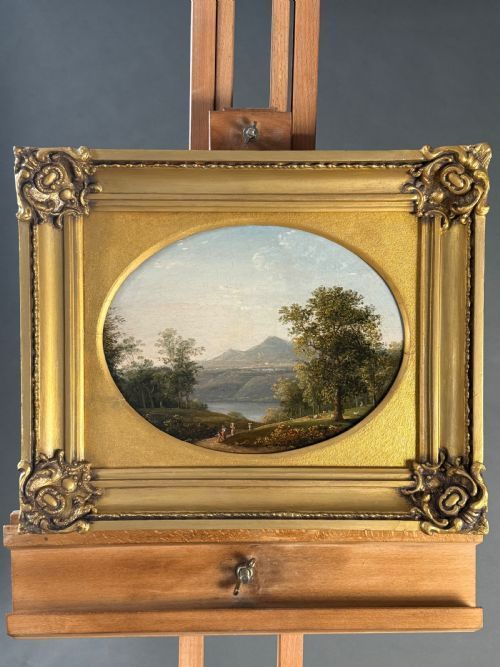
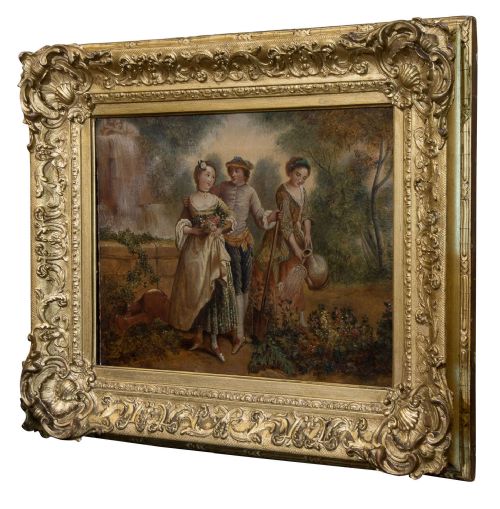
Many examples channel the aesthetic traditions of the Grand Tour, recording scenic vistas of Italy for travelling collectors. Others follow the specific manner of Claude Lorrain or French Rococo ideals, balancing natural elements with classical ruins and harmonious compositions.
Materials and Technique
Pigments ground in oil paint applied to woven canvas form the primary medium for these works, supported by wooden stretchers and frames. Giltwood frames often incorporate intricate gesso moulding and gold leaf detailing to enhance the presentation of the artwork.
Brushwork varies from the restrained precision of earlier academic studies to the freer application seen in later nineteenth-century interpretations. Artists built luminous atmospheric effects through careful layering of translucent glazes over opaque underpaintings.
Frames incorporate traditional materials such as gesso, gold leaf, and giltwood to complement the classical pastoral landscape painting subjects.
Evaluating Quality
The distinction between ordinary and exceptional works rests upon the handling of light, atmospheric depth, and anatomical confidence in the figures. Superior compositions guide the viewer's eye purposefully through distinct planes, from shaded foregrounds to sunlit distant ruins.
The integrity of the original canvas, the subtlety of the pigment preservation, and the harmony of the framing contribute significantly to a work's standing. Period frames matching the age of the canvas elevate the overall coherence of the piece.
Jacob Philipp Hackert·Jan Miel·Margaret Maitland Howard·Jean-baptiste Joseph Pater·Claude Lorrain·Andre de Moller·Eugene Verboeckhoven·Pierre Emmanuel Dielmans·Francesco Zuccarelli·Jean-Antoine Watteau·Augustus Jules Bouvier·Richard Wilson·Thomas Jones·Peter de Wint
The Classical Pastoral Landscape Painting Glossary
- Italianate
- Describing northern European art influenced by the landscape, light, and architecture of Italy. Artists often introduced classical ruins and warm palettes to evoke the Mediterranean.
- Grand Tour
- A traditional trip through Europe, undertaken by upper-class young men mainly in the eighteenth and nineteenth centuries to accumulate culture and art. Paintings purchased on these journeys typically recorded classical views.
- Giltwood
- Wood carved and coated with gold leaf or a gold-coloured finish. This material is frequently found on the ornate frames encasing classical canvases.
- Gesso
- A paint mixture consisting of a neutral binder mixed with chalk, gypsum, or pigment. It serves as a prepared surface for gilding or painting on wooden frames.
- Trumeau
- An architectural mirror or panel placed between windows or above a mantelpiece. Some examples incorporate painted classical scenes into the woodwork.
Classical Pastoral Landscape Painting: Frequently Asked Questions
What defines a pastoral landscape?
A pastoral landscape depicts rural life in an idealized, harmonious manner, often combining rustic figures with classical architecture, herds, and tranquil rivers.
These scenes derive from literary traditions that celebrate the peace of the countryside over the bustle of urban existence.
How do I hang a large oil painting?
Large oil paintings require secure wall fixings suited to the combined weight of the canvas, stretcher, and heavy giltwood frame.
Position the work at eye level away from direct sunlight and heat sources to protect the canvas and paint layers.
What is a Grand Tour painting?
Grand Tour paintings were created for travellers exploring continental Europe, capturing famous sights, ruins, and picturesque Italian views as souvenirs of their travels.
These works document the landscape taste of collectors from the seventeenth to the nineteenth centuries.
How are periods identified in antique art?
Periods are determined through stylistic analysis, the preparation of the canvas, framing techniques, and recorded signatures or documentation.
Comparing brushwork and compositional conventions against known masterworks helps narrow down the date of execution.