


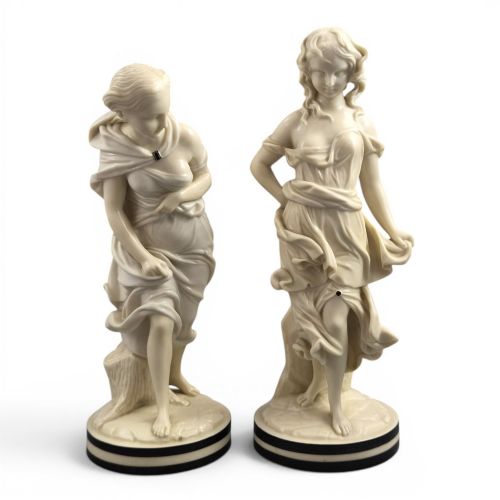


Classical Parian Statue
A classical parian statue brings nineteenth-century neoclassical sculpture into domestic rooms through fine unglazed porcelain.
Classical Parian Statue
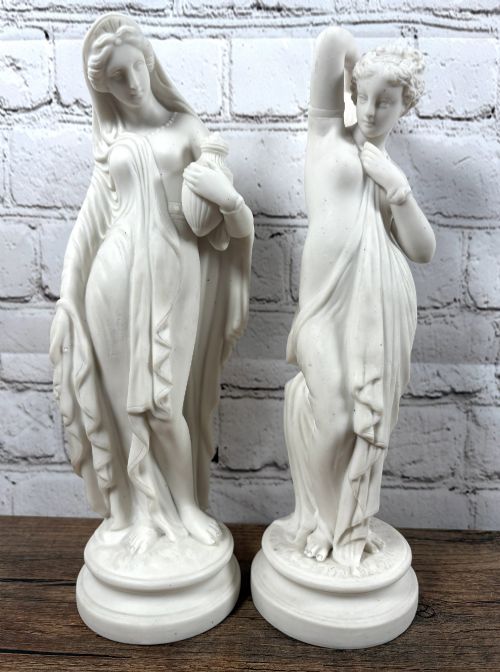
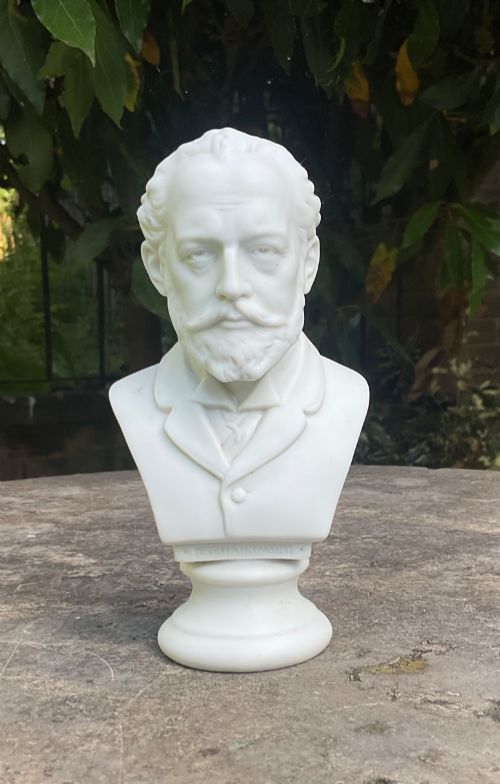
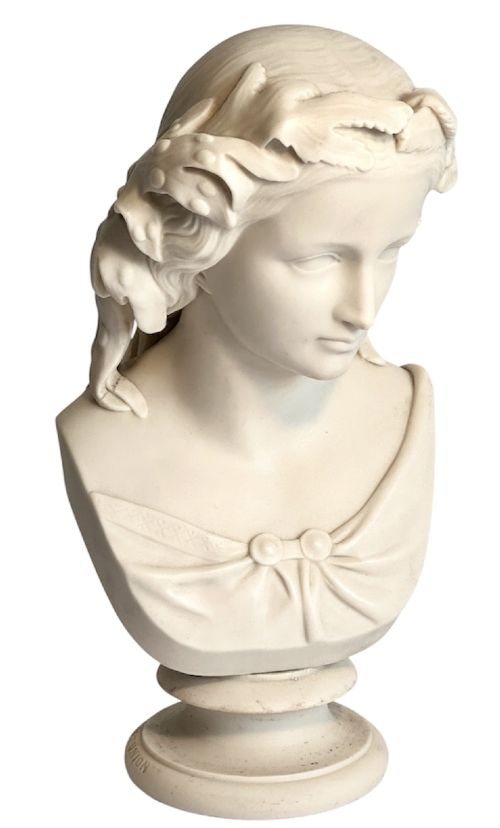
A classical parian statue represents nineteenth-century sculptural subjects rendered in unglazed ceramic materials often described as parian ware, bisque porcelain, or biscuit ceramic. These figures draw heavily from Victorian neoclassical aesthetics, depicting historical, mythological, and literary subjects such as Ariadne, Miranda, Virginia, and Napoleon.
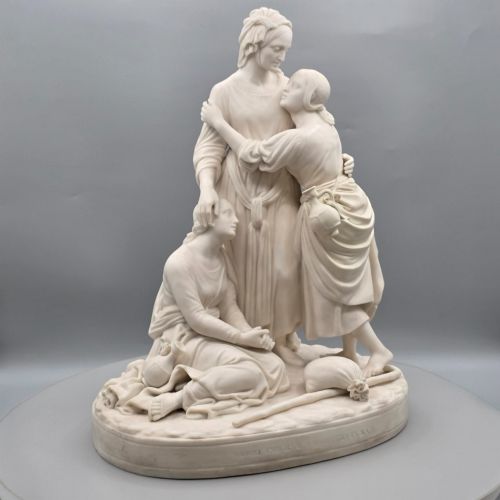
The objects appearing on this page span forms including individual busts, statuettes, and multi-figure groups. Makers working during the Victorian period produced these works to emulate carved marble without the prohibitive cost, satisfying domestic desires for high culture.
Most examples originate from the nineteenth century, with specific dates clustering through the 1850s, 1860s, 1870s, 1890s, and into 1900. English factories alongside continental makers such as Sèvres contributed to this wide body of sculptural production.
How they were made
Makers utilised specialised porcelain bodies that fired without a glossy glaze, producing a matte surface texture that closely resembled carved white marble. This parian ware or bisque porcelain required precise temperature control during kiln firing to prevent distortion in larger scales.
Complex compositions, such as multi-figure groups or detailed drapery, were cast in multiple mould parts and assembled by hand before firing. Some pieces incorporate subtle painted elements to highlight specific details on the unglazed porcelain body.
Classical Parian Statue Retail Price Guide 2026
Typical asking prices for classical parian statue among the pieces listed under this phrase on Sellingantiques today, from the lower quarter to the upper quarter. They describe what is for sale here now, not the wider market.
Current listings feature works from the nineteenth century, incorporating both English factories and continental makers.
What varies in quality
The ambition of the subject also separates standard figures from exceptional works, such as large-scale studies after known sculptors like Dannecker or Chaudet. Superior examples demonstrate careful attention to proportion and balance across complex figurative groupings.
Sèvres·Minton·Copeland·Royal Worcester
The Classical Parian Statue Glossary
- Parian ware
- A type of hard-paste porcelain developed in the nineteenth century to imitate white marble. It fires to a smooth, matte finish.
- Bisque porcelain
- Unglazed ceramic body fired once or twice to achieve a matte, porous surface resembling marble. It is also known as biscuit porcelain.
- Neoclassical
- A stylistic movement reviving the classical art and architecture of ancient Greece and Rome. This aesthetic dominates Victorian figurative sculpture.
- Bust
- A sculpted representation of a person's head, shoulders, and chest. Many nineteenth-century portrait subjects commemorate historical figures and royalty.
- Statuette
- A small statue, typically under life-size. These domestic objects allowed middle-class households to display classical motifs.
Classical Parian Statue: Frequently Asked Questions
How do I clean a parian statue?
The unglazed matte surface absorbs dust and oils readily, making gentle dry brushing the safest maintenance method.
Avoid using water or liquid cleaners unless absolutely necessary, as moisture penetrates the porous ceramic body and can trap dirt within the texture.
How can I date a Victorian parian figure?
Dating relies on factory marks, registration stamps, and stylistic cues associated with nineteenth-century production periods.
Many pieces carry impressed maker names or model titles directly on the base, providing clear links to specific decades like the 1850s or 1860s.
Why are some figures called biscuit porcelain?
Biscuit porcelain refers to ceramic ware that has undergone a firing process without the application of a surface glaze.
This French-derived term describes the same matte, unglazed state found in English parian ware and bisque figures.