
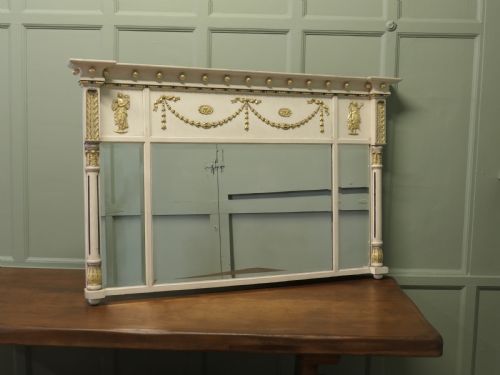
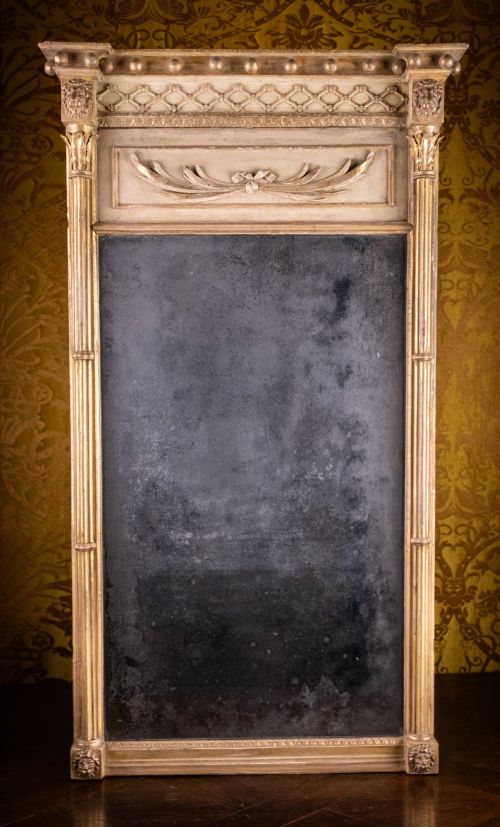
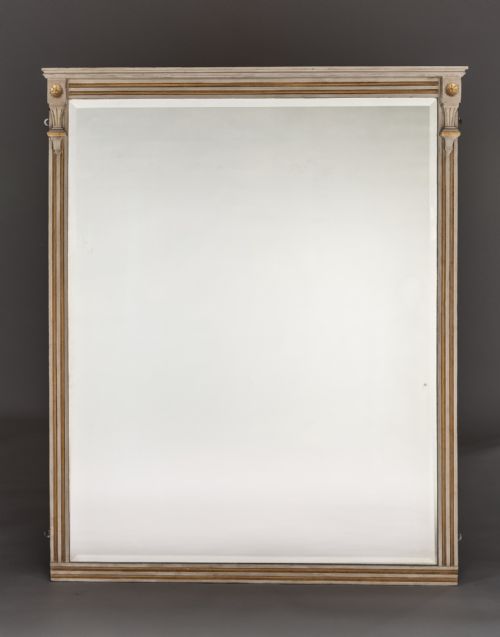


Classical Painted Overmantel Mirror
A classical painted overmantel mirror brings architectural presence and reflected light to a period room, shaped by the decorative vocabularies of Regency, Georgian, and French Empire design.
Classical Painted Overmantel Mirror
A classical painted overmantel mirror is a large horizontal or vertical wall glass designed to sit above a fireplace, though many survive as pier mirrors or trumeau panels. When searching this phrase, a buyer meets examples spanning the Georgian, Regency, and Victorian eras, alongside French Empire and Louis XVI styles.
The pieces listed on this page frequently combine painted surfaces with parcel gilding, gesso ornamentation, and column-framed structures. Surviving forms range from triple-plate Regency designs to grand scale trumeau mirrors featuring painted panels or classical relief details.
Materials and construction
These mirrors are constructed from wood, often carved and built up with gesso to receive intricate surface decoration. Makers applied paint finishes, gold leaf, and parcel gilding to highlight architectural elements such as column frames, lion masks, and Vitruvian scrolls.
Mirrors utilise mirror glass and occasionally eglomisé panels or painted classical scenes set above the main glass plate. The integration of wood, paint, and gold leaf defines the physical character of these large wall and overmantel pieces.
Evaluating craftsmanship and survival
Quality in these mirrors rests upon the depth of the carving in the wood and gesso, alongside the crispness of the painted and parcel-gilded details. Superior examples display finely proportioned column frames and integrated decorative relief panels that remain harmonious with their original period.
The condition of the mirror glass and the integrity of the painted surfaces also divide the standard of survival. Pieces retaining their original gilding, gesso relief work, and primary glass plates demonstrate greater historical cohesion.
The Classical Painted Overmantel Mirror Glossary
- Overmantel mirror
- A large mirror specifically proportioned to hang on the wall directly above a fireplace mantelpiece. They often feature extended horizontal formats to match the width of the fireplace below.
- Trumeau mirror
- A decorative wall mirror incorporating a painted panel or a classical scene above the glass plate. This French style frequently integrates wood framing designed to match wall panelling.
- Gesso
- A plaster-like material applied to wooden mirror frames to provide a smooth base for carving, painting, and gilding. It allows for intricate relief details such as scrolls and classical motifs.
- Parcel-gilt
- A decoration method where only specific raised portions of a painted wooden frame are highlighted with gold leaf. This creates a contrasting two-tone effect between the paint and the gilding.
- Eglomisé
- A technique involving the application of gold or silver leaf to glass, combined with painting, to create a reflective ornamental panel. These panels often appear above the main mirror glass in Regency trumeau pieces.
Classical Painted Overmantel Mirror: Frequently Asked Questions
Where should an overmantel mirror hang?
An overmantel mirror traditionally hangs directly above a fireplace mantelpiece to reflect light and anchor the room's primary focal point.
Buyers also place them on principal salon or dining room walls as grand pier mirrors to add depth and architectural scale to the interior.
How do I identify a Regency mirror?
Regency mirrors often feature classical architectural elements like column frames, eglomisé panels, and distinct decorative motifs such as lion masks. They frequently date from the early nineteenth century and show clean, neoclassical influences.
Examining the construction methods, wood framing, and gesso relief work helps distinguish Regency pieces from later Victorian revivals.
Are these mirrors made of solid wood?
The structural frames are built from wood, but the decorative details and smooth mouldings are typically formed using gesso built up over the timber base. This combination allowed makers to carve and shape intricate classical reliefs.
Paint and gold leaf were then applied over the gesso and wood foundation to finish the piece.