


Classical Ornate Candlesticks
Classical ornate candlesticks bring sculptural metalwork and period illumination into a room, offering heavy cast metals and elaborate classical styling.
Classical Ornate Candlesticks
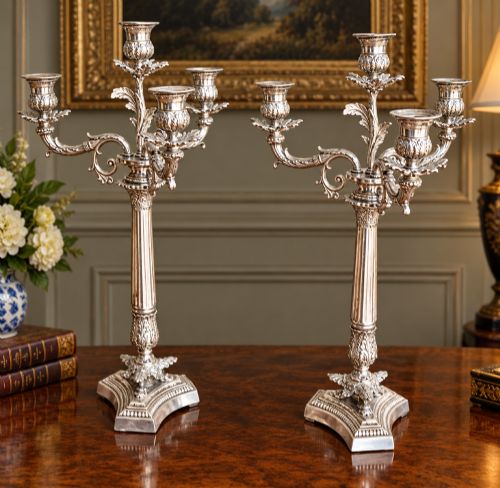
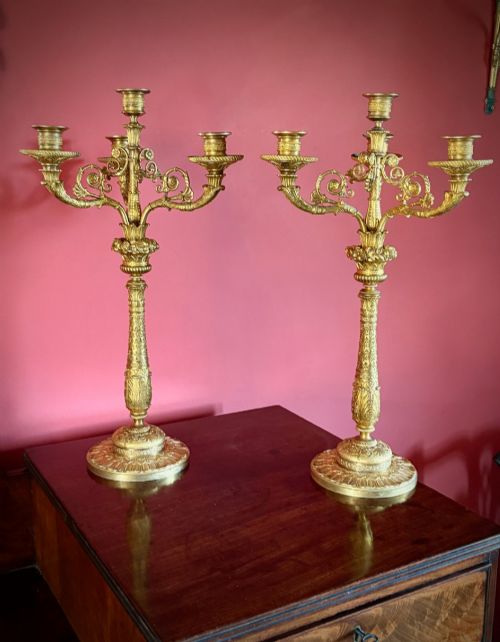
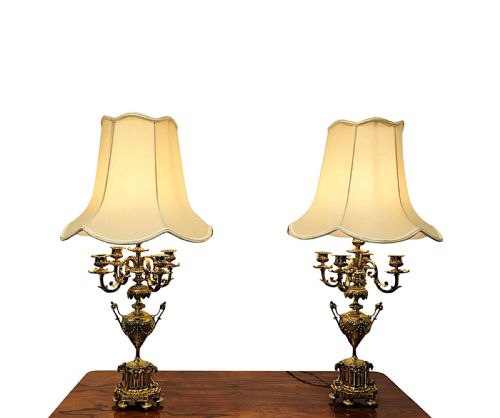
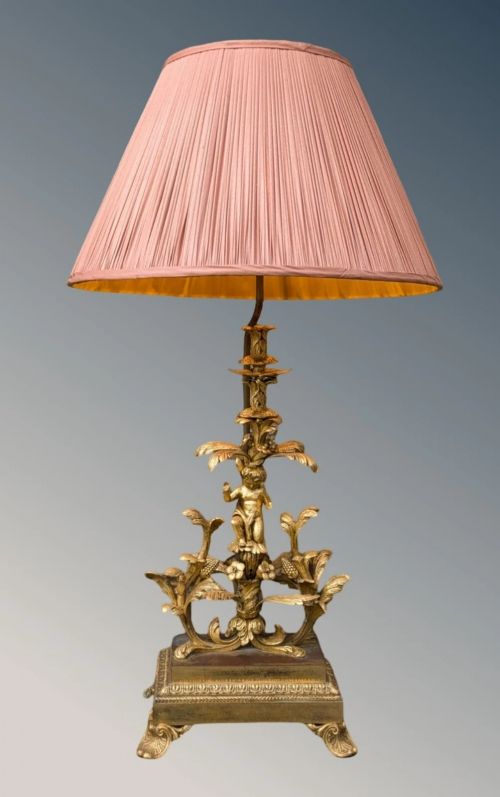
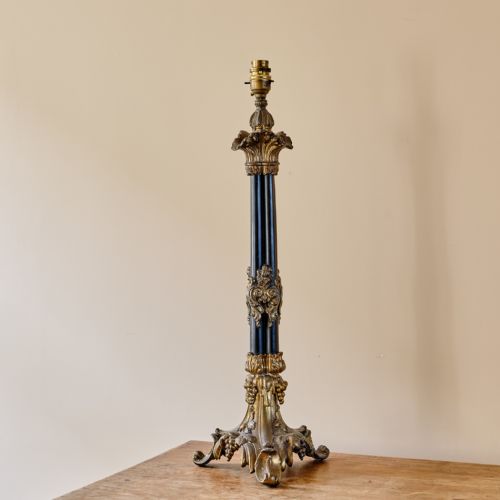
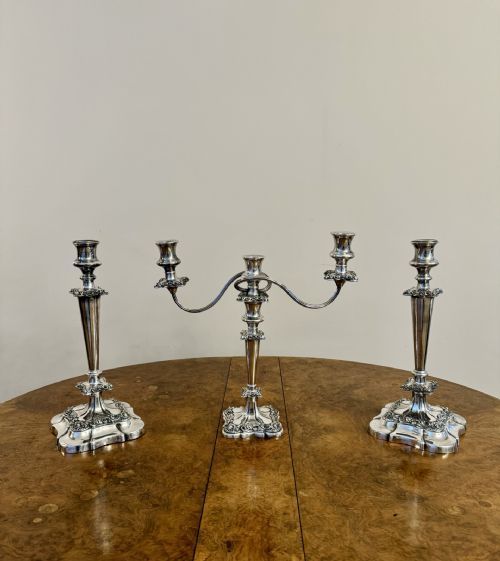
When buyers search for classical ornate candlesticks, they look at heavy cast lighting pieces from the eighteenth, nineteenth, and early twentieth centuries. These objects frequently appear as pairs and often include multi-branch candelabra formats or conversions to table lamps.
The selections span Regency, Victorian, and continental European workshops, drawing heavily on Neoclassical, Rococo, and Empire design vocabularies. Brass, bronze, and silver-plated metals dominate the forms, frequently paired with marble bases or gilded surfaces.
Materials and Construction
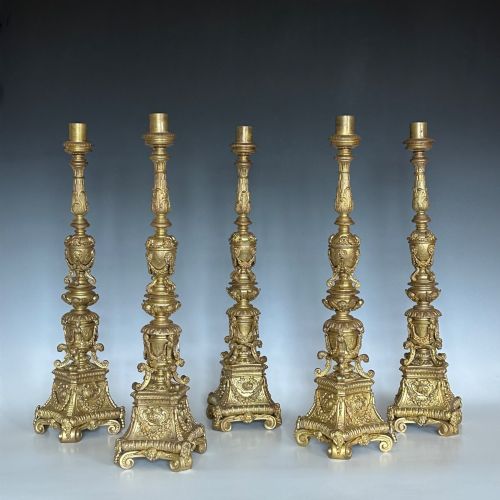
Makers utilised casting techniques in brass, bronze, and ormolu to achieve intricate scrollwork, foliage, and figural details. Molten metal poured into moulds created the heavy structural components, which workers then chased and finished by hand.
Surface treatments included silver plating, fire gilding, and the application of giltwood or marble plinths to elevate the visual weight. Silk elements occasionally supplemented these metal structures, particularly on later standard lamps and converted table lights.
Assessing Quality
Quality rests upon the crispness of the metal casting and the depth of the hand-chased surface details. Pieces with sharp relief work and substantial weight in the hand sit firmly above lighter, mechanically stamped productions.
The integration of secondary materials, such as solid marble bases and genuine ormolu rather than simple lacquered paint, marks the upper tier of these lighting objects. Preservation of the original gilding or plating finish also dictates the standing of each piece.
Elkington
The Classical Ornate Candlesticks Glossary
- Ormolu
- A technique of applying finely ground high-carat gold to a bronze base. This process creates a rich, warm metallic lustre characteristic of French decorative objects.
- Candelabra
- A multi-branched lighting fixture designed to hold several candles simultaneously. These pieces often feature removable branches to function as standard candlesticks.
- Torchere
- A tall ornamental stand or candlestick designed to elevate a light source. In this selection, they appear as substantial pedestals.
- Regency
- A British design period spanning the early nineteenth century. It is defined by classical restraint and strong archaeological influences from ancient Greece and Rome.
Classical Ornate Candlesticks: Frequently Asked Questions
How do I identify a Regency period piece?
Regency pieces often display strict classical proportions and motifs inspired by ancient Rome. They typically date from the early nineteenth century.
Look for cast bronze or brass with disciplined architectural details rather than flowing Rococo curves.
Are converted table lamps still authentic antiques?
Yes, many nineteenth-century candelabra were wired for electricity as domestic lighting habits changed over time. The underlying metalwork retains its original period manufacture.
Buyers often appreciate these conversions for practical use in modern rooms while keeping the antique base.
What materials are most common in these pieces?
Brass and bronze form the heavy structural core of the majority of these listings. Gilt metal, silver plate, and marble frequently appear as surface finishes and base components.
Selected items also incorporate giltwood or silk elements depending on the specific nineteenth or early twentieth-century style.