
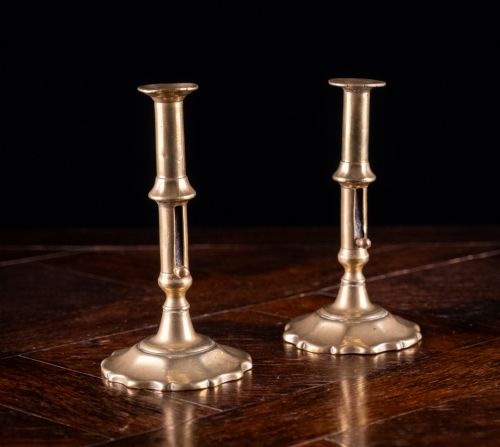
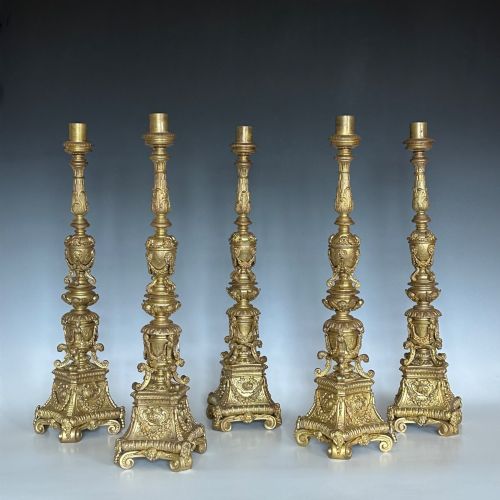
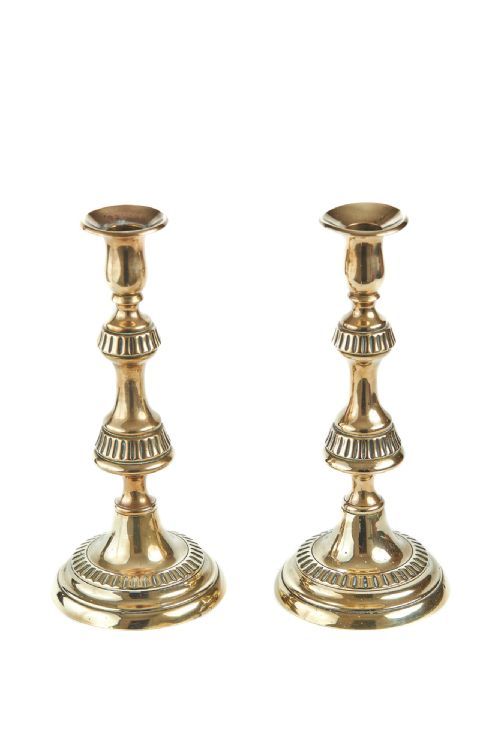
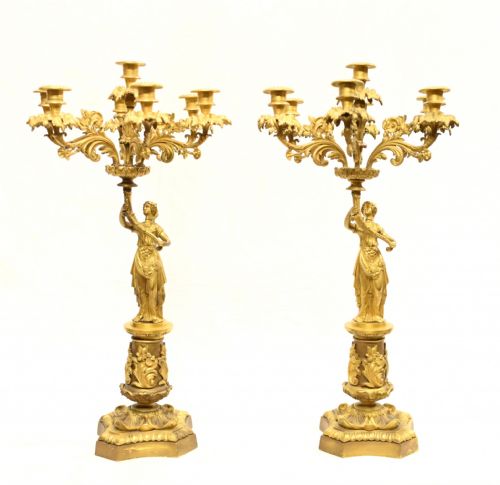

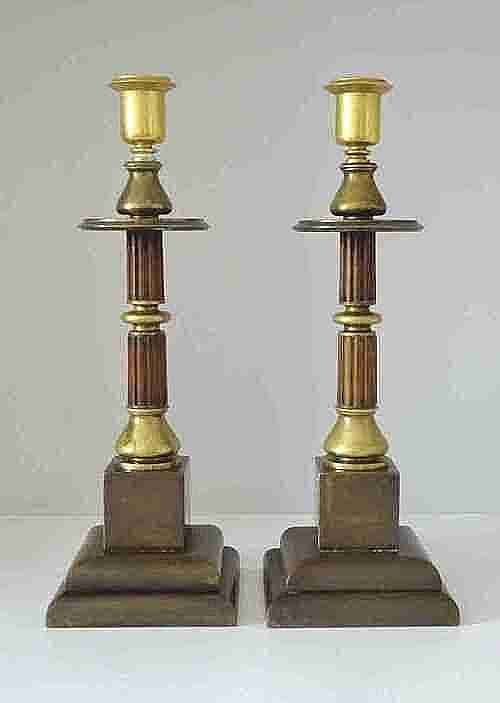


Gold Metal Candleholders
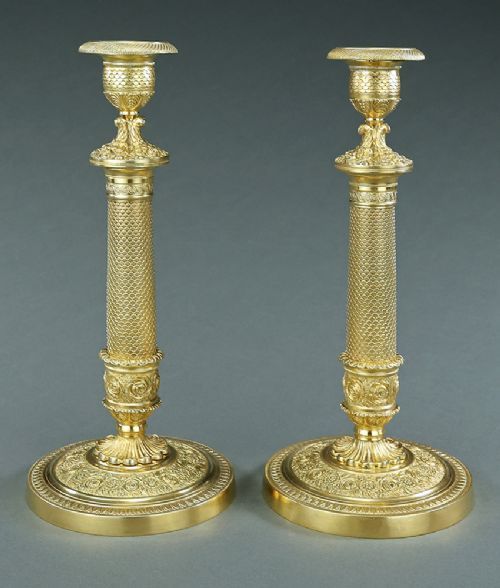
Gold metal candleholders bring warmth and historic craftsmanship to a room, offering functional illumination through finely cast brass, ormolu, and gilt bronze.
Gold Metal Candleholders
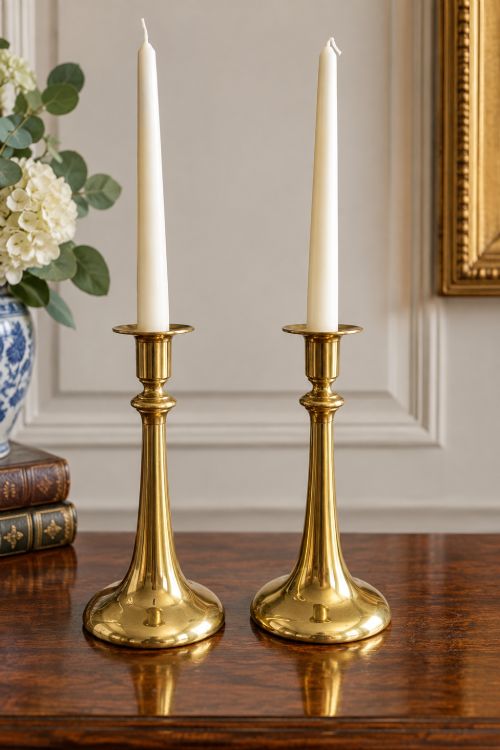
Gold metal candleholders encompass a wide range of lighting fixtures, with brass and gilt bronze examples forming the bulk of what appears on this page. These pieces date across several centuries, from Georgian designs to Victorian and Edwardian periods.
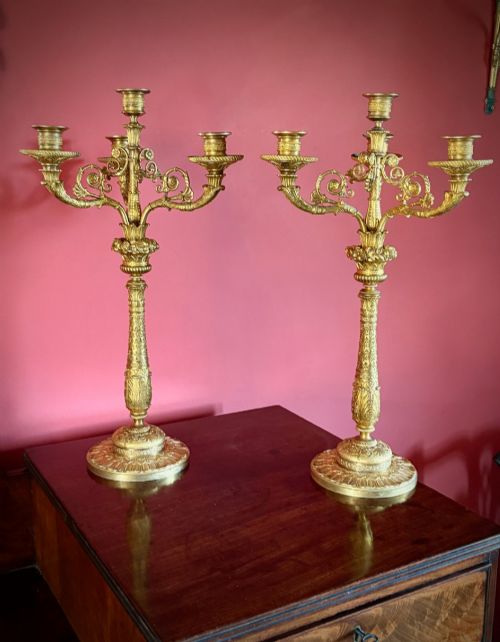
Buyers encountering these items will frequently find pairs of candlesticks or larger candelabra intended for mantelpieces and dining tables. Styles span from French Empire and Rococo Revival to simpler domestic forms in cast brass.
Origins vary between English workshops and continental makers, particularly French and Venetian foundries. The selection bridges formal decorative arts and utilitarian household objects from the eighteenth, nineteenth, and early twentieth centuries.
Materials and production methods
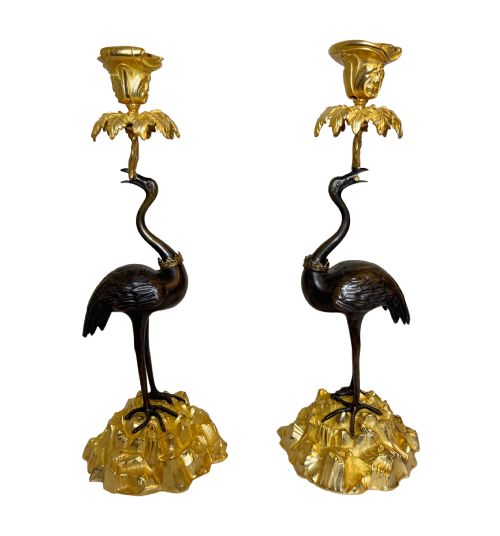
Makers utilised brass, ormolu, and bronze as the primary metals for these items, often employing sand-casting or seaming techniques to form the stems and bases. Many nineteenth-century examples combine patinated bronze with bright gilding or polished surfaces to create textural contrast.
Ormolu and gilt bronze pieces required mercury gilding or gold plating over a copper alloy base, yielding a durable metallic finish that survives on many Victorian and Georgian objects. Marble components also appear on select French candelabra, providing structural weight and varied colour beneath the metal work.
A solitary Syrian candlestick brings a medievalist flamingo motif right to the mantelpiece.
Distinctions in craftsmanship
The refinement of the casting and chasing separates standard domestic items from superior decorative examples. Crisp detail in foliate motifs, figural elements, or geometric patterns indicates skilled hand-finishing after the metal came out of the mould.
Weight and construction integrity also define the better items in this category. Solid brass or heavy gilt bronze assemblies with tightly fitted bases and well-balanced proportions demonstrate superior workshop standards compared to lighter, purely utilitarian pieces.
The Gold Metal Candleholders Glossary
- Ormolu
- Gilded bronze, typically produced by applying a gold-mercury amalgam to a bronze base and firing it. This French technique imparts a rich, deep yellow lustre to decorative metalwork.
- Candelabra
- A branched candlestick holding multiple candles on a single base. These multi-light fixtures often feature elaborate ornamentation such as figural or architectural motifs.
- Patinated bronze
- Bronze that has developed a surface sheen or controlled chemical darkening through age or intentional treatment. It provides a dark contrast against brighter gilt highlights.
- Seamed brass
- Brass formed by joining rolled sheet metal along a visible seam, common in certain nineteenth-century manufacturing methods before seamless tubing became standard.
- French Empire
- A neoclassical design style spanning the late eighteenth and early nineteenth centuries. It utilises martial motifs, classical symmetry, and rich gilt surfaces.
Gold Metal Candleholders: Frequently Asked Questions
How do I clean antique brass candlesticks?
Maintenance requires only a soft cloth to remove dust, avoiding harsh chemical polishes that strip away historic patination. Preserving the natural surface layer maintains the integrity of the metal.
For pieces with gilt bronze or ormolu finishes, moisture should be kept to a minimum. Gentle dusting protects the delicate gold layers from unnecessary wear.
Were these holders used for dining tables?
Many pairs served on dining tables and sideboards to provide ambient illumination during evening meals. Taller candelabra were specifically designed for grand reception rooms.
Domestic candlesticks were frequently moved from room to room as needed. Their sturdy bases ensured stability during daily handling.
How do I tell Georgian from Victorian pieces?
Georgian examples often display restrained neoclassical lines, simpler cast brass profiles, and substantial weight with square or octagonal bases. Eighteenth-century construction methods differ noticeably from later mass production.
Victorian pieces lean towards ornate revival styles, including Rococo, Renaissance, and Aesthetic movements. They frequently incorporate intricate chasing, figural motifs, or mixed materials like marble.