


Rococo Gilt Bronze Candleholders
Rococo gilt bronze candleholders bring dramatic French flair and warm metallic glow to any interior through ornate, scrolling designs.
Rococo Gilt Bronze Candleholders
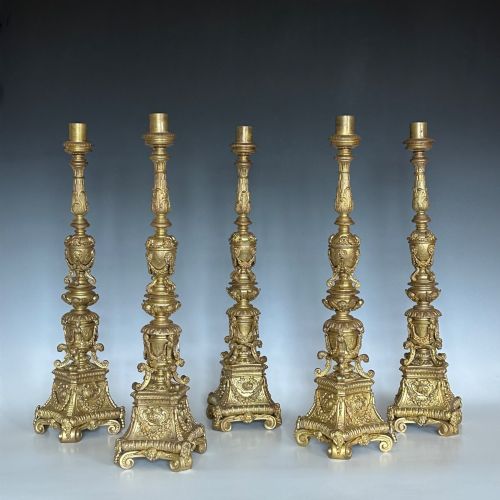
When you search for rococo gilt bronze candleholders, you encounter elaborate lighting pieces designed to catch the candlelight on polished metal surfaces. The examples listed here span from the eighteenth century through to the early twentieth century, showing lasting appeal for asymmetrical and ornate forms.
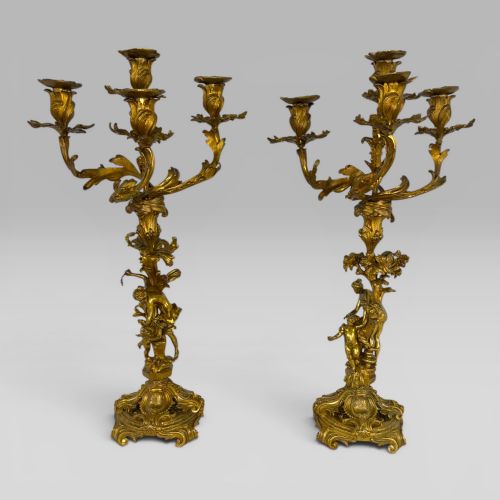
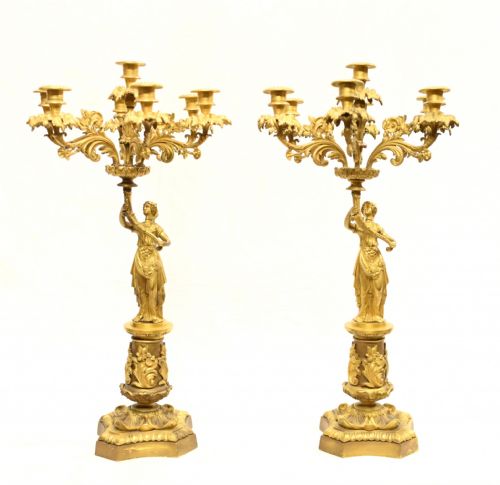
Most items you meet on this page are pairs of French candlesticks and multi-branched candelabra incorporating styles such as French Rococo Revival and Second Empire. Makers frequently paired the gilt bronze or ormolu with contrasting materials like marble, porcelain, and glass to elevate the visual impact.
The objects take various functional forms including single candlesticks, multi-light candelabra, wall sconces, and twin-branch girandoles. Cherubs, putti, and birds frequently appear alongside foliage and scrollwork to create sculptural centerpieces for tables and mantelpieces.
How They Were Made
The primary material is bronze, cast into intricate shapes and then treated with a gold-coloured finish known as ormolu or gilt bronze. Artisans also utilised patinated bronze and brass to create tonal contrast within a single piece.
Many of these items combine metalwork with other decorative media, mounting porcelain birds or vases and marble bases directly into the bronze structure. This multi-material construction required specialised casting, chasing, and assembly techniques.
Listings feature items spanning the eighteenth, nineteenth, and early twentieth centuries, predominantly showcasing French Rococo Revival styles.
What Varies in Quality
The crispness of the casting and the depth of the chasing separate standard items from superior examples. Master artisans spent hours hand-finishing the bronze surface to ensure scrollwork and sculptural figures retained sharp detail.
The integration of secondary materials such as marble and porcelain also influences the overall standard of the piece. High-grade items display secure mountings and high-fired porcelain or well-veined stone that complement the surrounding metalwork.
Samson Porcelain
The Rococo Gilt Bronze Candleholders Glossary
- Ormolu
- Gilt bronze, created by applying a mixture of finely ground gold and mercury to a bronze base and heating it. This historic technique produced a durable and rich golden lustre.
- Candelabra
- A branched candlestick holding multiple candles on separate arms. These fixtures often served as prominent table ornaments in nineteenth-century interiors.
- Girandole
- An ornamental branched candlestick, frequently designed to be fixed to a wall or placed on a surface with a reflective backplate. The twin-branch variant provides balanced illumination.
- Putti
- Depictions of chubby male infants, often winged, appearing frequently as sculptural elements in rococo art. They add a playful or classical narrative to the base or stem of a candleholder.
- Rococo Revival
- A nineteenth-century design movement that reinterpreted the asymmetrical scrolls and natural motifs of the eighteenth-century French rococo style. This aesthetic dominates the revival pieces found in this category.
Rococo Gilt Bronze Candleholders: Frequently Asked Questions
What is the difference between ormolu and gilt bronze?
Ormolu specifically refers to gilt bronze created through a historic mercury gilding process that leaves a distinctive deep lustre. Gilt bronze is a broader term encompassing various methods of applying gold finish to a bronze base.
Both terms describe the golden metallic surfaces seen on these antique lighting pieces, though ormolu is frequently associated with finer French decorative objects from the eighteenth and nineteenth centuries.
How do I date an antique candelabra?
Dating relies on examining the casting techniques, the style of the chasing, and the secondary materials used in the construction. Pieces from the eighteenth century show different casting signatures compared to later nineteenth-century revival items.
Makers also combined materials like marble, porcelain, or glass in ways that reflect the manufacturing tastes of specific periods, such as the Second Empire or the late Victorian era.
Were these candleholders meant for dining tables?
These decorative objects served multiple purposes in historic homes, frequently placed on mantelpieces, console tables, or dining surfaces to provide ambient illumination. Multi-branched candelabra acted as principal room lighting before the widespread adoption of electricity.
Pairs were standard to maintain symmetry in interior decoration, often flanked by mirrors or clocks to maximise the reflection of candlelight.
How should I clean gilt bronze candleholders?
Maintenance requires gentle dusting with a soft, dry cloth to prevent the accumulation of dirt within the intricate scrollwork and crevices. Avoid harsh chemical cleaners and abrasive polishes that can strip away the delicate gold finish.
Preserving the original surface is essential for maintaining the historical and aesthetic integrity of ormolu and patinated metal components.