




Classical Nude Art
Classical nude art brings together centuries of academic study, mythology and sculptural form, offering a direct line to historical human representation.
Classical Nude Art
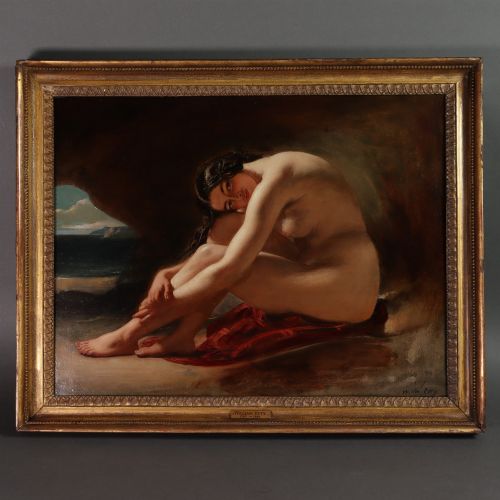
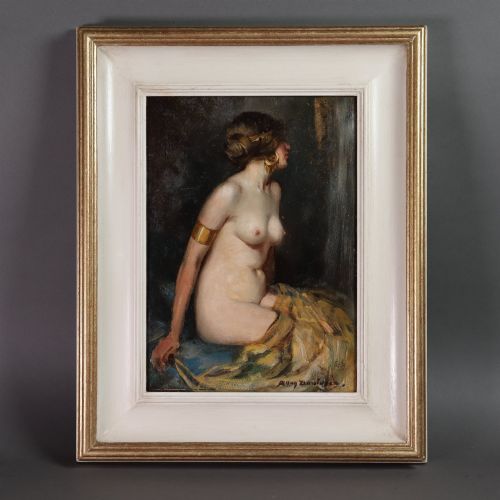
Classical nude art encompasses drawings, paintings, prints and sculptures that draw upon historical motifs, mythological subjects and academic figure studies. You will most frequently encounter works from the nineteenth and early twentieth centuries, alongside earlier interpretations rooted in the academic tradition.
The subjects range from mythological figures such as nymphs, gods and heroes to life studies produced within art schools and academies. These pieces vary from intimate pencil sketches on paper to substantial bronze sculptures and oil paintings.
The selection reflects both European academic training and later stylistic shifts through Art Nouveau and Art Deco. Each piece records the enduring focus on the human form through the lens of historical periods.
Materials and Techniques
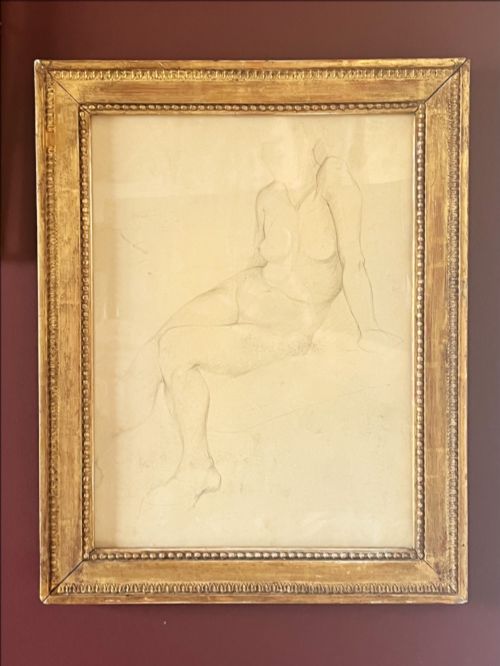
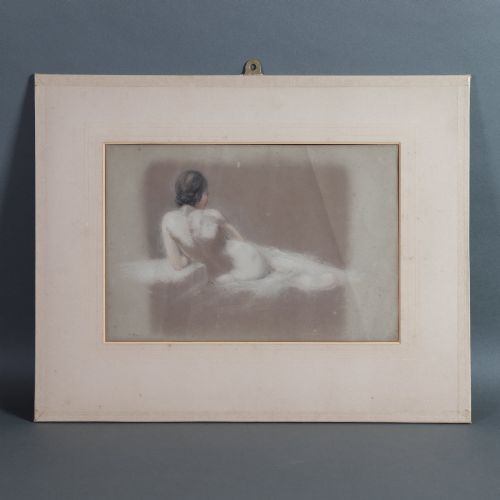
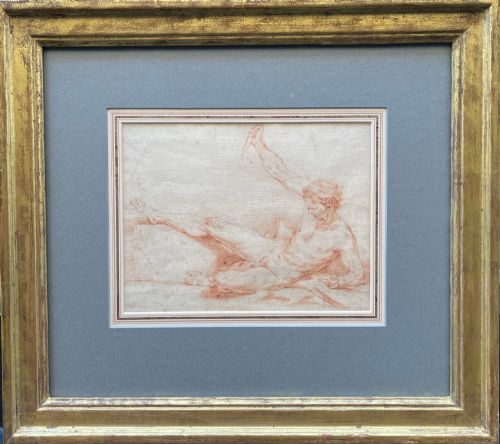
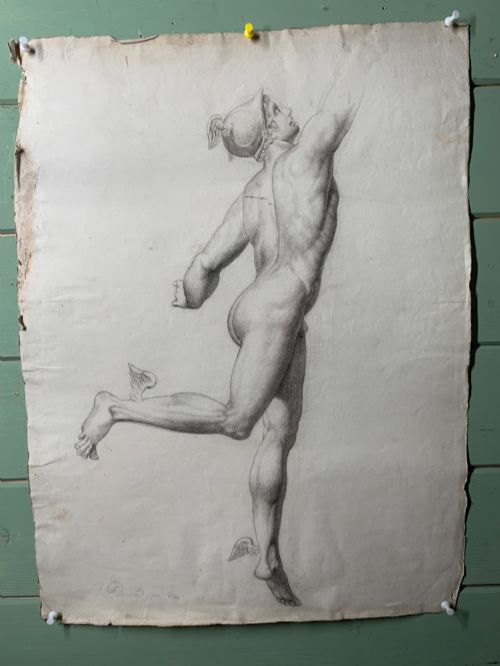
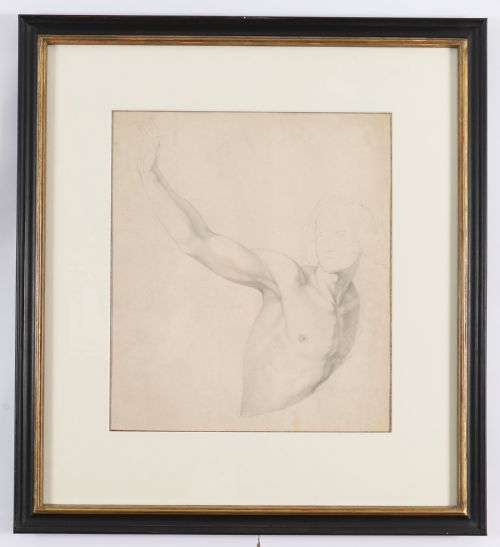
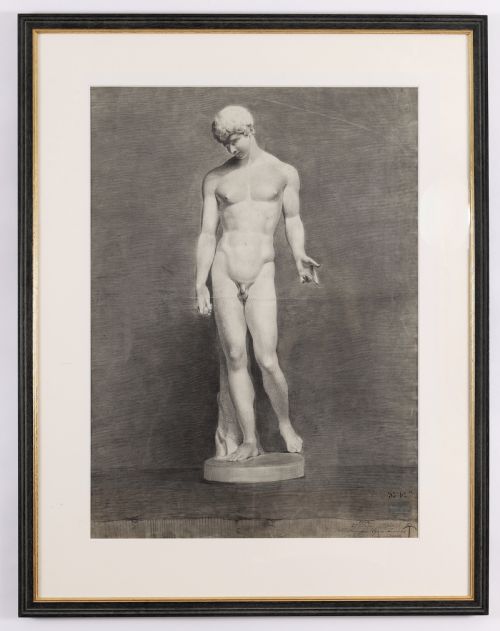
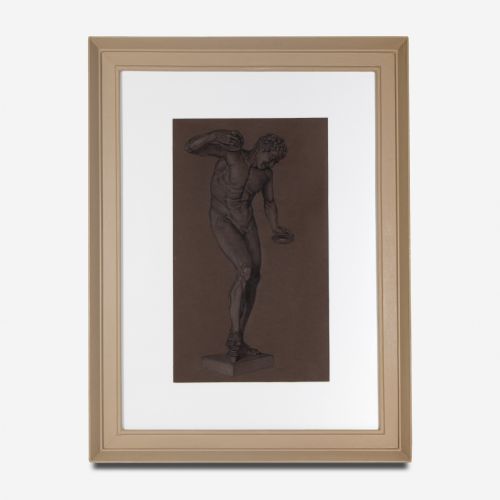
Works on paper rely on graphite, charcoal, red chalk, pen and ink, capturing the immediacy of the life model or the deliberate study of antique sculpture. These drawings often demonstrate the foundational draftsmanship taught within European art schools.
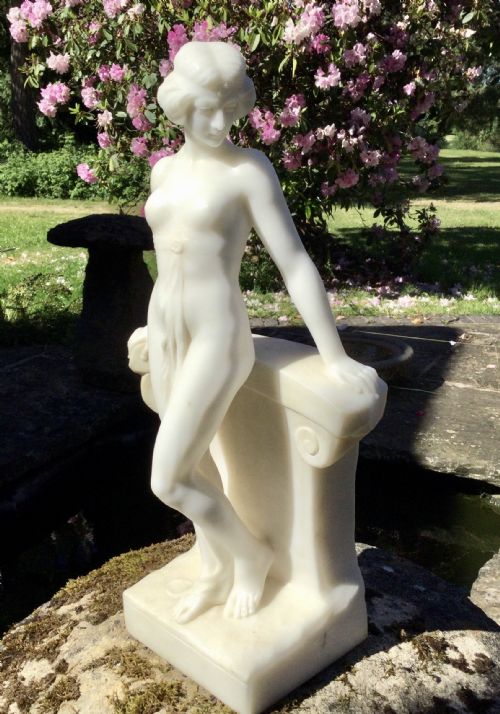
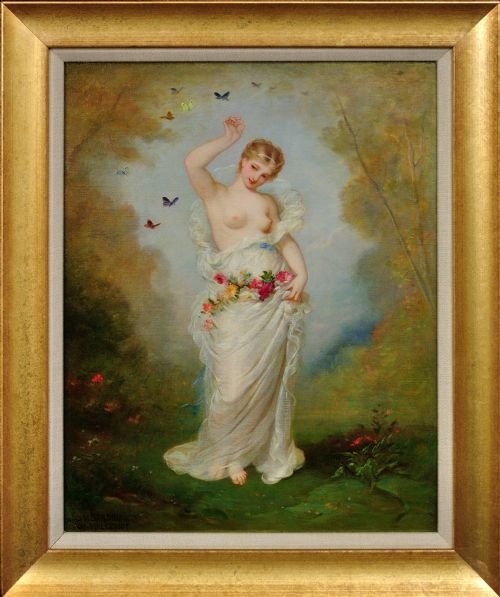
Paintings utilise oil on panel or board, employing traditional glazing and layering techniques to render flesh tones and soft light within mythological landscapes or studio settings. Sculptural works are cast in bronze, carved from marble or alabaster, or modelled in terracotta and limewood, showing the transition from clay model to finished monument.
Several pieces preserve the quiet focus of nineteenth-century art students grappling with the proportions of ancient Greek deities.
Assessment of Quality
Quality rests upon the precision of anatomical rendering, the confidence of the line and the handling of light and volume within the medium. Stronger examples display a firm grasp of underlying structure, whether in the musculature of a bronze figure or the subtle shading of a graphite study.
The distinction between a standard academic exercise and a finished composition lies in the sensitivity of the modelling and the integration of the figure within its space. Provenance and attribution to trained academic artists further elevate the standing of individual works.
William Etty·Allan Douglas Davidson·Hans Müller·Aristide Maillol·Fritz Kochendorfer·Hector Lemaire·James Clark·Arthur Hacker
The Classical Nude Art Glossary
- Academic Realism
- A style of painting and sculpture produced under the influence of European academies of art, prioritising strict standards of proportion, finish and classical subject matter.
- Collotype
- A photomechanical printing process used to produce high-detail monochrome or colour prints, often employed for reproducing fine art drawings and paintings.
- Neoclassical
- A Western cultural movement drawing inspiration from the art and culture of classical antiquity, focusing on heroic subjects, symmetry and restrained composition.
- Recumbent
- Reclining or lying down, a common pose for mythological figures and academic bather studies across painting and sculpture.
- Terracotta
- Fired clay used for sculptural models and finished figures, allowing artists to capture direct impressions before kiln firing.
Classical Nude Art: Frequently Asked Questions
What defines classical nude art?
Classical nude art focuses on the human form through the lens of historical traditions, academic training and mythological narratives. It spans centuries of drawing, painting and sculpture that reference antiquity.
The genre relies heavily on formal study, proportion and traditional techniques rather than modern abstraction, connecting directly to the curriculum of historical art schools.
How were these life studies used?
Artists produced life studies to master human anatomy, lighting and perspective within a controlled studio or academy setting. These drawings and paintings served as preparatory exercises or finished works for exhibition.
Students drew directly from live models or plaster casts of antique statues to build proficiency before attempting complex narrative compositions.
How should I display a drawing on paper?
Works on paper require careful framing behind conservation-grade glass to filter ultraviolet light and prevent fading of graphite, chalk or ink. Acid-free mounts protect the edges of the sheet from chemical degradation over time.
Position these pieces away from direct sunlight and damp environments to preserve the integrity of nineteenth-century papers and mixed media.
How do I distinguish bronze from other metals?
Bronze sculptures possess a distinct weight, a resonant sound when struck gently, and a rich patina developed through oxidation and applied finishes. They often show casting seams or foundry marks depending on the period.
Alabaster and marble offer a cool, dense stone alternative, while terracotta presents a porous, fired-earth texture with distinct surface warmth.