
Classical Marble Urn Pair
A classical marble urn pair brings architectural symmetry and neoclassical weight to a room, cast in stone and metal.
Classical Marble Urn Pair
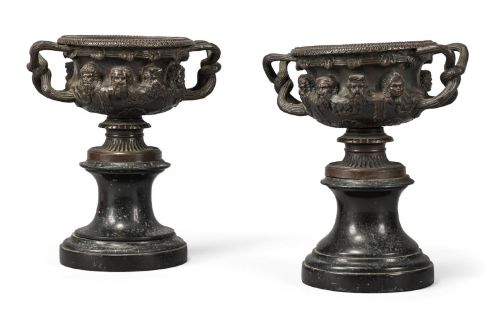
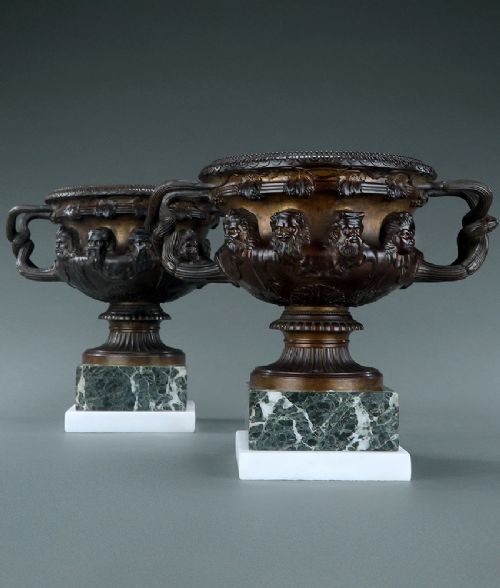
A classical marble urn pair consists of matching decorative vessels shaped by antiquity and revived during the nineteenth century. These symmetrical pairs draw directly from archaeological discoveries across Italy, reflecting the aesthetic of the Grand Tour and Neoclassical periods. Most examples encountered here originate from French and Italian workshops during the nineteenth century.
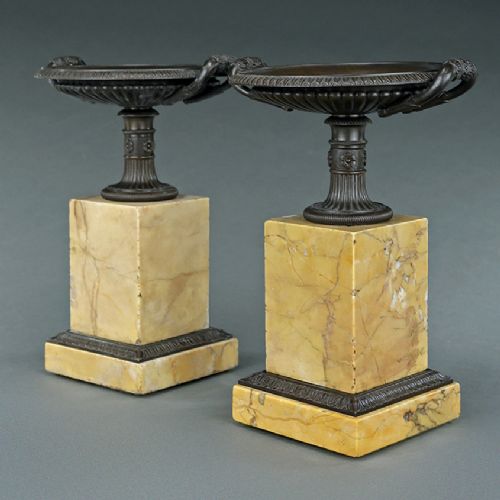
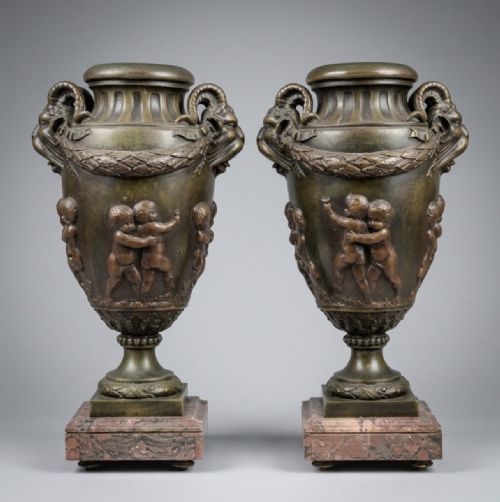
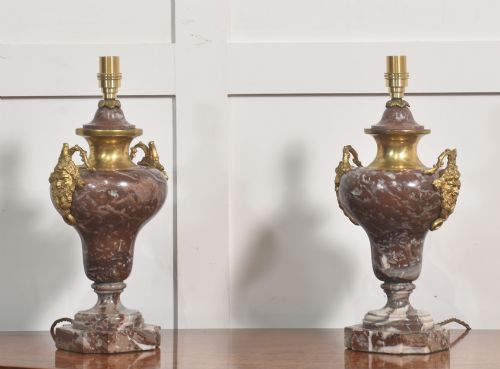
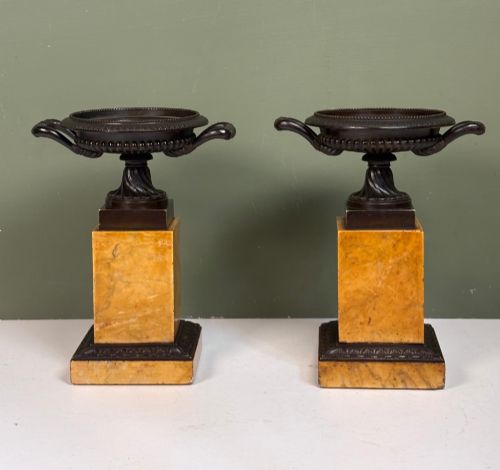
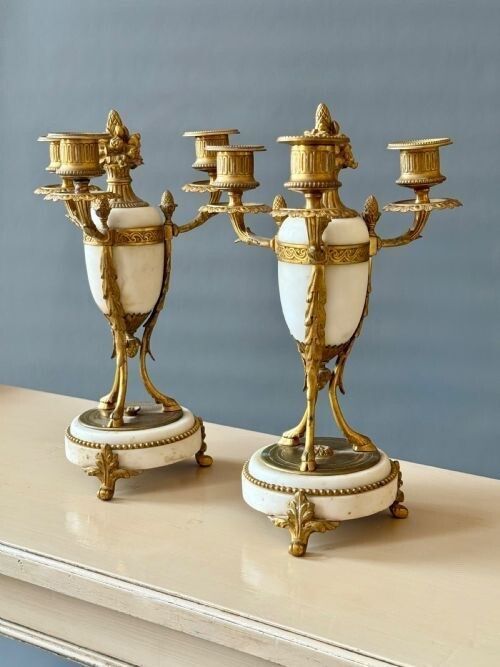
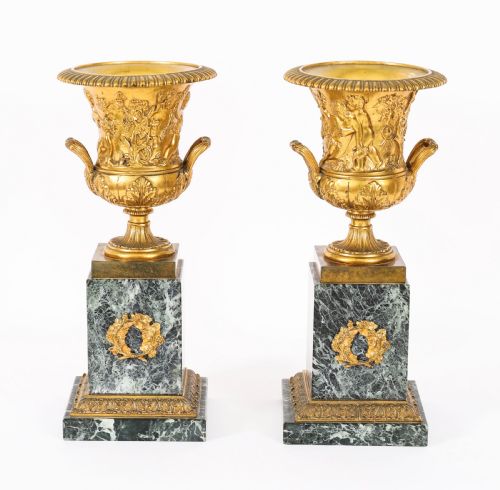
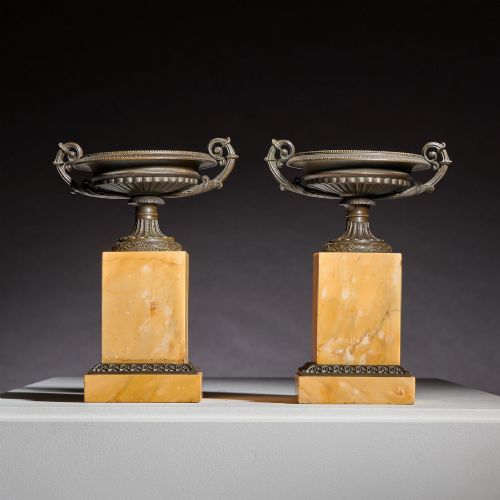
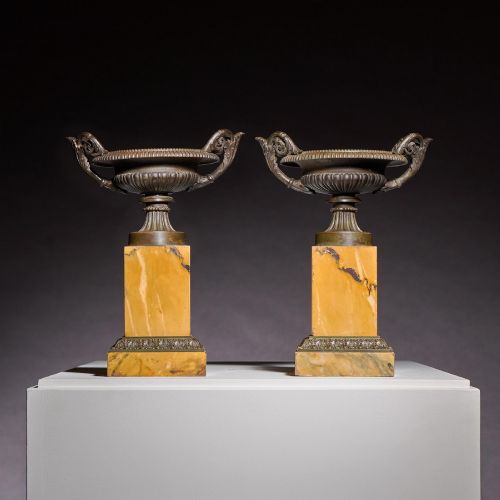
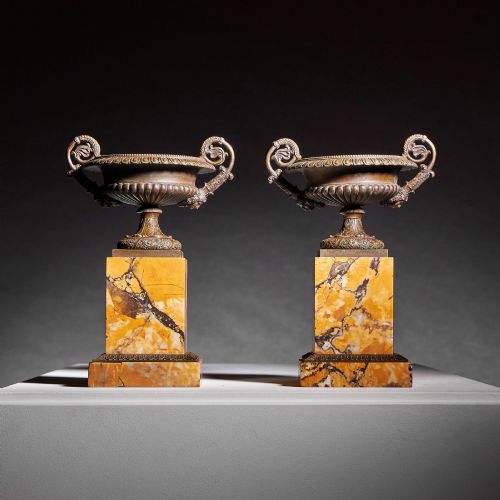
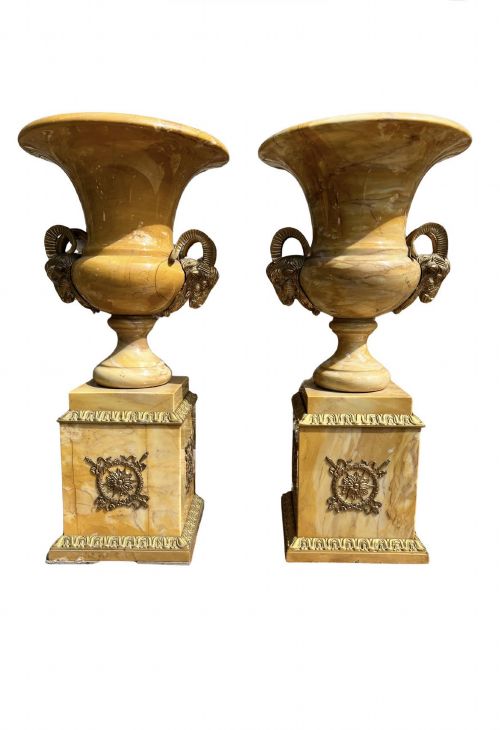
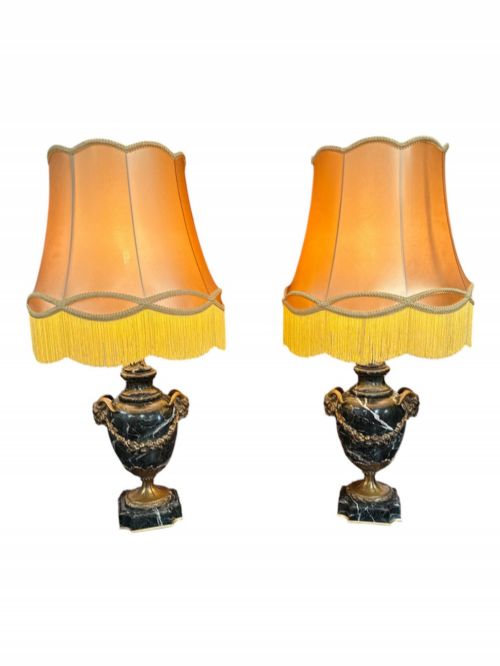
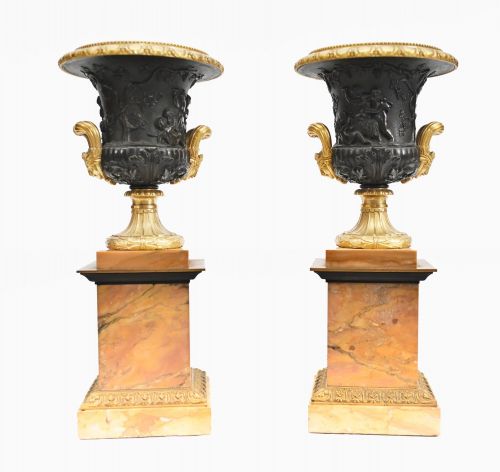
The physical forms include traditional campana shapes, tazzas, cassolettes, and monumental vases. Makers mounted stone bodies upon square plinths or bases, frequently adapting the original vessel designs into nineteenth century table lamps or candelabras. Buyers seek these matched pairs to anchor a mantelpiece, sideboard, or console with balanced decorative presence.
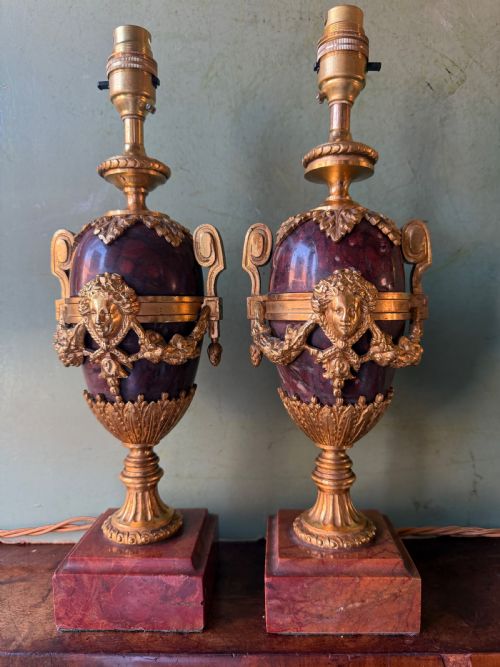
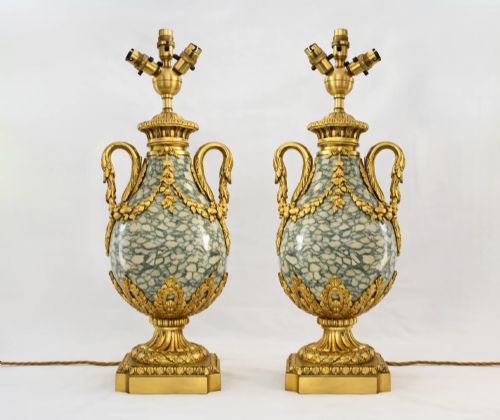
Evidence shows varied stone bodies ranging from white and variegated marbles to deep red rouge marble and rich yellow Siena marble. Metal components including bronze, gilt bronze, ormolu, and brass provide structural mounts and handles that contrast with the cold mineral finish of the stone. Each pair demonstrates how nineteenth century artisans translated ancient archaeological motifs into interior ornaments.
How They Were Made
Craftsmen turned solid blocks of marble on lathes to create smooth vessel bodies, finishing the stone surfaces by hand to highlight natural veining and colour variations. Artisans carved intricate details directly into softer stones or shaped alabaster to achieve translucent effects on early twentieth century examples.
Foundries cast bronze and brass elements using traditional methods before applying fire gilt, ormolu, or patinated finishes. Craftsmen then fitted the metal mounts, handles, and cast foliate collars tightly around the stone bodies, securing them with internal threaded rods or pins.
Object forms span decorative urns, tazzas, cassolettes, candlesticks, candelabra, and table lamps styled in the French Empire and Louis XVI traditions.
What Varies in Quality
Quality rests upon the crispness of the metal chasing and the selection of the stone. Finer examples display deeply chiselled ormolu mounts with sharp leaf and scroll work, paired with richly figured Sienna or rouge marble rather than plain uniform stone.
Proportion and weight dictate the distinction between standard decorative items and exceptional pieces. Master makers ensured that the balance between the bronze handles, the marble body, and the metal base felt architecturally sound and intentional.
The Classical Marble Urn Pair Glossary
- Grand Tour
- An extended journey through Europe undertaken by nineteenth century travellers who collected antiquities and classical souvenirs. These objects heavily influenced later revival designs.
- Cassolette
- A decorative vessel featuring a reversible lid that functions either as an urn or a burner. They frequently incorporate ormolu mounts and marble bodies.
- Tazza
- A shallow bowl or vase raised on a high foot and plinth. This classical form appears frequently in bronze and Sienna marble pairs.
- Ormolu
- Finely ground high-carat gold applied to a bronze base using mercury amalgamation. This technique creates a rich, durable golden surface on nineteenth century mounts.
- Campana
- A bell-shaped vessel derived from ancient pottery and stone wine coolers. It remains one of the primary silhouettes for classical decorative urns.
Classical Marble Urn Pair: Frequently Asked Questions
What is a classical marble urn pair?
A classical marble urn pair comprises two matching decorative vessels made from stone and metal during the nineteenth and early twentieth centuries. They reflect neoclassical design principles inspired by ancient Greek and Roman archaeological finds.
These matched objects served primarily as decorative garnitures for mantelpieces and large furniture pieces in formal nineteenth century interiors.
How were these urns used historically?
Nineteenth century homeowners displayed these matched pairs on mantelpieces, console tables, and pedestals to project classical learning and refined taste. Some examples were later adapted during the Victorian and Edwardian eras to function as table lamps or candelabras.
Their symmetrical placement added architectural balance to formal rooms, drawing on the aesthetics popularized by the Grand Tour.
How can I tell nineteenth century pieces apart from later ones?
Nineteenth century pieces typically feature heavier cast bronze mounts, hand-chiseled surface details, and natural marbles with distinct mineral depth. Later twentieth century interpretations often utilise lighter brass components, simplified casting, and more uniform synthetic stone effects.
Examining the internal construction, patination of the bronze, and the specific geological character of the marble helps clarify the period of manufacture.
Why do some urns function as lamps?
Many nineteenth century stone urns and tazzas were converted into table lamps during the late nineteenth or early twentieth centuries to accommodate modern lighting while retaining classical forms. These adaptations utilised the existing hollow stone bodies and bronze mounts to run internal wiring safely.
Such conversions represent a continuous history of domestic use, adapting antique decorative objects for contemporary functional living spaces.