





Classical Marble Mantel Clock
A classical marble mantel clock anchors a room with sculptural weight, bringing nineteenth-century French architectural presence and heavy stone to a mantelpiece.
Classical Marble Mantel Clock
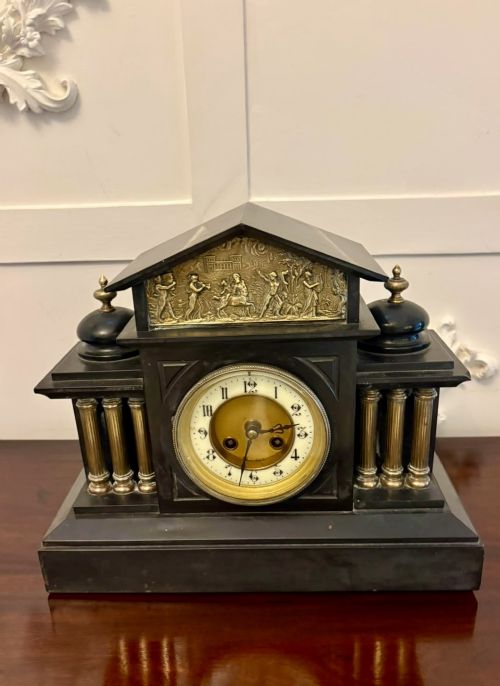
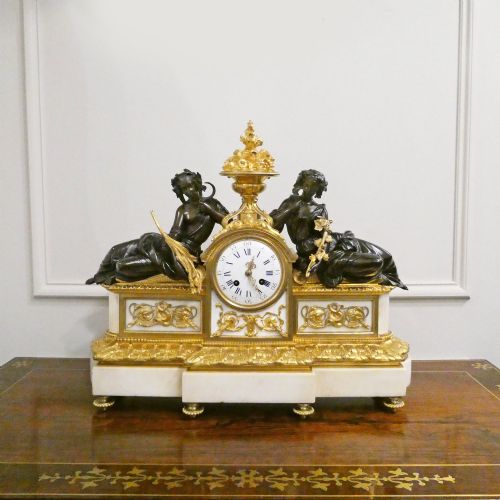
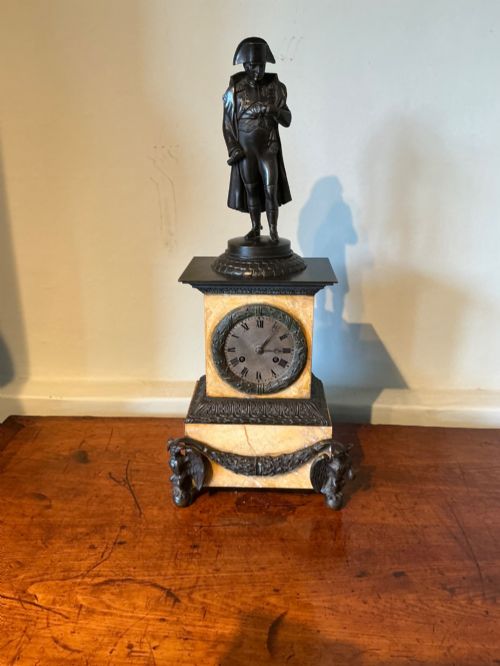
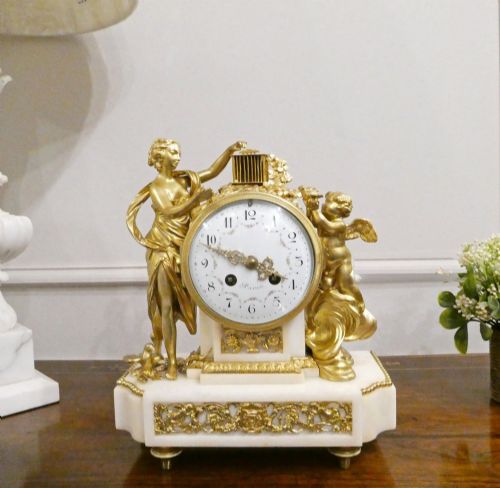
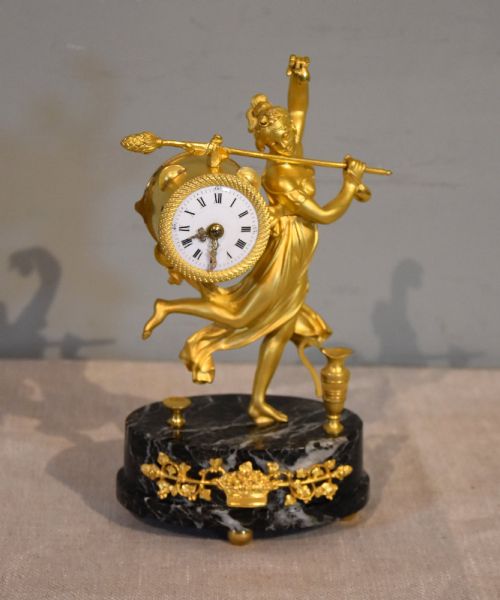
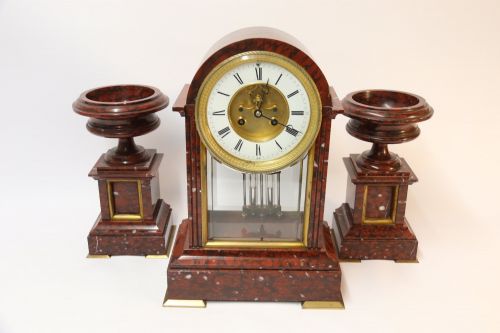
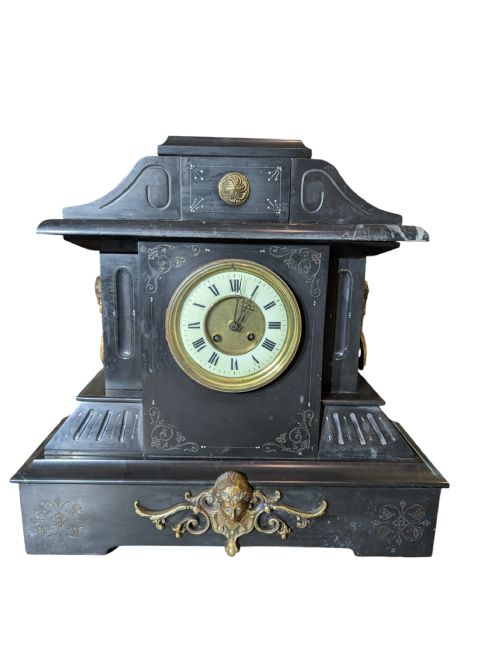
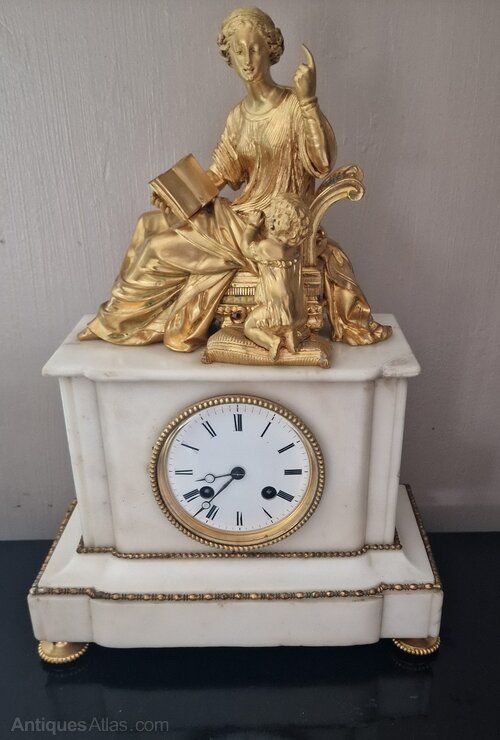
A classical marble mantel clock combines heavy stone bodies with metal mounts, often appearing as architectural edifices or figural compositions. When searching for this phrase, expect to encounter French designs from the nineteenth century, ranging from simple timepieces to extensive garniture sets flanked by matching vases or candelabra.
The dominant forms span black, red, green, grey, and sienna marble, frequently enriched with bronze, ormolu, or gilt brass details. Many pieces adopt Louis XVI, French Empire, or Neoclassical styles, displaying disciplined symmetry and classical motifs derived from antiquity.
Makers and retailers from Paris feature prominently among these objects, alongside Victorian interpretations produced in Britain. Whether housing an eight-day movement or a simpler timepiece, these works serve as functional sculptures that reflect nineteenth-century interior taste.
Materials and construction methods
The construction relies upon dense natural stones shaped into architectural columns, urns, and rectangular plinths, occasionally paired with slate or onyx. Craftsmen paired these polished mineral bodies with cast bronze or brass mounts, securing the components with threaded pins and screws.
Metal elements received fire gilding, ormolu, or patination to contrast against the cold stone surfaces. Dials were typically formed of white enamel with painted Arabic or Roman numerals, protected behind bevelled glass within a hinged bezel.
Listings feature black, red, green, grey, and sienna marble paired with ormolu, bronze, brass, and enamel.
Distinctions in craftsmanship
Quality separates objects by the precision of the stone cutting and the crispness of the bronze cast. Finer examples display hand-chased mounts with sharp relief, whereas simpler versions rely on unadorned marble or softer spelter figures.
The integrity of the movement and the signature on the dial or backplate elevate a piece. Marked works by established Parisian houses demonstrate superior mechanical reliability and artistic coordination between stone and metal.
Vincenti·Samuel Marti·Japy Freres·Philippes Paris·Berger, Paris·H Luppens Paris
The Classical Marble Mantel Clock Glossary
- Garniture
- A set comprising a central clock flanked by matching decorative objects such as urns or candelabra. These matched ensembles were designed to create a symmetrical arrangement on a mantelpiece.
- Ormolu
- Finely ground high-carat gold applied to a bronze base through a mercury amalgamation technique. This process creates a durable, warm metallic lustre characteristic of luxury French metalwork.
- Movement
- The internal mechanical heart of the clock comprising gears, springs, and escapements. Nineteenth-century examples frequently feature eight-day duration movements requiring weekly winding.
- Sienna marble
- A distinctive yellow-brown ornamental stone quarried in Italy with dark veining. It was highly favoured for neoclassical decorative arts due to its rich, warm tonality.
- Dial
- The face of the clock where time is indicated through numerals and hands. Enamel versions were fired onto copper substrates to achieve a smooth, glossy finish.
Classical Marble Mantel Clock: Frequently Asked Questions
How do I wind a classical marble mantel clock?
Most nineteenth-century movements utilise a key inserted into winding holes on the enamel dial to tension the mainsprings. Care must be taken not to overwind the mechanism.
Regulating the pendulum via a small square nut at the base of the suspension spring allows the clock to be adjusted if it runs fast or slow.
Were these clocks meant for daily use?
They served as both reliable timekeepers and principal decorative centrepieces in nineteenth-century formal reception rooms. Their substantial weight suited them to permanent placement on stone or timber mantelpieces.
Many housed eight-day striking movements that chimed the hours and halves on bells or gongs, providing an auditory backdrop to the household.
What is a clock garniture set?
A garniture comprises the main clock alongside two matching side pieces, such as candelabra or ornamental urns. These matched suites created a balanced display across a fireplace opening.
Materials and decorative motifs matched precisely across all components, utilising the same marble and bronze mounts.
How do I distinguish French from Victorian examples?
French pieces often bear maker stamps on the movement backplate and utilise rich ormolu mounts alongside imported coloured marbles. Parisian foundries dominated high-end neoclassical production.
Victorian British alternatives frequently interpret these continental styles locally, sometimes employing slate or faux marble finishes within domestic architectural contexts.