
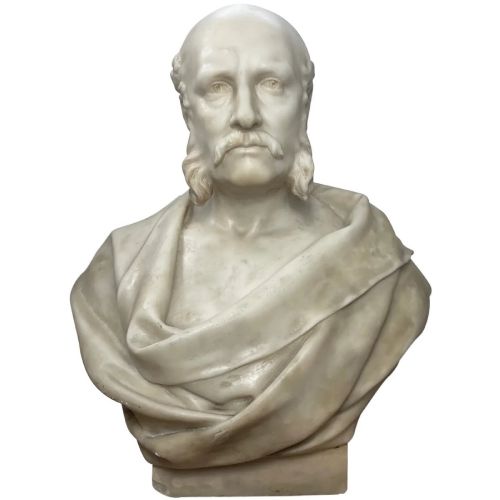
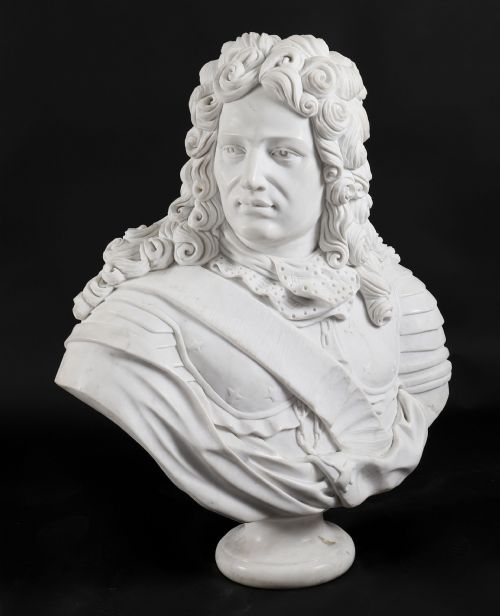
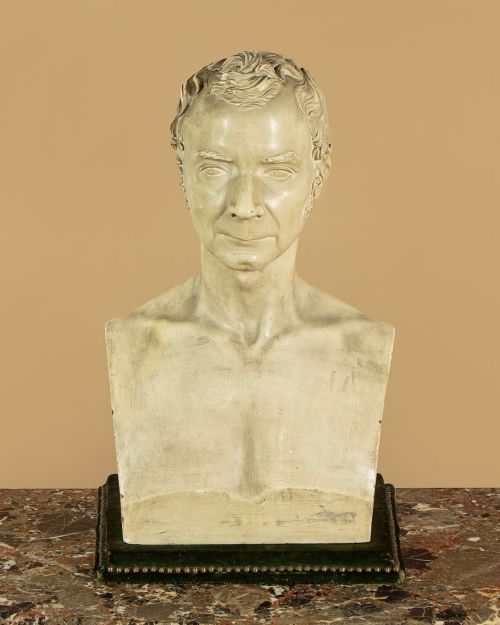


Classical Male Bust Sculpture
These classical male bust sculpture pieces bring academic gravity and dignified presence to a room, drawing the eye with enduring forms.
Classical Male Bust Sculpture
A classical male bust sculpture represents historical figures, philosophers, noblemen, or mythological subjects in white marble, bronze, plaster, and terracotta. These pieces draw heavily on ancient Greek and Roman traditions, celebrating the heroic or intellectual male form through portraiture.
Victorian and nineteenth-century examples dominate the selections here, alongside Edwardian interpretations and mid-century Italian works. Buyers encounter library busts designed for domestic display alongside monumental civic portraits and garden statuary.
The aesthetic ranges from austere academic realism and neoclassical restraint to the ornate flourishes of the baroque revival. Each portrayal captures character through detailed drapery, armour, or the bare shoulders typical of antiquity.
Materials and methods
Carved white marble and cast bronze form the backbone of the finer works, demanding exceptional skill from the sculptor. Plaster serves as a versatile medium for detailed library studies and patinated portraiture.
Foundries cast bronze pieces using traditional methods, often finishing the metal with rich patinas to highlight musculature and facial expression. Plaster casts allow intricate detailing of hair and drapery, sometimes finished with paint to simulate stone or bronze.
The listings here span the nineteenth and twentieth centuries, incorporating materials from traditional white marble and bronze to painted plaster and terracotta.
Assessing quality
Quality rests in the precision of the carving or the crispness of the casting, where anatomical accuracy and expressive depth distinguish a master work from a standard production piece. The handling of subtle facial contours and the depth of undercut drapery reveal the sculptorial competence behind the object.
Material selection also dictates value, with genuine carved marble and heavy cast bronze sitting above moulded plaster or reconstituted stone. The presence of a recognised artist signature or foundry mark elevates a piece significantly beyond unsigned decorative items.
Giuseppe Moretti·Sir Thomas Brock·Mathurin Moreau·Richard Aurili
The Classical Male Bust Sculpture Glossary
- Patina
- The surface sheen and coloration developed by bronze or paint over time through age and handling. This thin layer adds visual depth and confirms the age of the metal.
- Grand Tour
- A cultural journey undertaken by wealthy young Europeans in the eighteenth and nineteenth centuries to study classical art. Souvenirs from these travels included miniature or full-sized busts of ancient subjects.
- Neoclassical
- A style spanning the eighteenth and nineteenth centuries that revived the aesthetics of classical Greece and Rome. It emphasises austere lines, heroic proportion, and dignified poses.
- Terracotta
- Fired clay used for sculptural works, often left unglazed to show the warm earthy body. Sculptors valued it for its direct responsiveness to modeling tools.
- Herm
- A sculpture with a head and upper torso atop a square pillar, originating in ancient Greece. These forms frequently depict deities or philosophers.
Classical Male Bust Sculpture: Frequently Asked Questions
Where should I place a heavy marble bust?
Heavy marble and stone pieces require a robust surface such as a dedicated stone pedestal, a sturdy console table, or a low column. Ensure the weight distribution is secure to prevent tipping.
Position the sculpture where side lighting can catch the facial contours and carved details, enhancing the three-dimensional form.
How do I clean a plaster bust?
Dust plaster sculptures gently with a very soft brush or a microfiber cloth without applying moisture, as historic plaster absorbs water readily. Avoid chemical cleaning agents that strip painted or patinated surfaces.
Professional restoration is recommended for significant discoloration or structural damage to maintain the integrity of the piece.
What is a Grand Tour sculpture?
These are works acquired by travellers touring European cultural centres during the nineteenth century, often replicating famous antiquities. They served as scholarly souvenirs reflecting the owner's classical education and refined taste.
Such pieces range from bronze reductions of monumental statues to carved marble portrait busts.
How do I distinguish bronze from painted plaster?
Check the weight, temperature, and surface texture of the sculpture, as bronze feels cold to the touch and carries substantial heft. Tapping metal yields a distinct ring, whereas plaster sounds dull and feels lighter.
Examining the base or any minor chips can reveal the white plaster substrate beneath a dark surface finish.