
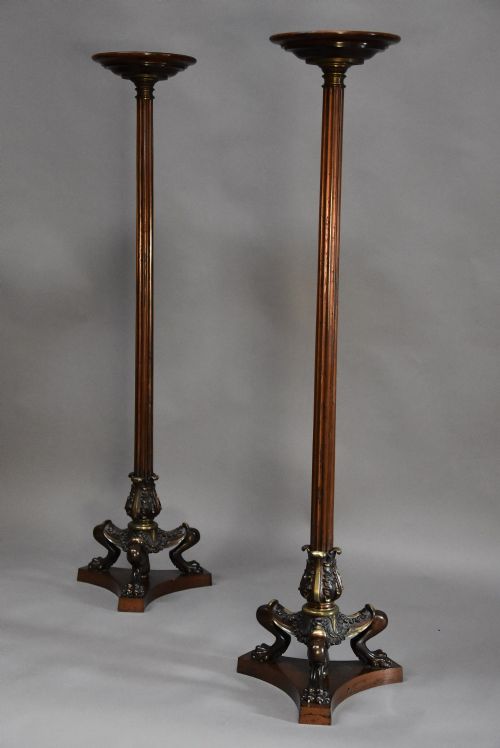


Classical Mahogany Plant Stands
Classical mahogany plant stands offer striking architectural height to a room, supporting urns and sculpture with timeless poise.
Classical Mahogany Plant Stands
Classical mahogany plant stands comprise tall pedestals, torcheres, and columns designed to elevate jardinieres and decorative objects within a room. You encounter forms ranging from simple architectural shafts to elaborately carved Victorian pillars and French neoclassical cabinets.
The selections span the Georgian, Victorian, and Edwardian eras, frequently exhibiting styles such as Regency, William IV, and Chippendale. These pieces function primarily as display surfaces, bringing vertical emphasis and structural rhythm to interior spaces.
Many examples emerge as matched pairs, incorporating materials beyond timber such as inset marble tops and bronze mounts. The core structure remains mahogany, often complemented by brass detailing, pine carcasses, and giltwood accents.
Materials and construction methods
Cabinetmakers utilised solid mahogany and timber veneers over secondary woods like pine, combining structural integrity with rich surface grain. Turning lathes shaped slender columns and hexagonal pillars, while skilled joinery secured plinths and capitals.
Metal components such as brass galleries, mounts, and bronze ornamentation integrated seamlessly with the wood. Statuary marble tops provided durable, cool surfaces specifically suited for supporting damp plant pots or heavy sculpture.
Carving and grain painting added textural variety, with artisan hands chiselling classical motifs directly into the hardwood. Surface finishes enhanced the natural warmth of the timber through traditional polishing techniques.
Object forms span torcheres, display pedestals, column supports, and bedside cabinets with classical lines.
Distinguishing quality in craftsmanship
Superior examples demonstrate refined proportions and meticulous joinery where columns meet their bases and capitals. The weight and selection of the mahogany timber dictate the visual depth and solidity of the piece.
The integration of secondary materials defines the upper tier of manufacture, notably heavy statuary marble insertions and finely chased bronze or brass mounts. Hand-carved decorative elements display crisp detailing rather than soft, mass-produced moulding.
The Classical Mahogany Plant Stands Glossary
- Torchere
- A tall, slender stand designed to support a lamp, vase, or plant. These pieces provide significant height without occupying much floor space.
- Pedestal
- A support or base for a statue, vase, or column. They anchor decorative objects and draw the eye upward in interior schemes.
- Jardiniere
- An ornamental pot or stand for plants and flowers. Often associated with architectural stands that manage moisture and weight.
- Neoclassical
- A style reviving classical Roman and Greek motifs such as columns, pilasters, and friezes. This aesthetic dominates the proportions of these stands.
- Portico
- An architectural framework resembling a porch structure, sometimes adapted into heavy furniture forms. It brings monumental classical geometry indoors.
Classical Mahogany Plant Stands: Frequently Asked Questions
How do I choose the right height?
Consider the scale of the room and the object you intend to display atop the stand. Taller torcheres suit corners and empty wall spaces, while lower pedestals work well beside seating.
Ensure the top platform matches the base dimensions of your planter or sculpture to maintain visual stability.
How do I care for the mahogany finish?
Dust regularly with a soft, dry cloth and avoid placing wooden stands in direct sunlight or near heat sources. Excessive temperature fluctuations can cause timber to split.
Use protective pads beneath plant pots to prevent moisture damage and water rings on the polished wooden surface.
Are these pieces stable on carpets?
Tall, slender pedestals require careful placement on thick carpets to ensure they do not wobble under heavy weights. Adjusting the position or placing them on firm flooring often provides better security.
Heavier Victorian and Edwardian examples generally offer greater inherent stability due to wider base plates.