



Classical Italian Landscape Artwork
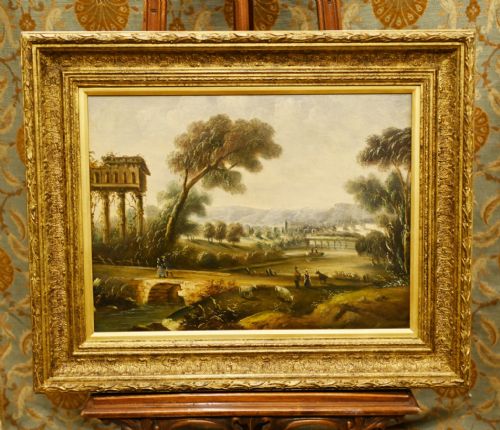
Classical italian landscape artwork brings home the sunlit ruins, ancient aqueducts and grand vistas recorded by travellers on the Grand Tour.
Classical Italian Landscape Artwork
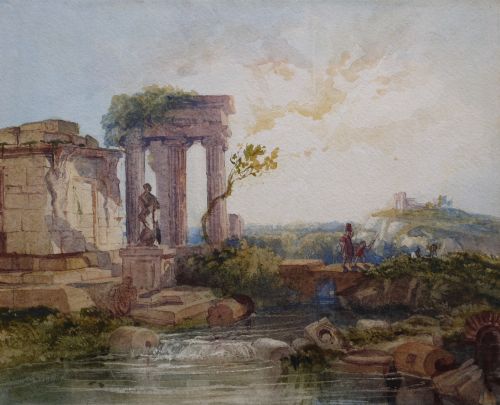
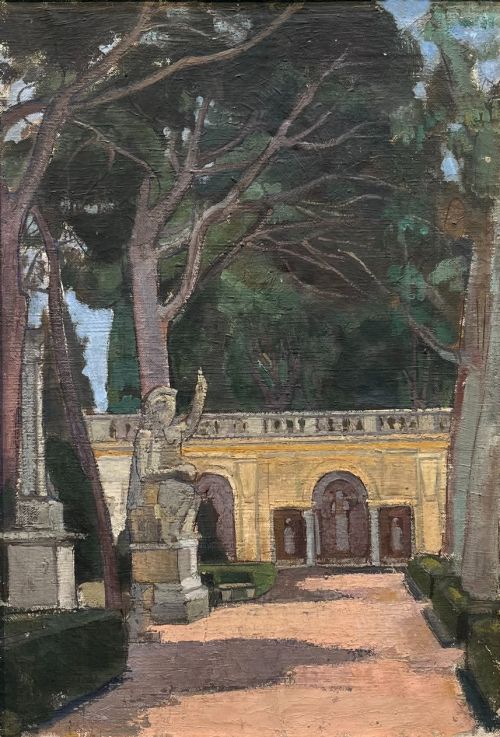
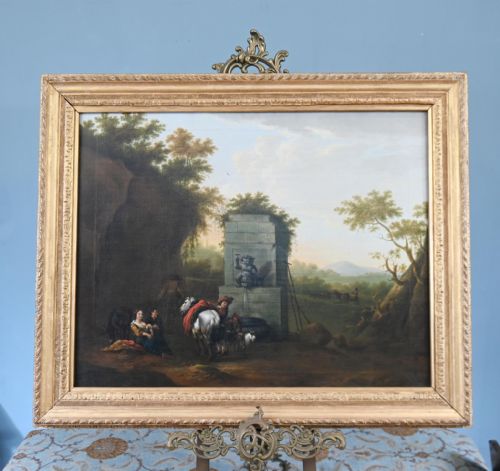
When you search for classical italian landscape artwork, you encounter oil paintings, watercolours and gouaches depicting pastoral views, ruined architecture and coastal scenes. These works capture the enduring appeal of the Roman Campagna, Venice and Tivoli as recorded by British and continental artists.
The pieces you meet most often on this page date from the seventeenth century through to the nineteenth century, including Grand Tour souvenirs and works by the Italian School. They range from intimate watercolours of ancient forums to large oil paintings of harbours and lakes.
Subjects frequently incorporate classical elements such as crumbling arches, distant villas and pastoral figures near vineyards. Works follow traditions established by painters like Claude Lorrain and Giovanni Paolo Panini, focusing on idealised compositions of nature and antiquity.
Materials and Techniques
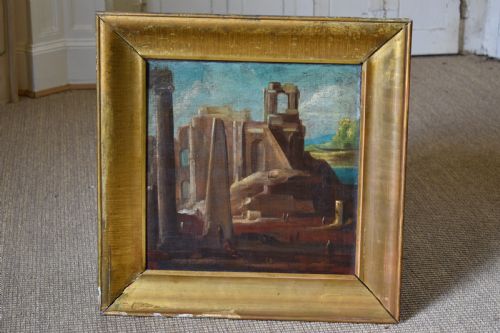
Artists recorded these Italian scenes using oil on canvas, watercolour and gouache on paper. Canvases are often housed within original gilded wood frames accented with gold leaf.
Watercolour paintings and gouaches capture the bright Mediterranean light on paper, frequently mounted behind glass to protect the delicate pigments. Oil paintings utilise layered brushwork to build atmospheric depth across pastoral and architectural vistas.
Listings feature works spanning the seventeenth to the twentieth century, executed in oil on canvas, watercolour and gouache.
Assessing Quality
Quality rests upon the handling of light, perspective and atmospheric depth within the composition. Stronger works demonstrate confident brushwork in oil or precise detail in watercolour, particularly when delineating architectural ruins and figures.
The presence of an original frame, period mounting or a documented attribution to a known circle or hand elevates a piece. Provenance linking an artwork to the nineteenth-century Grand Tour or earlier patronage also distinguishes finer examples.
Angelo Maria Crivelli·Franz Knebel·Francesco Zuccarelli·Karel Frans Philippeau·Jane Vivian·Giacomo Nani·Guido Agostini
The Classical Italian Landscape Artwork Glossary
- Grand Tour
- A traditional trip through Europe, particularly Italy, undertaken by upper-class European young men and travellers in the eighteenth and nineteenth centuries to study the arts and antiquity.
- Capriccio
- An architectural fantasy placing together buildings, archaeological ruins and other architectural elements in a fictional and pleasing combination.
- Campagna
- The countryside surrounding Rome, noted for its pastoral beauty, ancient aqueducts and picturesque ruins that inspired generations of landscape painters.
- Gouache
- An opaque watercolour medium consisting of natural pigment, water, a binding agent and sometimes additional inert material, used to achieve bright and solid colour on paper.
- Circle of
- A term used by art historians to describe a painting produced by an unidentified artist working during the same period and closely influenced by a specified master.
Classical Italian Landscape Artwork: Frequently Asked Questions
What is a Grand Tour watercolour?
A Grand Tour watercolour is a portable view of Italian monuments, ruins or scenery acquired by travellers in the eighteenth or nineteenth centuries.
These works served as personal records of travel and study across Italy, capturing sites like the Colosseum or the Roman Campagna.
How do I care for antique watercolours?
Antique watercolours on paper require protection from direct sunlight to prevent the fading of delicate pigments and washes.
Keep them away from damp environments and ensure they remain framed behind glass with acid-free mounts.
What is a capriccio painting?
A capriccio is an artwork depicting a landscape that combines classical ruins, architectural monuments and imaginary elements into a single composition.
Artists used this genre to create idealised and dramatic Italian scenes rather than topographically exact records.
How do I identify seventeenth-century works?
Seventeenth-century Italian landscape paintings often reflect the influence of Baroque traditions and classical pastoral compositions established by masters of the era.
Examination of the canvas weave, stretcher construction and preparation layers helps determine the age alongside stylistic characteristics.