
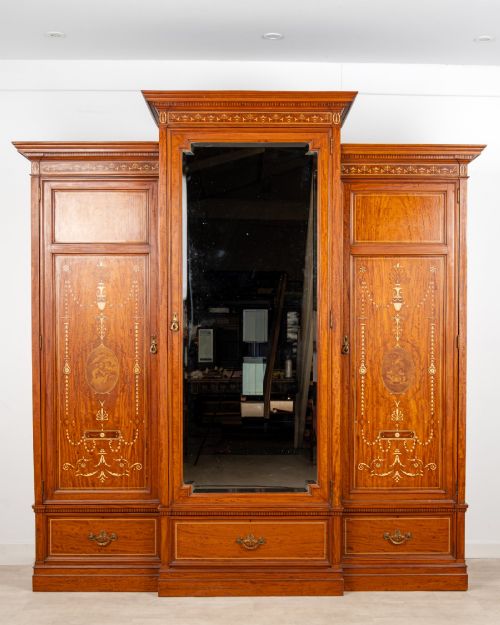

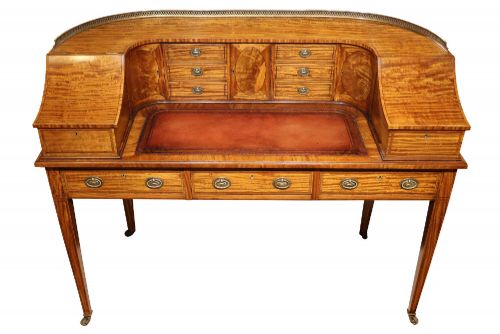
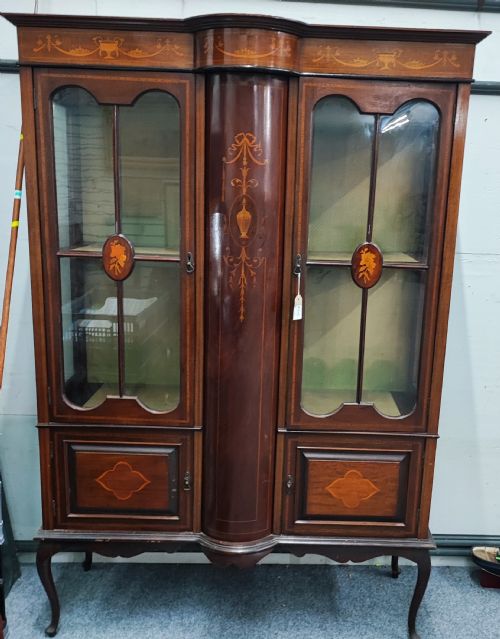


Classical Inlaid Furniture
Classical inlaid furniture brings together rich timbers and intricate marquetry from the Regency, Victorian, and Edwardian eras to anchor a room.
Classical Inlaid Furniture
Classical inlaid furniture encompasses a variety of storage and display pieces designed with traditional decorative motifs and figured woods. When exploring classical inlaid furniture, buyers encounter items ranging from Edwardian wardrobes and display cabinets to Victorian side cabinets and Dutch bureau desks.
The selections span several periods, with Edwardian satinwood pieces and nineteenth-century Sheraton Revival designs appearing frequently alongside Regency and Victorian examples. Formats include writing desks, music cabinets, occasional tables, and large armoires suited to period interiors.
How they were made
Cabinetmakers constructed these pieces primarily using solid timbers and veneers of mahogany, satinwood, rosewood, and walnut. Surfaces received intricate wood inlay and marquetry detailing to form contrasting patterns and pictorial scenes.
Many examples incorporate painted decoration alongside the inlay work. Brass hardware and glass panels complete the construction of cabinets, desks, and wardrobes.
Listings feature mahogany, satinwood, rosewood, walnut, and fruitwood inlay across pieces spanning the Regency to Edwardian periods.
What varies in quality
Quality rests upon the precision of the timber matching and the intricacy of the marquetry work embedded in the surface. Pieces featuring fine satinwood veneers and detailed painted elements alongside the inlay demonstrate superior craftsmanship.
The architectural proportions and structural integrity of larger items, such as triple wardrobes and display cabinets, dictate their standing. Finer examples maintain crisp lines in their marquetry and balanced proportions across doors, drawers, and pedestals.
Edwards and Roberts·Keeble London
The Classical Inlaid Furniture Glossary
- Marquetry
- Decorative patterns formed by fitting together small pieces of veneer into wooden panels. This technique creates pictorial or geometric designs across cabinet doors and tabletops.
- Satinwood
- A pale, lustrous timber native to India and Sri Lanka, highly prized for its grain and light colour. It serves as a primary ground wood for Sheraton Revival furniture.
- Sheraton Revival
- A late nineteenth-century design movement inspired by the neoclassical furniture of George Sheraton. These items utilise satinwood, delicate inlay, and painted motifs.
- Secretaire
- A piece of furniture incorporating a pull-down writing drawer that conceals small pigeonholes and compartments. It combines the storage capacity of a cabinet with a desk surface.
- Ormolu
- Gilded bronze mounts and decorative details applied to furniture. They accent the corners, legs, and panels of high-status pieces.
Classical Inlaid Furniture: Frequently Asked Questions
What is classical inlaid furniture?
Classical inlaid furniture comprises wooden cabinets, desks, tables, and wardrobes decorated with contrasting wood veneers and marquetry. These pieces date primarily from the nineteenth and early twentieth centuries.
They reflect historical revival styles such as Sheraton Revival, Regency, and Edwardian Neo-Classical designs.
Where were Dutch marquetry pieces made?
Dutch marquetry pieces originated in the Netherlands during the nineteenth century. They are characterised by dense, pictorial floral and bird inlay across bureau and cabinet surfaces.
These items utilise darker timbers like walnut and mahogany as a base for the detailed floral work.
How should I care for satinwood furniture?
Keep satinwood and inlaid surfaces away from direct sunlight to prevent the light timber and painted details from fading. Dust the wood regularly with a dry cloth and avoid harsh chemical polishes.
Maintain stable humidity levels in the room to protect the delicate veneer and inlay work from lifting.