



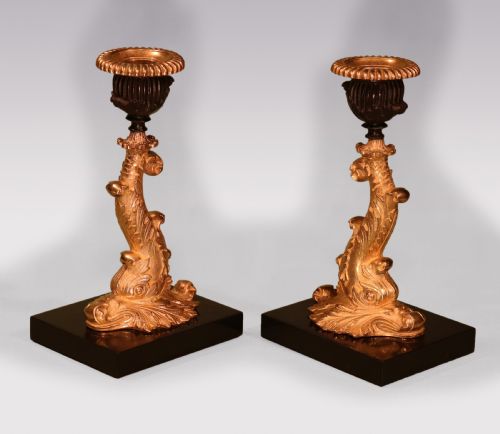

Classical Gilt Candleholders
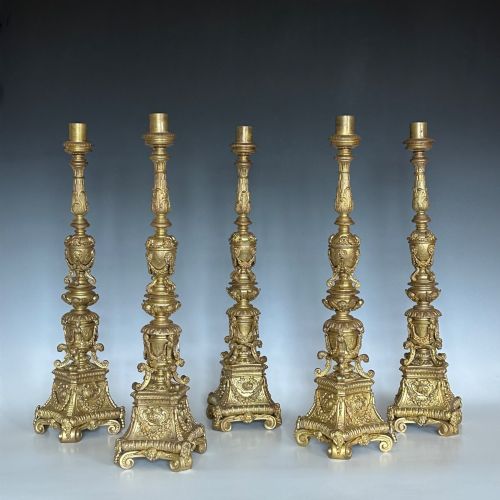
Classical gilt candleholders bring warmth and refined Neoclassical elegance to a room, offering striking lighting fixtures built to last centuries.
Classical Gilt Candleholders
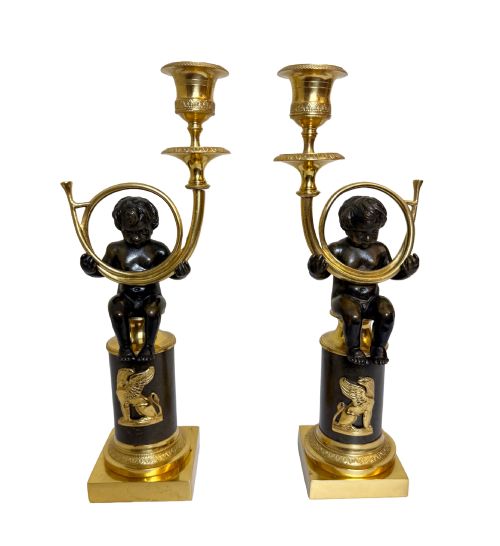
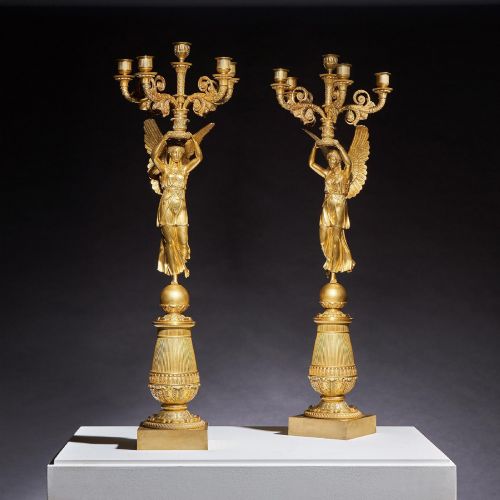
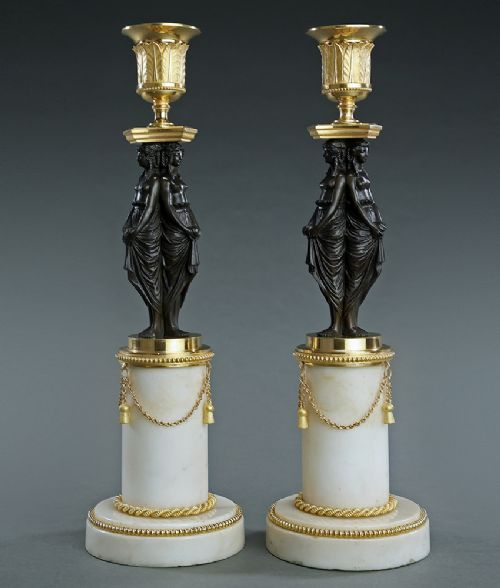
The objects frequently combine gilt bronze, ormolu, patinated bronze, and marble bases. Common figurative motifs include cherubs, caryatids, dolphins, and maidens derived from Grand Tour travels and classical mythology.
Materials and construction
The creation of these lighting pieces relies on bronze casting, mercury gilding or ormolu application, and stone cutting. Artisans combined patinated dark bronze with bright gilded highlights to create sharp textural contrast.
Marble and porphyry components provide sturdy foundations for the metalwork, often turned and polished by hand. Individual elements screw or peg together, hiding structural joints beneath decorative mounts.
Listings feature 19th Century, 1860, 1890, 1880, 18th Century, 1800, Regency, and 1920 periods.
Distinctions in craftsmanship
Quality separates objects by the crispness of the bronze chasing and the depth of the gilding. Superior examples display sharply defined facial expressions on figures like cherubs and caryatids, alongside smooth, even gilding across intricate scrollwork.
The weight of the metal and the selection of fine marbles indicate workshop standards. Pieces bearing signatures or attributed to prominent makers generally exhibit superior finishing on unseen underside surfaces.
Pierre Philippe Thomire·Rabiat
The Classical Gilt Candleholders Glossary
- Ormolu
- Gilt bronze produced by applying a mercury and gold amalgam to a bronze base and heating it. This technique creates a durable, warm golden surface found on finer nineteenth-century pieces.
- Patinated bronze
- Darkened metal surface treatment contrasting with bright gilt highlights. Makers used chemical patination to give bronze figures a rich, aged brown or black tone.
- Caryatid
- A sculpted female figure serving as an architectural support. These classical forms frequently function as the main stem of a candlestick.
- Grand Tour
- Eighteenth and nineteenth-century travels undertaken by wealthy Europeans to study classical antiquities. Souvenirs from these journeys often included small bronze and marble lighting fixtures.
- Porphyry
- A hard igneous rock with crystal inclusions used for decorative bases. Its deep purple-red colour added richness to French and English Neoclassical designs.
Classical Gilt Candleholders: Frequently Asked Questions
How do I care for gilt bronze and ormolu?
Gilt bronze requires gentle dusting with a soft, dry brush to prevent the accumulation of dirt in recessed areas. Avoid using commercial metal polishes, as abrasive compounds strip away the thin layer of gold.
Where were these pieces originally displayed?
These decorative objects sat upon mantelpieces, console tables, and sideboards in formal drawing rooms and parlours. Their reflective gilded surfaces multiplied the flickering light of candles during evening gatherings.
They formed part of coordinated interior schemes influenced by French Neoclassical and Victorian design trends.
How can I tell a nineteenth-century piece from an eighteenth-century one?
Eighteenth-century examples often display hand-chased surface details that show slight irregularities from individual artisan tooling. Nineteenth-century revival pieces, particularly those from the Victorian era, frequently utilise heavier brass bases alongside ormolu.
Examining the construction joints and casting methods helps determine the precise period of manufacture.