
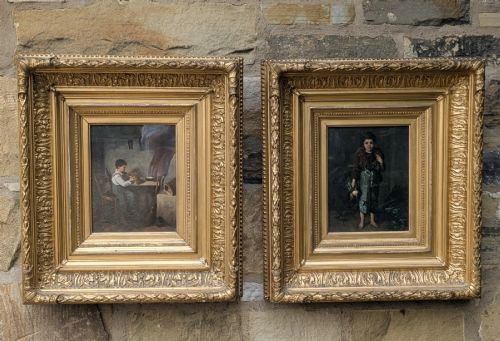
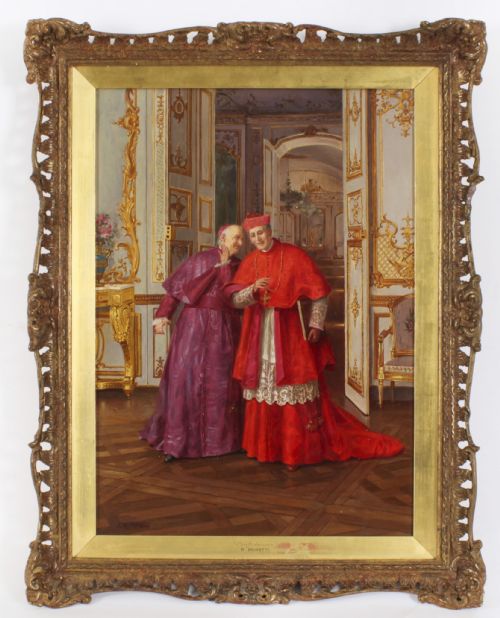
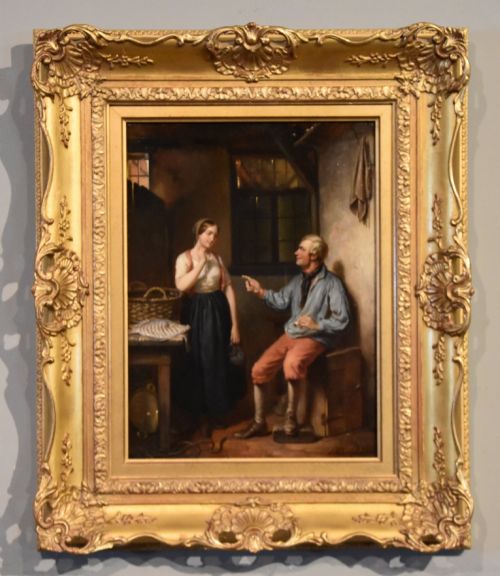
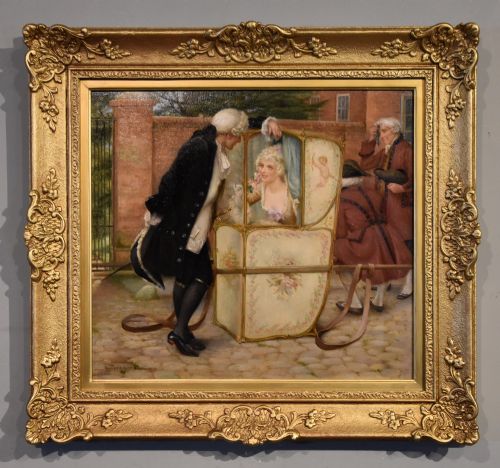






Classical Genre Scene Canvas
A classical genre scene canvas captures narrative moments from domestic or historical life, offering timeless character for traditional interiors.
Classical Genre Scene Canvas
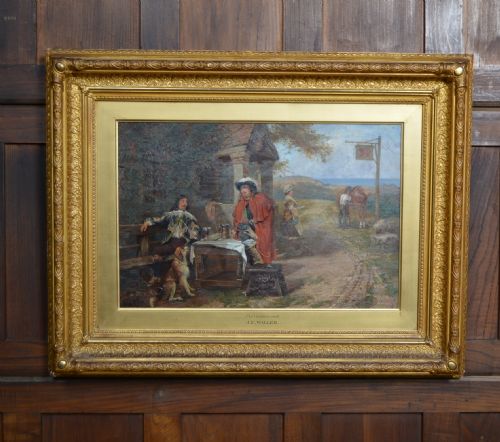
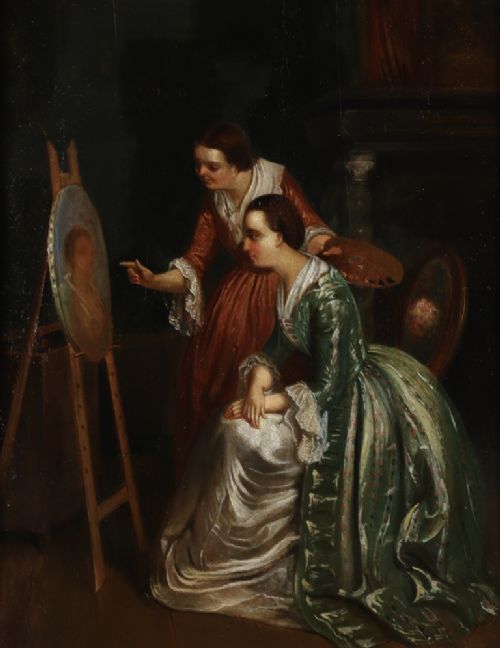
A classical genre scene canvas depicts figures in domestic, historical, or narrative settings, drawing on styles such as Victorian, French Academic, and Rococo Revival. These works range from intimate interior portraits of musicians and readers to large-scale historical compositions set in stately homes.
The selections span various periods including the nineteenth century alongside pieces dated specifically to 1830, 1850, 1870, 1880, 1900, 1910, 1920, and 1950. Buyers frequently encounter oil on canvas mediums framed in wood, giltwood, or gesso.
Subjects often reference Dutch Golden Age styles or the manner of earlier masters, depicting courtiers, peasants, and cavaliers in narrative moments. Each canvas presents a window into historical domesticity and theatrical storytelling.
Materials and construction
These works utilise oil paint applied to woven canvas substrates, allowing for rich layering and subtle tonal variation. Artists built depth through successive applications of pigment, creating detailed textures in clothing, furnishings, and architectural interiors.
Surviving canvases are typically housed within traditional frames fashioned from wood, embellished with carved giltwood or moulded gesso ornament. These heavy surrounds protect the perimeters of the fabric while completing the visual presentation of the academic compositions.
Several canvases capture elaborate afternoon tea rituals, proving that courtiers have debated gossip over porcelain for centuries.
Distinguishing quality in figurative oils
Quality separates through the handling of human anatomy, facial expression, and the play of light across interiors. Superior examples demonstrate precise draughtsmanship and atmospheric depth, whereas lesser works rely on rigid postures and repetitive compositional formulas.
The integration of the frame relative to the canvas also indicates standard, with period giltwood and gesso mouldings matching the origin and era of the painted scene. Well-preserved surfaces retain their original pigment vibrancy without heavy, obscuring overpaint.
Renato Moretti·Jacob Akkersdijk·Delapoer Downing·Joaquín Luque y Roselló·Paul Viry·Willem Johannes Martens·J E Waller·Jules Girardet·Robert Alexander Hillingford·Pierre-Louis Bouchard
The Classical Genre Scene Canvas Glossary
- Canvas
- A heavy woven fabric stretched across a wooden frame to serve as a support for oil paint. It provides a durable ground that responds well to traditional layering techniques.
- Giltwood
- Wood that has been coated with a thin layer of gold leaf or metallic powder. It is frequently found on the ornate frames enclosing nineteenth-century academic paintings.
- Gesso
- A paint mixture consisting of a neutral binder mixed with chalk, gypsum, or pigment. It was applied to wooden frames to create a smooth surface for subsequent gilding.
- Academic Realism
- A style of painting produced under the influence of European academies of art. It emphasises precise anatomical accuracy, polished brushwork, and historical or narrative subject matter.
- Genre Painting
- The pictorial representation of scenes from everyday life. These works typically depict ordinary people engaged in common activities, domestic interiors, or historical anecdotes.
Classical Genre Scene Canvas: Frequently Asked Questions
What is a classical genre scene canvas?
A classical genre scene canvas is an oil painting depicting figures in everyday, historical, or narrative settings. These artworks often portray domestic interiors, musicians, readers, or courtiers.
The category encompasses works painted during the nineteenth and twentieth centuries, reflecting academic and revivalist styles. They offer a direct link to historical painting traditions.
How should I hang an oil painting?
Oil paintings on canvas require stable wall environments away from direct sunlight and dramatic temperature fluctuations. Proper picture hooks secured into wall studs support the combined weight of the canvas and its wooden frame.
Positioning the work at average eye level ensures optimal viewing of the painted details and narrative interactions. Adequate wall clearance also permits air circulation around the wooden stretcher bars.
How do I identify the period of a painting?
Period identification relies on examining the stretcher construction, canvas preparation, framing materials, and stylistic signatures. Nineteenth-century academic works frequently display specific brushwork techniques and narrative conventions tied to European art schools.
Signatures, artist documentation, and historical attire depicted within the scene offer further clues for dating. Comparing the style to known works by recorded painters helps narrow the era of execution.
What subjects are common in these scenes?
Common subjects include domestic interiors, romantic interludes, historical anecdotes, and musical gatherings. Figures such as courtiers, cavaliers, peasants, and readers appear frequently in staged narrative moments.
Many compositions draw inspiration from seventeenth-century Dutch painting traditions or French academic standards. These theatrical vignettes capture everyday interactions set within stately homes or modest dwellings.