
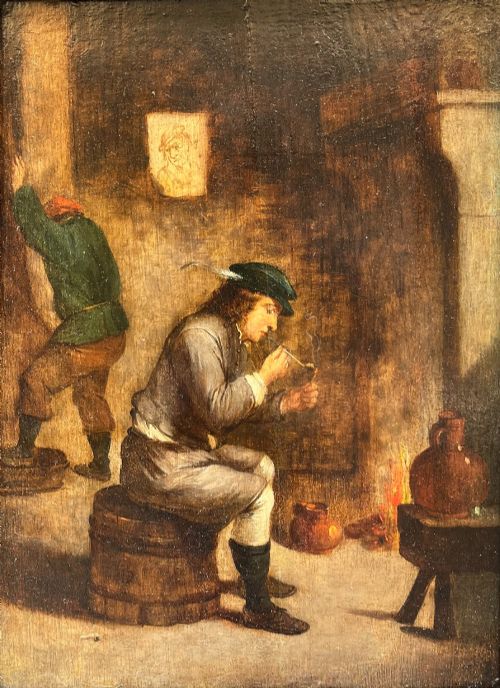

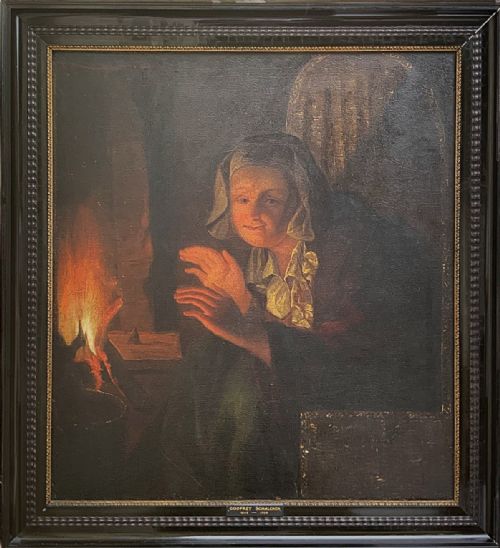


Dutch Master Genre Painting
Dutch master genre painting depicts domestic life and tavern scenes, offering buyers a window into historic European daily existence through rich oil on canvas and panel works.
Dutch Master Genre Painting
When you search for dutch master genre painting, you encounter works spanning the seventeenth century up to the nineteenth century, encompassing original pieces, period copies, and later interpretations in the Dutch Golden Age style.
The subjects on this page focus on everyday human activity, including tavern interiors, smokers on barrels, musicians, spinners, and hearthside scenes.
Originating from traditions associated with artists such as David Teniers, Godfried Schalcken, Jan Cossiers, and Quirijn van Brekelenkamp, these fine art paintings range from seventeenth-century productions to nineteenth-century academic and golden age style revivals.
Assessing quality
Quality in these works rests upon the precision of brushwork, the depth of characterisation in portraiture, and the structural integrity of the support, whether canvas or timber panel.
Pieces executed in the manner of established masters vary according to the fidelity of the composition and the handling of light, shadow, and texture within the genre scene.
Listings feature works executed on canvas, wood panels, oak panels, and copper plates across the seventeenth, eighteenth, and nineteenth centuries.
David Teniers·Godfried Schalcken·Jan Cossiers·Quirijn Van Brekelenkamp·Willem Johannes Martens·Reinier de la Haye·Jan Steen·Bartholomeus Van der Helst
The Dutch Master Genre Painting Glossary
- Genre painting
- Depiction of aspects of everyday life by subjects from ordinary life, typically concurrent with domestic settings or taverns. This style forms the core of the listed artworks.
- Oil paint
- A type of slow-drying paint consisting of pigment particles suspended in a drying oil. It allows for rich blending and depth in historical paintings.
- Giltwood
- Wood that has been treated with gold leaf or gold paint. Frames of this material frequently accompany seventeenth-century and nineteenth-century portraits.
- Panel painting
- A painting made on a flat panel of wood, such as oak. This rigid support is characteristic of earlier European works.
- Manner of
- A term indicating that a work is executed in the style of a specific artist without being an original production by their hand.
Dutch Master Genre Painting: Frequently Asked Questions
What is a genre painting?
A genre painting represents scenes from everyday life, such as tavern gatherings, musicians, and domestic interiors, rather than religious or mythological subjects.
These works capture the ordinary habits and social interactions of historical populations through detailed oil paint execution.
How do I care for an oil painting on wood panel?
Keep the artwork away from direct sunlight and rapid fluctuations in temperature and humidity, which can cause wood panels to warp or crack.
Dust the surface gently with a dry, soft brush and avoid using any liquid cleaners on the paint or giltwood frame.
What does manner of David Teniers mean?
The phrase indicates that the painting was created in the distinct artistic style and tradition of David Teniers, though not by the artist himself.
Such works often date from later periods, including the nineteenth century, while reproducing seventeenth-century thematic elements.
Why are some paintings on copper?
Copper plates provided a smooth, stable surface that allowed artists to achieve exceptional detail and luminous colour retention over centuries.
This material was utilised by European painters seeking a durable alternative to canvas or wood for small-scale genre scenes.