



Classical Garden Urn Pedestal
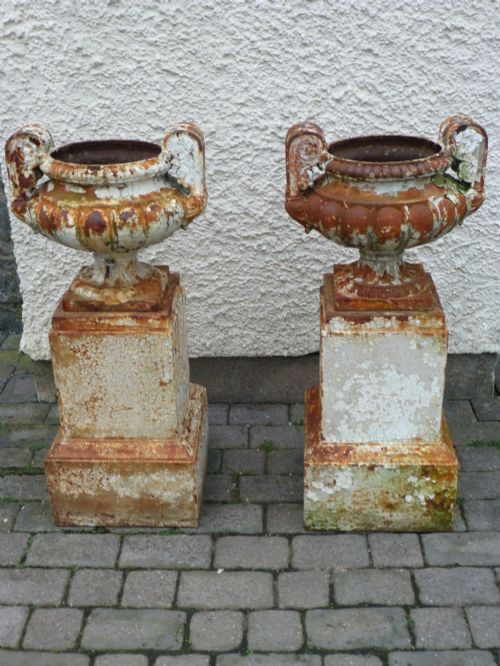
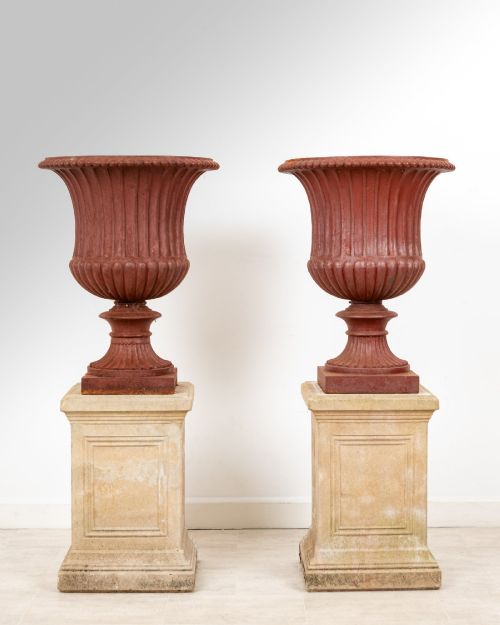
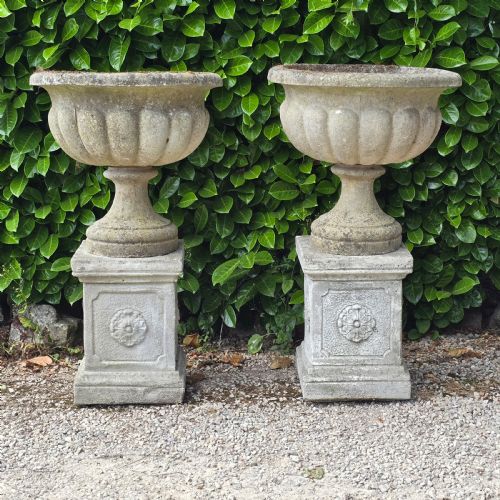
These heavy classical garden urn pedestals combine classical form with robust construction, offering an architectural focal point for formal terraces and lawns.
Classical Garden Urn Pedestal
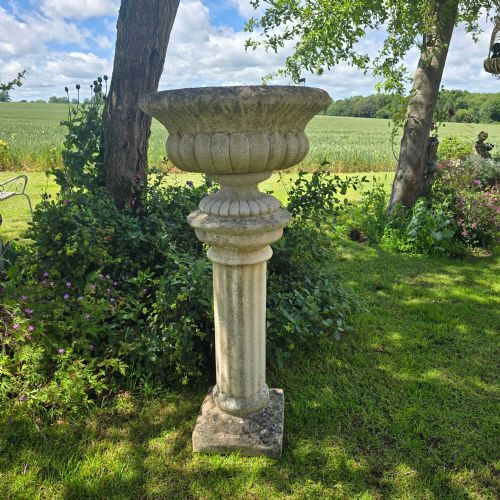
A classical garden urn pedestal brings together a commanding vessel and a matching plinth or column to elevate planting schemes. When you search for a classical garden urn pedestal, you find substantial garden ornaments designed to anchor formal outdoor spaces.
The pieces appearing here span the nineteenth century into the mid-twentieth century, drawing on Georgian, Regency, and Victorian design vocabularies. Most examples pair a cast iron or terracotta campana urn with a solid stone or iron base, though carved stone and limestone variants also occur.
Makers such as Falkirk Carron, Coalbrookdale, Andrew Handyside, and Lipscombe & Co contributed foundry work and terracotta production to this tradition. These vessels function equally as standalone architectural antiques or as functional planters and jardiniere stands.
Materials and construction methods
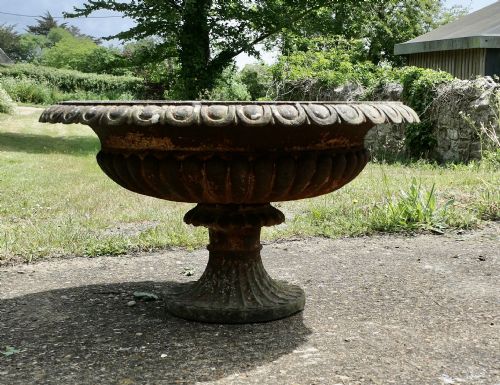
Foundries utilised cast iron for durable campana urns, pouring molten metal into detailed moulds to achieve crisp acanthus leaf motifs, gadrooning, and classical profiles. This metalwork was often finished with protective paint layers that have since weathered outdoors.
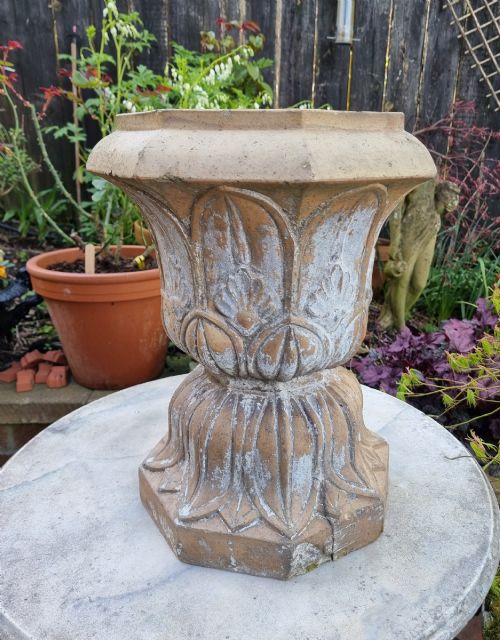
Terracotta and glazed clay were shaped and fired in kilns to produce porous garden vessels and wine cisterns. Stone versions, including limestone, marble, and reconstituted cast stone, were shaped through manual carving or casting techniques to form sturdy pedestals and plinths.
Some nineteenth-century terracotta vessels doubled as wine cisterns before retiring to the shrubbery.
Distinctions in quality
The refinement of the casting and carving dictates the visual strength of the piece, separating standard utility vessels from finely ornamented foundry work. Crisp definition in foliage details, classical friezes, and gadrooning indicates superior craftsmanship.
The integrity of the material pairing matters significantly, particularly where original iron urns rest upon matching stone or iron plinths. Surface patina from decades of weathering adds character, provided the underlying structural material remains sound and uncompromised.
Falkirk Carron foundry·Coalbrookdale·Andrew Handyside·Lipscombe and Co
The Classical Garden Urn Pedestal Glossary
- Campana urn
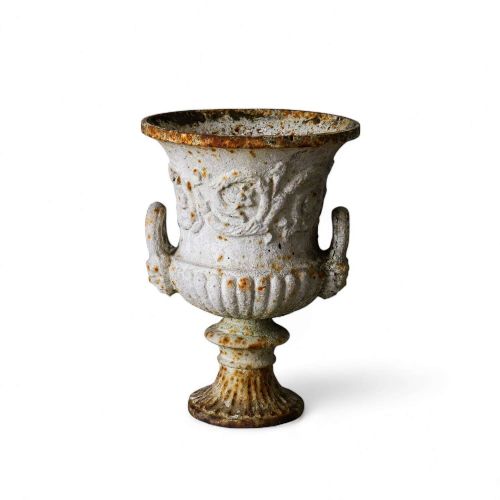
- A bell-shaped garden vessel with an everted rim and a footed base. This form originates from classical antiquity and remains standard for nineteenth-century garden ornaments.
- Gadrooning
- A decorative carved or moulded band of parallel convex curves. It frequently encircles the lower body of classical urns.
- Plinth
- A heavy rectangular or square block supporting an urn or column. It elevates the vessel to improve sightlines in a garden setting.
- Jardiniere
- An ornamental pot or stand designed to hold growing plants. These often share the robust proportions of garden urns.
- Tazza
- A shallow cup or basin on a pedestal. These Italian marble variants provide a flatter profile for display.
Classical Garden Urn Pedestal: Frequently Asked Questions
What is a classical garden urn pedestal?
A classical garden urn pedestal combines an ornamental vessel, often shaped like a campana or tazza, with a matching architectural plinth or column.
These paired items elevate plants and serve as permanent focal points in formal gardens, terraces, and courtyards.
How were nineteenth-century iron urns made?
Foundries cast molten iron into complex sand or metal moulds to achieve crisp classical details such as acanthus leaves and gadrooning.
These heavy iron castings were frequently paired with stone plinths or complementary iron columns.
Are terracotta urns frost resistant?
Nineteenth-century terracotta and glazed clay vessels were fired in kilns to achieve durability, though porosity varies between pieces.
Many period examples have survived decades outdoors, acquiring a weathered patina from exposure to the elements.
How do I place a pedestal in the garden?
These heavy architectural pieces require a level, stable foundation such as stone paving, reinforced gravel, or formal lawns to support their considerable weight.
Position them at the end of gravel paths, as focal points on terraces, or flanking formal entranceways.