


Antique Iron Urn Planter
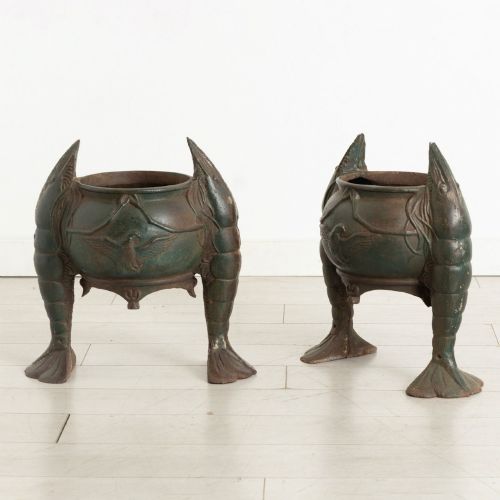
These antique iron urn planters bring classical grandeur to terraces and gardens through robust metal forms.
Antique Iron Urn Planter
When you search for an antique iron urn planter, you encounter robust garden vessels designed to hold plants and ornament outdoor spaces. The selection on this page centres heavily on nineteenth-century pieces, including Victorian examples and French variants.
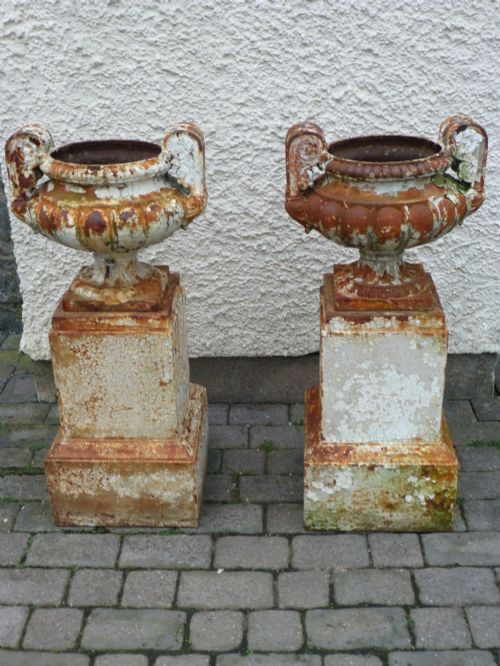
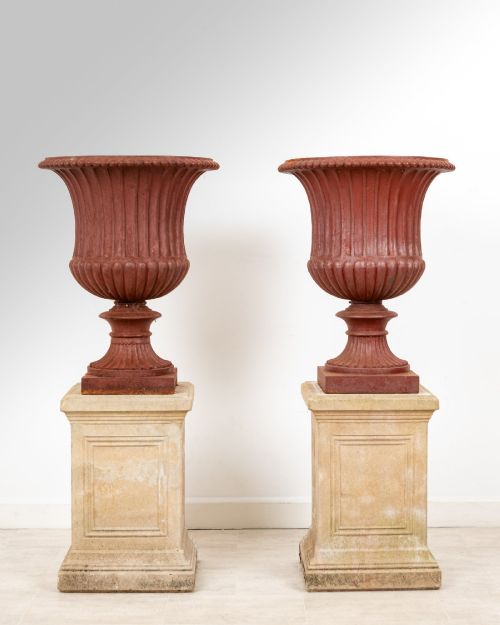
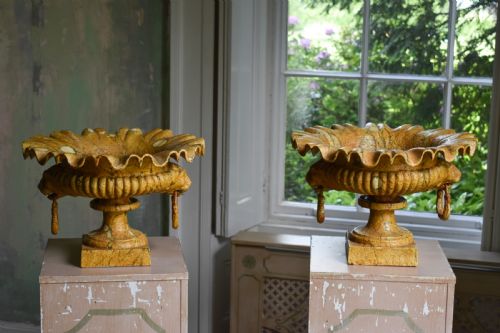
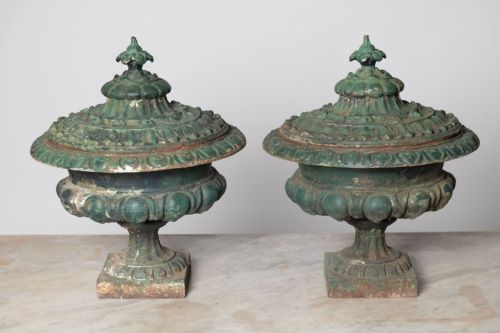
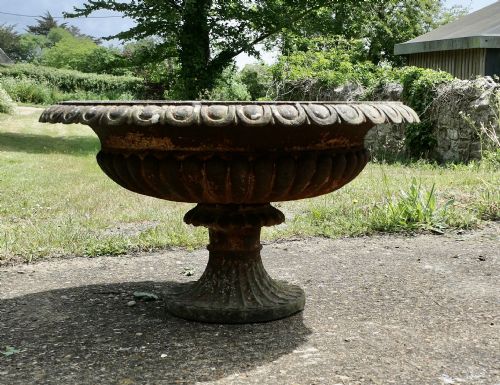
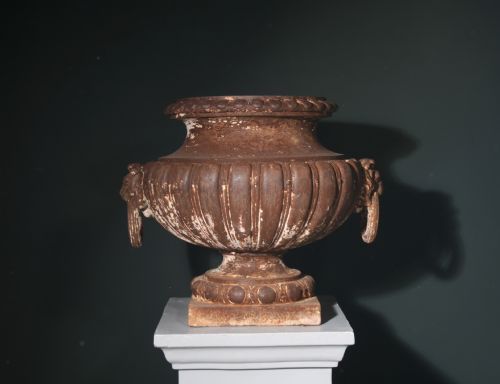
Most items take the form of classical campana shapes, tazzas, or jardinieres cast in heavy metal. These vessels often sit upon matching plinths or stone pedestals, bringing architectural presence to garden layouts.
Materials and foundry techniques
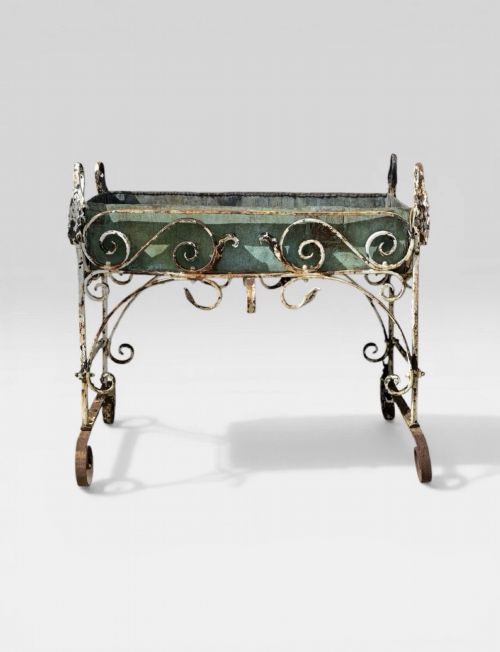
Foundries utilised durable cast iron poured into moulds to create deep relief decoration, acanthus leaves, and fluted bodies. Certain pieces also incorporate wrought iron components or sit alongside stone and terracotta elements.
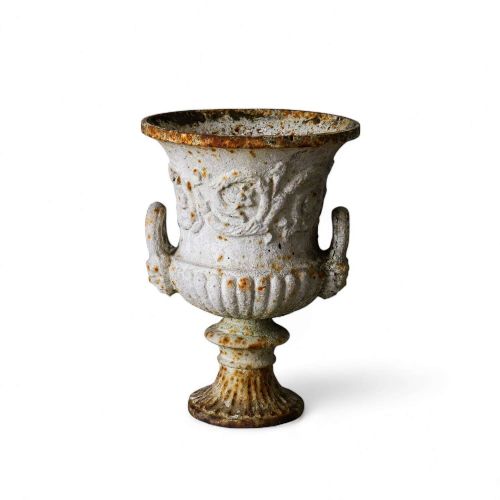
Many survivors retain layers of original paint or show weathered patination built up over decades of outdoor exposure. Foundries such as Coalbrookdale and Falkirk Carron produced significant numbers of these robust garden ornaments.
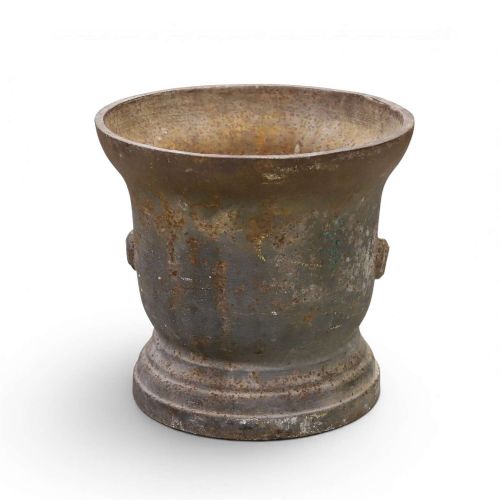
Materials extend beyond cast iron to include wrought iron, zinc, sheet iron, stone, and terracotta.
Assessing quality in cast iron planters
Quality rests in the crispness of the cast ornamentation and the weight of the metal. Superior examples exhibit sharply rendered classical details like acanthus leaves and fluting rather than softened, worn edges from tired moulds.
Integrity of the original form matters significantly, particularly when pieces retain matching plinths, lids, or stands. The balance of proportions and the stability of the heavy metal structure separate ordinary items from exceptional foundry work.
Falkirk Carron foundry·Coalbrookdale·Andrew Handyside·Val D Osne Foundry
The Antique Iron Urn Planter Glossary
- Campana urn
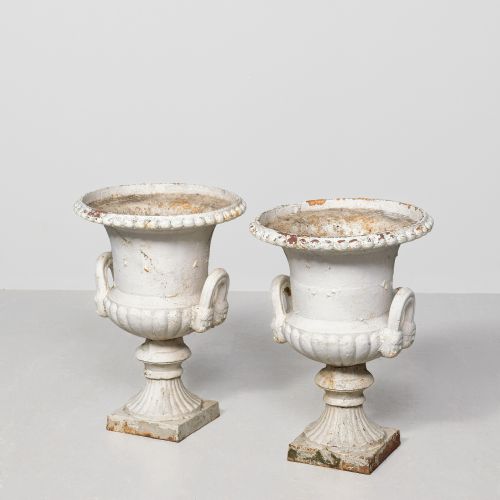
- A bell-shaped garden vessel with an everted rim that rises from a slender stem and foot. This classical silhouette dominates nineteenth-century garden ornament.
- Tazza
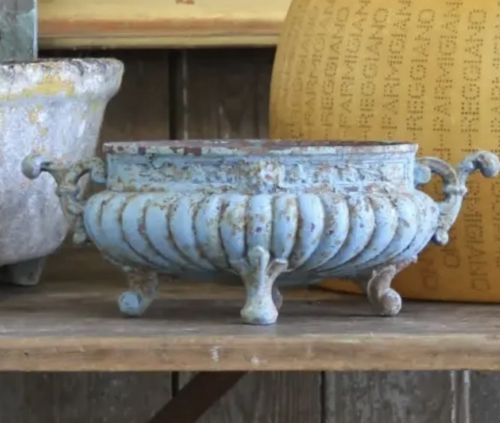
- A shallow bowl or cup resting on a pedestal base. These wide vessels function effectively as low planters.
- Jardiniere
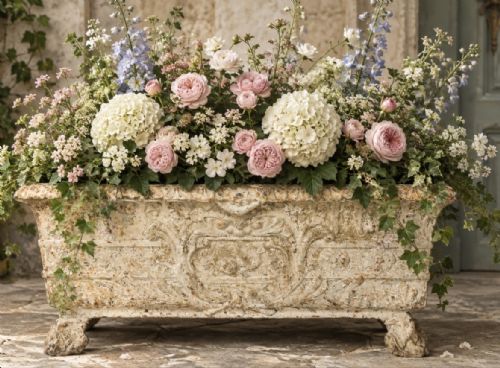
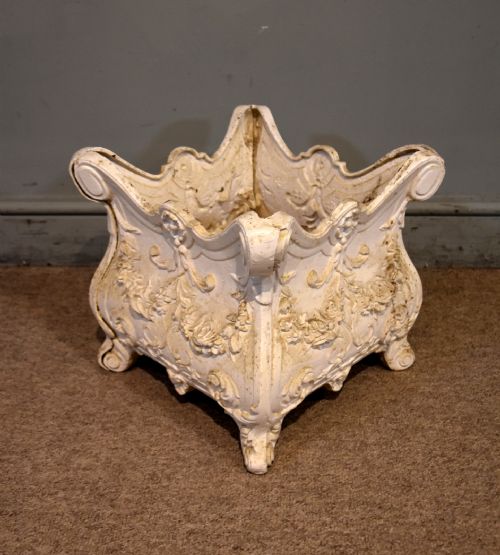
- An ornamental pot or stand designed to hold growing plants. French makers applied this term to both indoor and outdoor receptacles.
- Plinth
- A heavy rectangular or square base block supporting an urn. Many antique planters rely on these structural supports for height.
- Acanthus leaf
- A classical carved or cast leaf motif derived from Mediterranean flora. Foundries frequently used this pattern to decorate the bowls of urns.
Antique Iron Urn Planter: Frequently Asked Questions
Can antique iron urn planters stay outside all winter?
Cast iron stands up well to outdoor climates, though water freezing inside a planted vessel can place stress on the metal. Good drainage helps protect the integrity of the piece.
Positioning the urn on stone pedestals or feet prevents moisture retention at the base during prolonged wet weather.
How do I identify a Victorian iron urn?
Victorian examples often display heavy cast construction with classical motifs like acanthus leaves, fluting, or Campana profiles. These pieces frequently show weathered paint layers from nineteenth-century use.
Looking closely at the weight, wall thickness, and casting seams helps distinguish nineteenth-century foundry work from later reproductions.
Are original pedestals important for these urns?
Matching plinths and pedestals complete the architectural composition intended by the original foundry. Finding an urn with its original base adds considerably to its character.
Many pieces survived separated from their stands, meaning urns and pedestals are frequently paired together later in their history.
How should I clean a weathered iron planter?
Gentle brushing removes loose dirt and organic debris without disturbing stable patination or historic paint layers. Aggressive scraping harms the protective oxide skin.
Preserving the weathered surface maintains the visual history that collectors value on nineteenth-century garden metalwork.