




Traditional Outdoor Garden Urn
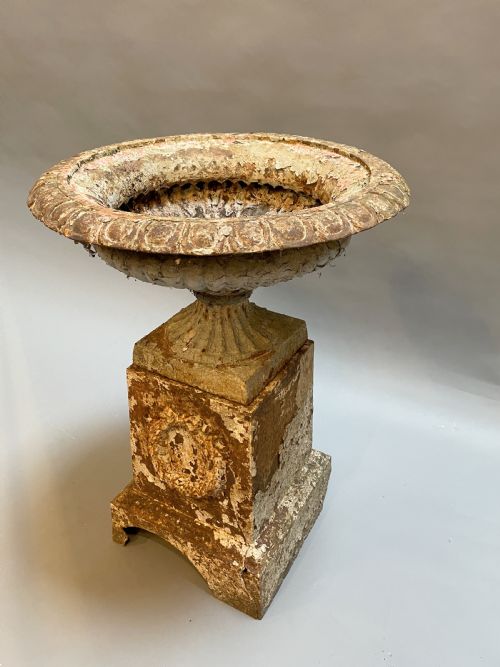
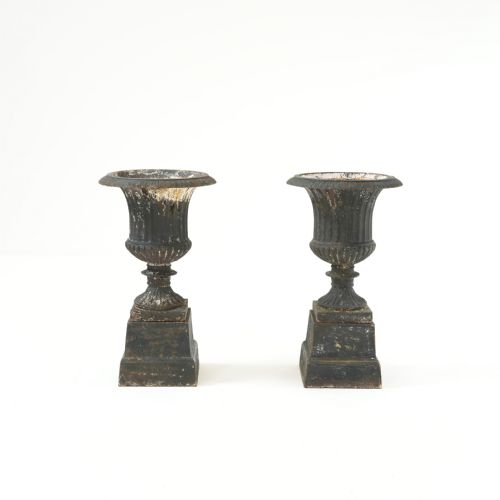
These traditional outdoor garden urns bring classic lines and weathered permanence to lawns and terraces, offering generous spaces for planting.
Traditional Outdoor Garden Urn
Traditional outdoor garden urns take the form of classical vessels designed to sit permanently on lawns, terraces, and plinths. The pieces listed under this phrase span periods from the Victorian era and the nineteenth century through to the mid-twentieth century.
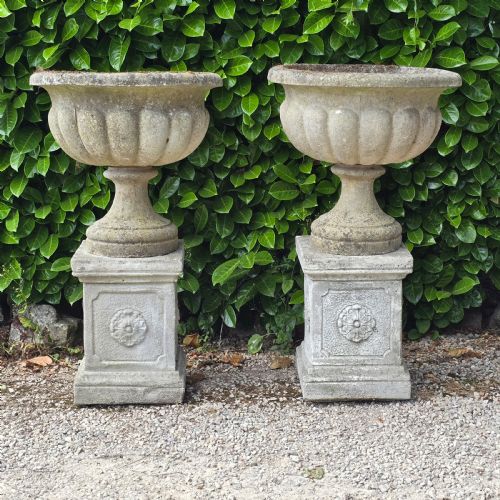
Campana shapes dominate the selection alongside taller oil jars and round planters. Buyers encounter paired sets resting on dedicated plinths as well as single monumental pieces cast from heavy metals or formed from fired clay.
How traditional outdoor garden urns were made
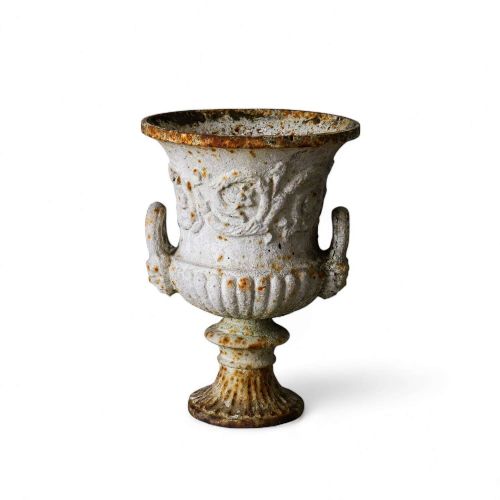
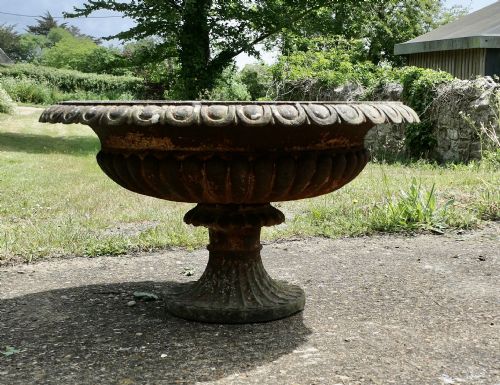
Foundries shaped the metal pieces using cast iron and bronze poured into moulds to capture crisp neoclassical details and fluted bowl profiles. Makers also worked with terracotta, earthenware, stone, and reconstituted stone, firing clay or setting aggregates to achieve robust vessels suited to exterior conditions.
Surfaces received protective coats of paint or developed natural patination over decades of exposure to weather. Workshops finished certain forms with gadrooned borders and classical relief ornament cast directly into the body.
What varies in quality in traditional outdoor garden urns
The crispness of the cast ornamentation defines the superior examples, where mould details remain sharp and well-defined across the handles and rims. Heavier metal casting and thick-walled terracotta signal greater substance and durability in a garden setting.
Proportion and the integration of matching plinths elevate certain pieces above standard utility planters. The balance between the bowl and the base governs the visual weight of the vessel when positioned in open grounds.
Andrew Handyside
The Traditional Outdoor Garden Urn Glossary
- Campana urn
- A bell-shaped garden vessel with an everted rim and a footed base, often styled on classical antiquities. These forms appear frequently in cast iron and terracotta.
- Gadrooned
- Decorated with a series of convex curves or flutes moulded in a parallel pattern around the body or base of the vessel. This ornamental detail frequently encircles the lower bowl of classical garden urns.
- Plinth
- A heavy architectural base or pedestal that elevates a garden urn above ground level. Many nineteenth-century examples are mounted directly onto these matching supports.
- Terracotta
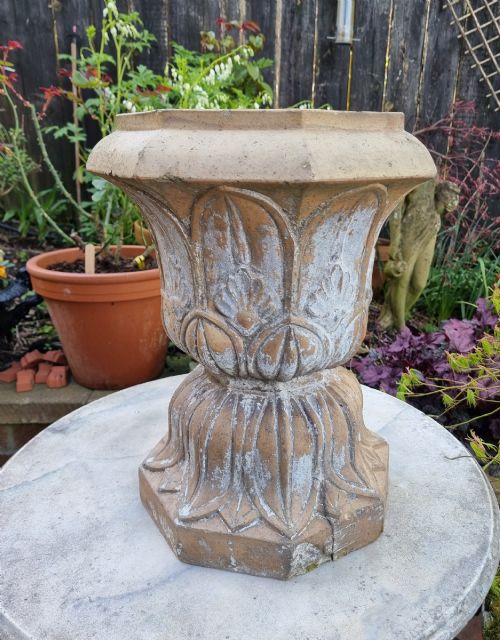
- A porous, unglazed fired red clay used for garden vessels and oil jars. This material develops characteristic weathering and surface lichen over time.
- Usubata
- A traditional Japanese bronze vessel type designed for floral arrangement and garden display. These pieces introduce distinct patination and form to the wider category.
Traditional Outdoor Garden Urn: Frequently Asked Questions
Can I leave cast iron urns outside all winter?
Cast iron handles exterior conditions reliably when placed securely on stable ground or plinths. The substantial weight of these metal vessels prevents movement during high winds.
Gardeners ensure proper drainage through the base to prevent trapped water from expanding during freezing temperatures.
How do I secure tall urns on plinths?
Heavy urns typically rely on their own mass and gravity when seated correctly upon matching stone or iron plinths. Positioning them on level paved surfaces or compacted ground ensures stability.
For taller pieces in exposed garden locations, appropriate anchoring methods prevent accidental tipping by strong gales.
Do terracotta urns crack in the frost?
Terracotta and earthenware absorb moisture, which makes them sensitive to severe frost cycles when left saturated. Gardeners often line these vessels or move them under shelter during freezing winter months.
Selecting high-fired nineteenth-century clay pieces helps mitigate weather damage over extended periods of outdoor use.
How do I distinguish Victorian urns from later pieces?
Victorian and nineteenth-century examples display deeper casting definition and heavier metal sections than mid-century alternatives. Founders during this period utilised distinct mould patterns and decorative motifs like classical scrollwork.
Examining the underside, bolt fixings, and surface patination reveals clues regarding the age and manufacturing origin of the iron.