
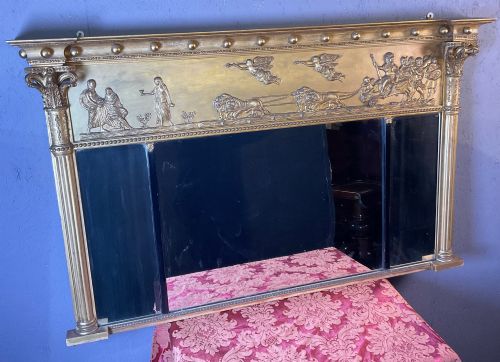

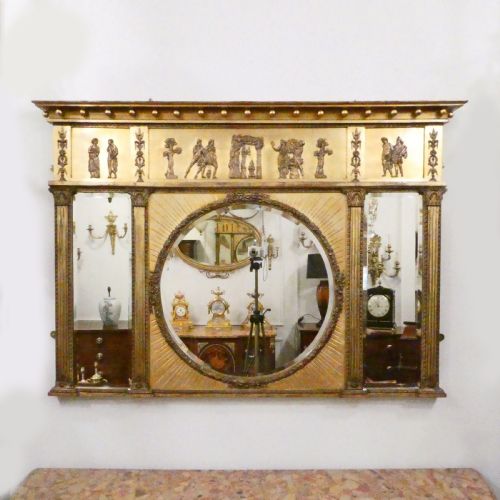


Classical Frieze Gilt Mirror
A classical frieze gilt mirror brings architectural proportion and radiant reflection to a room, offering the refined design collectors seek in nineteenth-century furnishings.
Classical Frieze Gilt Mirror
A classical frieze gilt mirror represents a distinctive form of wall furnishing, encompassing grand overmantel mirrors and more compact pier glasses designed for placement between windows. These pieces emerge primarily from the nineteenth century, including the Regency, Victorian, and Georgian styles recorded in current listings.
The most common formats found on this page are substantial overmantel mirrors, frequently featuring triple plates or triptych configurations. Alongside these wide architectural examples, narrower pier mirrors appear, often incorporating carved details such as acanthus leaf friezes along the upper section.
Originating across the nineteenth century, these mirrors bridge several stylistic revivals, including Regency Neoclassical and Victorian Neo-Classical interpretations. Buyers encounter both painted and parcel gilt surfaces alongside traditional giltwood finishes, reflecting the diverse output of the period.
Materials and construction
Giltwood and gesso form the primary structural and decorative surfaces of these mirrors, often enhanced with composition ornament applied over wood foundations. Artisans utilised water gilding techniques with gold leaf to achieve brilliant metallic finishes on early Regency pier glasses.
The optical properties rely upon traditional silvered mirror glass, frequently divided into multiple plates within triptych or triple plate overmantel formats. Painted wood and parcel gilt treatments provide alternative surface variations across nineteenth-century examples.
Factors determining quality
The finesse of the carved ornamentation, such as the depth and clarity of acanthus leaf friezes or figurative depictions like chariot scenes, distinguishes finer examples. Superior pieces display crisp detailing in the gesso and composition work rather than softened contours.
The integrity of the original gilding and the condition of the reflective glass plates significantly influence the character of the object. Construction methods using solid wood foundations and well-joined frames separate standard production from expertly executed pieces.
The Classical Frieze Gilt Mirror Glossary
- Gesso
- A plaster-like mixture applied to wood frames to create a smooth surface for gilding or relief moulding. It is built up in layers before being carved or stamped with composition ornaments.
- Frieze
- A decorative horizontal band situated near the top of the mirror frame, often featuring classical carvings or architectural motifs. This band draws the eye and defines the neo-classical character of the piece.
- Pier glass
- A tall, narrow mirror traditionally hung on the pier wall between two windows. These mirrors often sit above low console tables to maximise light within a room.
- Triptych
- A mirror composed of three adjacent plates set within a single unified frame. This multi-plate format expands the visual width of overmantel installations.
- Water gilding
- A traditional technique applying gold leaf over wet gesso and bole, producing a brilliant shine that can be burnished to a high lustre. It represents the height of period craftsmanship.
- Parcel gilt
- A decorative finish where only specific portions of a painted or stained wooden surface are highlighted with gold leaf. This technique creates subtle contrast across the frame moulding.
Classical Frieze Gilt Mirror: Frequently Asked Questions
Where should I hang an overmantel mirror?
These large mirrors traditionally sit directly above a fireplace mantelpiece to reflect light and anchor the room's proportions.
Ensure the wall fixings can support the substantial weight of the wooden frame and glass plates safely.
What is a pier mirror used for?
Pier mirrors were designed to hang on the narrow wall space between windows to brighten darker corners of a nineteenth-century interior.
Their upright proportions suit narrow wall spaces where a wide overmantel mirror would overpower the room.
How do I distinguish Regency from Victorian examples?
Regency mirrors tend to exhibit strict classical restraint, clean architectural lines, and precise water-gilt surfaces.
Victorian pieces often incorporate heavier proportions or eclectic revival details while retaining traditional gesso and gilt finishes.