
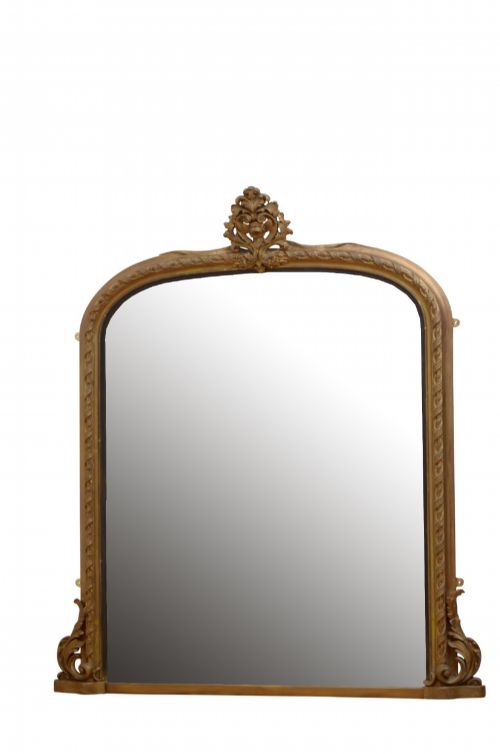


Gilt Plaster Overmantel Mirror
A gilt plaster overmantel mirror brings architectural weight and reflected light to a room, functioning as the traditional centrepiece above a fireplace.
Gilt Plaster Overmantel Mirror
A gilt plaster overmantel mirror is a substantial wall hanging designed to sit above a mantelpiece, drawing the eye with its ornate presence. When you search for this phrase, you encounter grand statement frames intended to anchor a room.
The pieces appearing on this page span the nineteenth century, including Victorian and Edwardian examples. French styles and Rococo Revival influences appear frequently alongside neoclassical designs.
Most examples function primarily as wall mirrors or overmantel mirrors. Their proportions lean towards large formats, offering expansive mirror glass within heavily decorated surrounds.
How they were made
Construction relies on timber frames built to support heavy glass, finished with gesso and composition moulding to create intricate relief ornament. Gilding is then applied to the prepared surfaces, using gold leaf or metallic finishes to achieve a bright or burnished appearance.
Makers utilised mirror glass fitted securely into rebated backs. The combination of carved wood, moulded compo, and applied gilt creates the characteristic layered texture seen across nineteenth-century frames.
Beneath layers of nineteenth-century gold leaf, a patient eye can sometimes spot the reddish hue of traditional bole glowing through the worn highlights.
What varies in quality
The crispness of the moulded ornament separates standard production from finer work, as sharp detail indicates skilled handling of the composition material before gilding. Finer pieces retain deep relief without the softening that occurs in worn or heavily restored mouldings.
The character of the gilt surface also dictates the visual impact, ranging from bright uniform gold to distressed finishes showing underlying layers of red bole and gesso. Weight and structural integrity in the timber carcass ensure the heavy frame hangs true over a fireplace.
The Gilt Plaster Overmantel Mirror Glossary
- Gesso
- A plaster-like mixture applied to wood frames to provide a smooth, absorbent surface for gilding. This substance takes fine detail during moulding.
- Composition
- A mixture of whiting, resin, glue, and linseed oil pressed into moulds to create decorative reliefs. It offers a cheaper and more flexible alternative to hand carving.
- Giltwood
- Wood that has been coated with gold leaf or metallic powder. The term denotes the primary finish seen on these decorative frames.
- Overmantel
- A large mirror or painting specifically designed to hang on the wall directly above a fireplace mantel. These pieces dominate the visual space of a chimney breast.
- Rococo Revival
- A nineteenth-century design style reviving eighteenth-century asymmetrical scrolls, C-scrolls, and naturalistic foliage. This aesthetic informs many of the most ornate frames.
Gilt Plaster Overmantel Mirror: Frequently Asked Questions
How do I hang a heavy overmantel mirror safely?
These frames carry significant weight from timber and glass, requiring robust wall fixings anchored directly into studs or masonry.
Professional mirror plates screwed securely to the heavy wooden back ensure the piece remains stable against the wall above a fireplace.
What is the difference between an overmantel and a wall mirror?
Overmantels are specifically proportioned to span the width of a fireplace breast, often featuring horizontal layouts or arched tops tailored to mantel heights.
Standard wall mirrors lack this specific architectural context and are designed for general room placement rather than anchoring a hearth.
How do I clean a gilded plaster frame?
Dusting requires a very soft, dry brush to prevent disturbing fragile composition ornament and thin layers of gold leaf.
Moisture and commercial cleaning products must be kept away from both the gilt surface and the edges of the antique mirror glass.
How do I identify a Victorian mirror?
Victorian pieces often display eclectic revivals ranging from heavy neoclassical symmetry to exuberant rococo scrolls.
Construction methods, timber types, and backboards characteristic of the nineteenth century help distinguish these frames from later reproductions.