


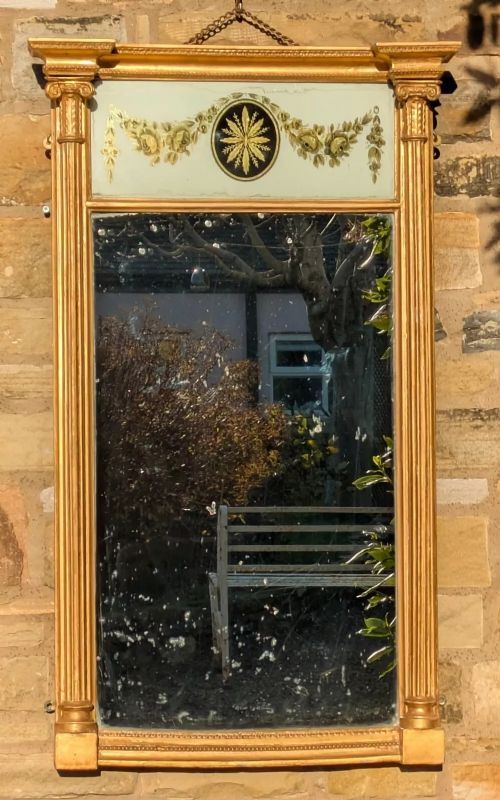


Classical Fluted Column Mirror
These classical fluted column mirrors bring architectural discipline to a room, offering grand proportion and bright reflection through neoclassical design.
Classical Fluted Column Mirror
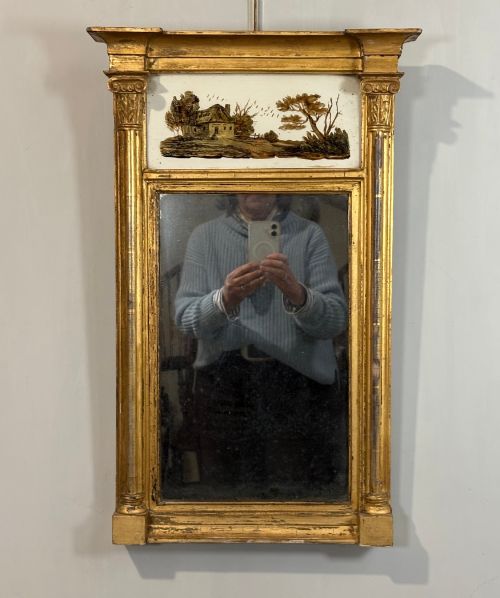
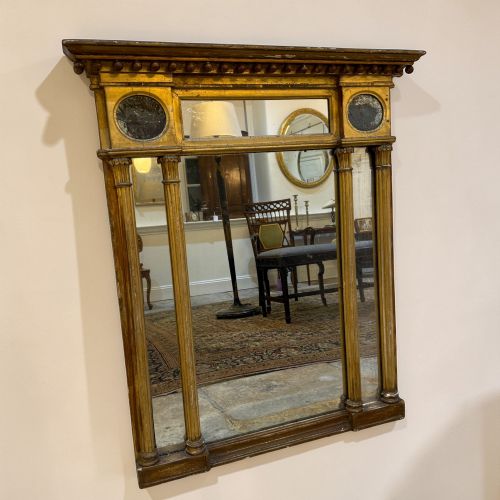
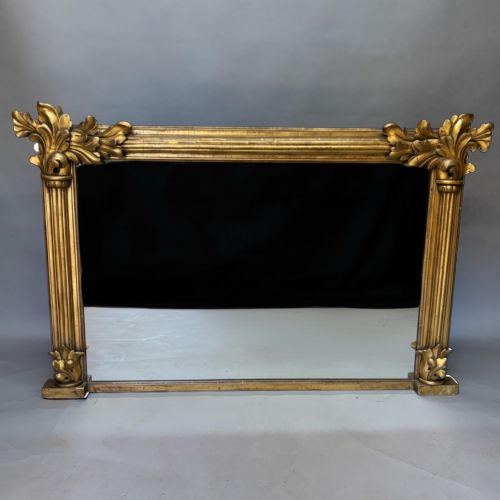
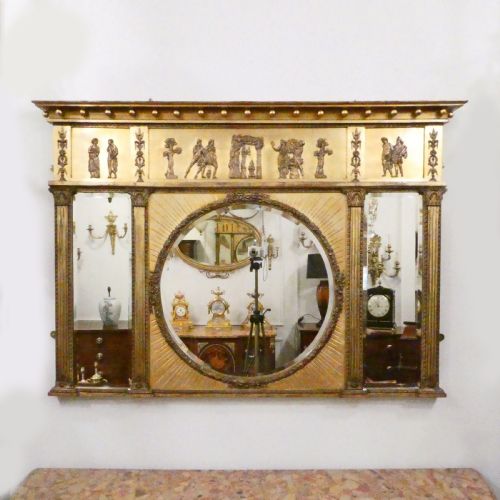
A classical fluted column mirror is an architectural looking glass defined by vertical pillasters and upright channels. These pieces appear most frequently in Regency and nineteenth-century formats, spanning wall mirrors, pier glasses and wide overmantel designs.
The form often incorporates painted wood, carved wood and gesso finished in gold leaf or parcel gilt. Certain examples feature decorative additions such as lion masks or verre eglomise panels set above the glass.
Buyers encounter both English and French interpretations within the Neoclassical, Victorian and Regency Revival styles. Dimensions range from neat-sized triptychs to large proportions suited for principal reception rooms.
Materials and construction methods
Makers shaped the structural frames from timber, utilising carved wood and painted wood as the foundational base. Detail was then applied through moulded gesso to create the crisp vertical fluting of the columns.
Surfaces received application of gold leaf and parcel gilt, or flat paint finishes alongside ebonised accents. The reflective glass is fitted alongside specialised elements like verre eglomise glass panels.
Classical Fluted Column Mirror Retail Price Guide 2026
Typical asking prices for classical fluted column mirror among the pieces listed under this phrase on Sellingantiques today, from the lower quarter to the upper quarter. They describe what is for sale here now, not the wider market.
Listings span the Regency and Victorian periods, incorporating Neoclassical and French Neoclassical design influences.
Judging execution and finish
Quality rests in the crispness of the carved wood and the depth of the gesso moulding along the column shafts. Finer examples display precise hand-tooling and well-proportioned architectural framing that maintains balance across larger overmantel formats.
The treatment of the gilding and secondary decorative elements marks the distinction between standard production and superior work. Original surfaces showing harmonious wear carry greater integrity than later interventions.
The Classical Fluted Column Mirror Glossary
- Gesso
- A prepared plaster mixture applied to wood frames to receive gilding or paint. This material allows artisans to carve and mould crisp architectural details like fluting.
- Verre eglomise
- A cold decoration technique involving gilding on glass with gold or silver leaf, then etching a design. It frequently appears in panels above the main mirror glass.
- Pier mirror
- A tall, narrow looking glass designed to hang on the wall space between windows. These pieces often feature column supports to match the surrounding joinery.
- Parcel gilt
- A finish where portions of an object are gilded with gold leaf while other areas show painted wood or exposed grain. This technique highlights specific architectural mouldings.
- Overmantel mirror
- A wide looking glass proportioned to sit directly above a fireplace mantelpiece. They often utilise triptych glass divisions and heavy architectural framing.
Classical Fluted Column Mirror: Frequently Asked Questions
Where should I hang an overmantel mirror?
These wide mirrors sit naturally above a fireplace mantelpiece, where their proportions reflect the hearth and draw the eye upward.
Ensure the wall fixings match the substantial weight of the timber and gesso frame to support the piece securely.
How do I distinguish a pier mirror?
Pier mirrors are traditionally narrow in width and tall in height, designed specifically for the wall space between two windows.
They maximise natural light within a room while maintaining a slender architectural presence.
How do I care for giltwood frames?
Dust the carved and gilded surfaces gently with a dry, soft brush to protect the delicate gold leaf and gesso mouldings.
Avoid liquid cleaners and moisture, which can damage the historic surface finish.
What defines the Neoclassical style?
Neoclassical design draws upon the classical architecture of ancient Greece and Rome, prioritising symmetry, straight lines and structural columns.
In these mirrors, this translates into fluted pillars and balanced geometric proportions.