


Classical Figure Urns
Classical figure urns bring mythological subjects and ancient vessel forms into domestic interiors, spanning porcelain, bronze, and earthenware across several centuries.
Classical Figure Urns
Classical figure urns combine decorative vessel shapes with human figures drawn from antiquity, mythology, and grand tour traditions. When you search for classical figure urns, you encounter objects spanning the Georgian, Victorian, and later nineteenth and early twentieth centuries.
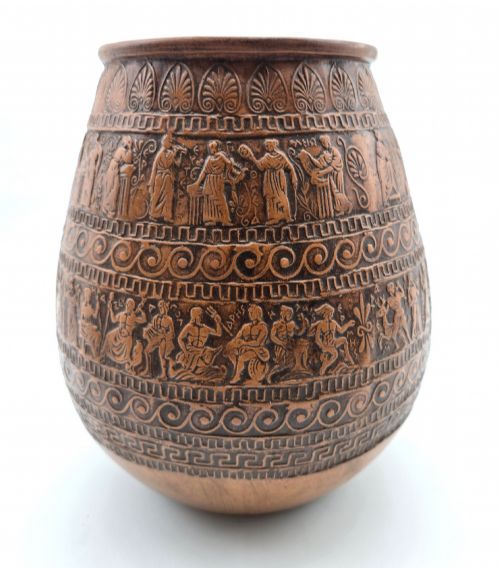
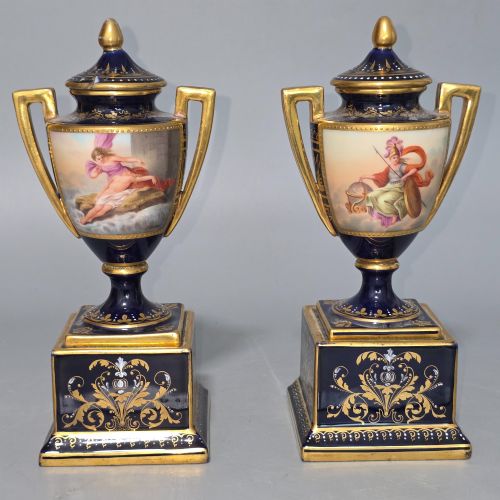
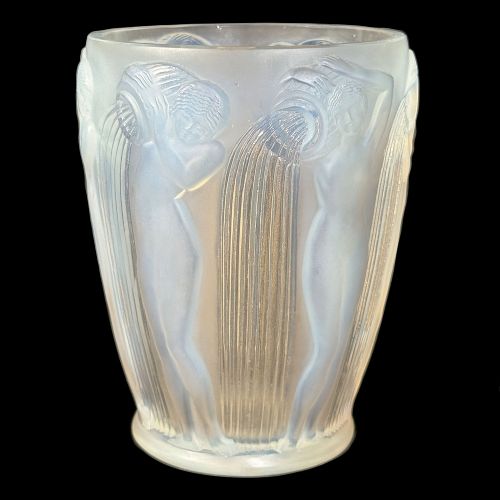
The selections on this page appear in materials such as porcelain, bronze, marble, and earthenware, reflecting Neoclassical, French Empire, and Art Deco interpretations. Vases, lamps, cachepots, and jardinieres form the primary shapes through which these figural subjects are expressed.
Victorian and nineteenth-century examples dominate the offerings, often drawing directly on Greek Revival or French Neoclassical design principles. Makers across Britain, France, Denmark, and Austria interpreted these classical motifs in varied mediums.
Execution and Detail
The standard of a piece rests upon the crispness of the cast or the precision of the hand-painted and moulded relief work. Superior examples demonstrate refined facial expressions and anatomical proportions on the figures.
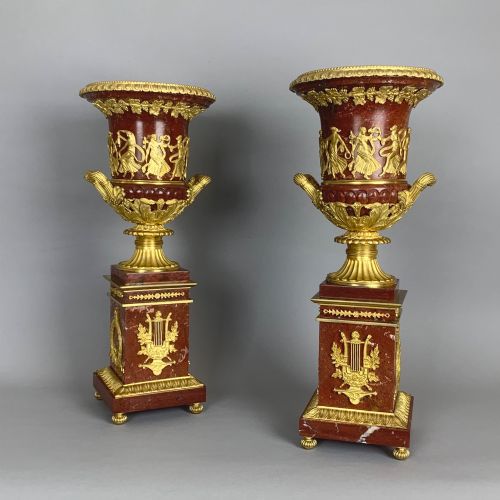
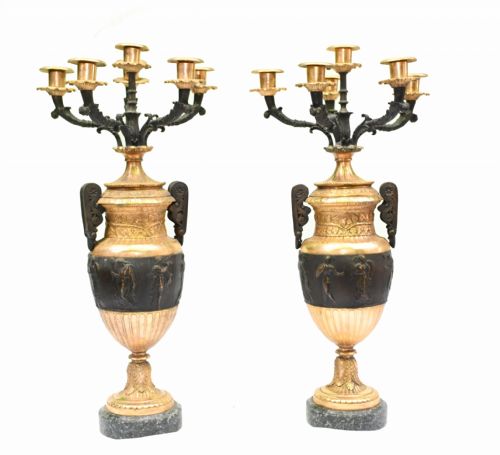
The choice of materials, from heavy patinated bronze and fine porcelain to richly veined marble bases, determines the weight and presence of the object. Signed works by recognised potteries or sculptors elevate the standing of an individual piece.
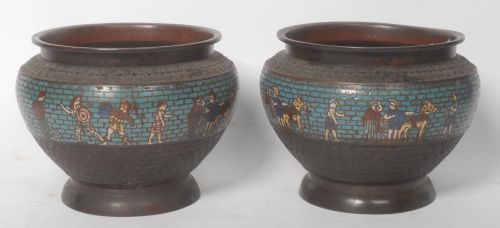
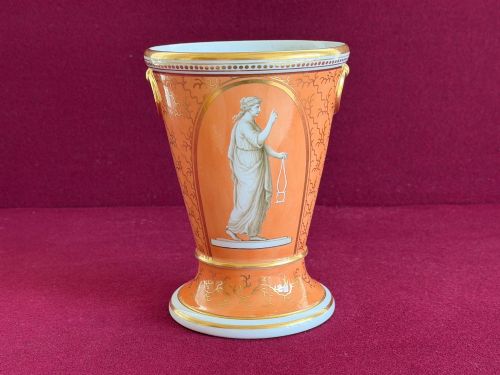
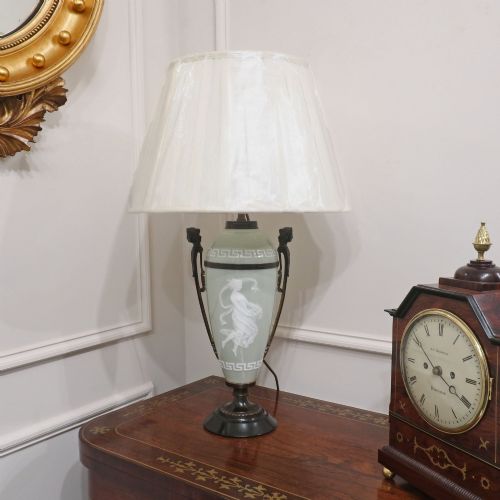
Object forms range from table lamps and cachepots to majolica figures and large amphora vases from nineteenth-century European makers.
Flight & Barr Worcester·P. Ipsens Enke·Wedgwood·Goldscheider·Minton
The Classical Figure Urns Glossary
- Neoclassical
- A style reviving the design elements of ancient Greece and Rome, prioritising symmetry, restraint, and classical motifs. It heavily influences nineteenth-century decorative arts and urn forms.
- Pate sur pate
- A ceramic technique where wet white porcelain slip is built up in successive layers on a coloured clay body to create a low relief cameo effect. This method requires considerable skill from the ceramic artist.
- Jasper ware
- A type of fine stoneware developed by Wedgwood, characterised by a matte surface and contrasting white moulded classical reliefs. Blue is the most recognisable background colour.
- Candelabra
- A branched candlestick or lamp holder designed to hold multiple candles, often cast in bronze or brass with figural ornamentation. They frequently share stylistic themes with decorative urns.
- Cachepot
- An ornamental pot used to conceal an ordinary flowerpot, commonly rendered in porcelain, bronze, or majolica. Many feature classical friezes or mythological scenes around the exterior.
Classical Figure Urns: Frequently Asked Questions
What rooms suit classical figure urns?
These pieces function well on mantelpieces, sideboards, or large tables where their sculptural forms and classical details remain visible. They anchor traditional interior schemes and add historical weight to mixed decorative displays.
Larger vessels and cachepots serve as standalone floor or pedestal ornaments, while lamp adaptations combine decorative subject matter with functional lighting.
How are porcelain and bronze urns cleaned?
Porcelain and glazed earthenware generally require gentle dusting with a soft, dry cloth to protect hand-painted surfaces and gilding. Moisture should be avoided on unglazed bisque or areas with delicate enamel work.
Bronze benefits from occasional light dusting and should not be subjected to abrasive polishes that might remove the historic patina. Preserving the original surface finish maintains the character of the metal.
How do you distinguish nineteenth-century pieces?
Nineteenth-century examples frequently exhibit the revival styles popular during the Victorian and Napoleon III eras, including French Empire and Greek Revival. Examination of the base, mounting techniques, and material composition helps indicate the manufacturing period.
Maker marks, factory stamps, and artist signatures provide direct evidence of origin, aligning pieces with known potteries and bronze foundries active in Britain and continental Europe.
Were these urns purely decorative items?
Many urns and vases were created solely as decorative display objects for grand interiors, reflecting nineteenth-century fascination with antiquity. Others functioned practically as jardinieres, cachepots, or lighting fixtures.
Grand tour souvenirs allowed travellers to bring back smaller bronzes and terracottas as physical mementos of classical sites visited across the Mediterranean.