




Classical Figure Mantel Clock
A classical figure mantel clock brings architectural weight and sculptural presence to a room, driven by nineteenth-century French foundry work.
Classical Figure Mantel Clock
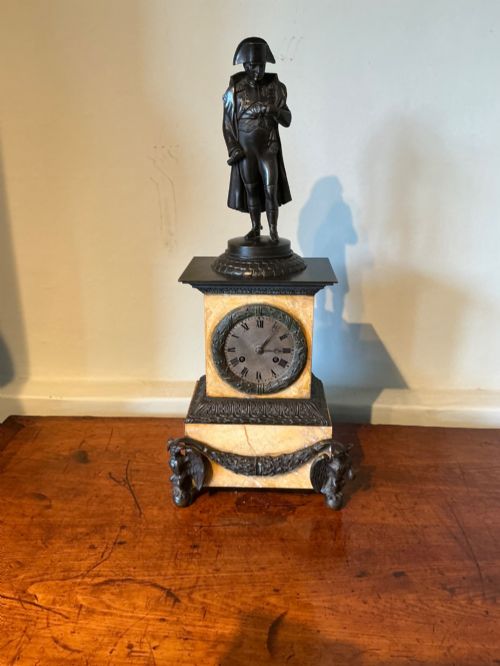
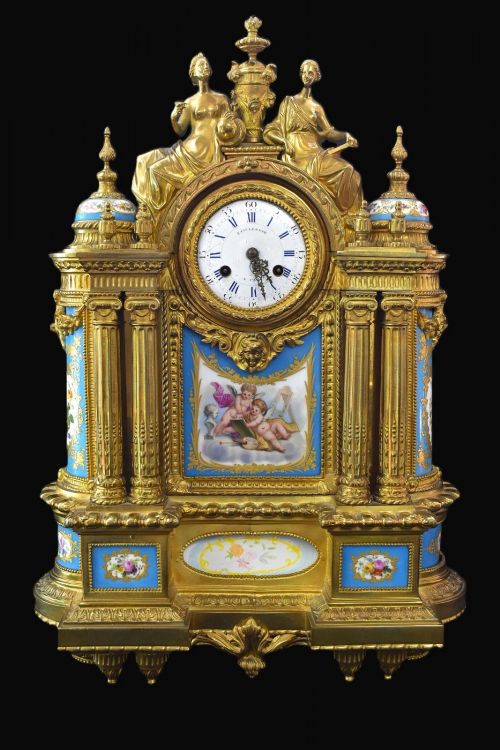
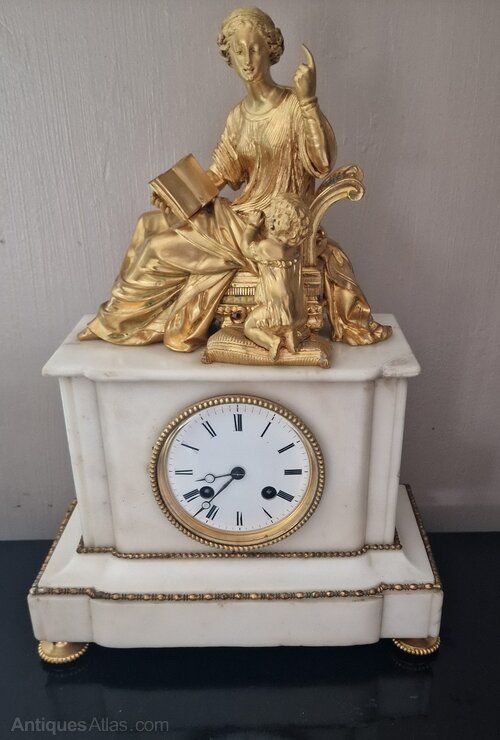
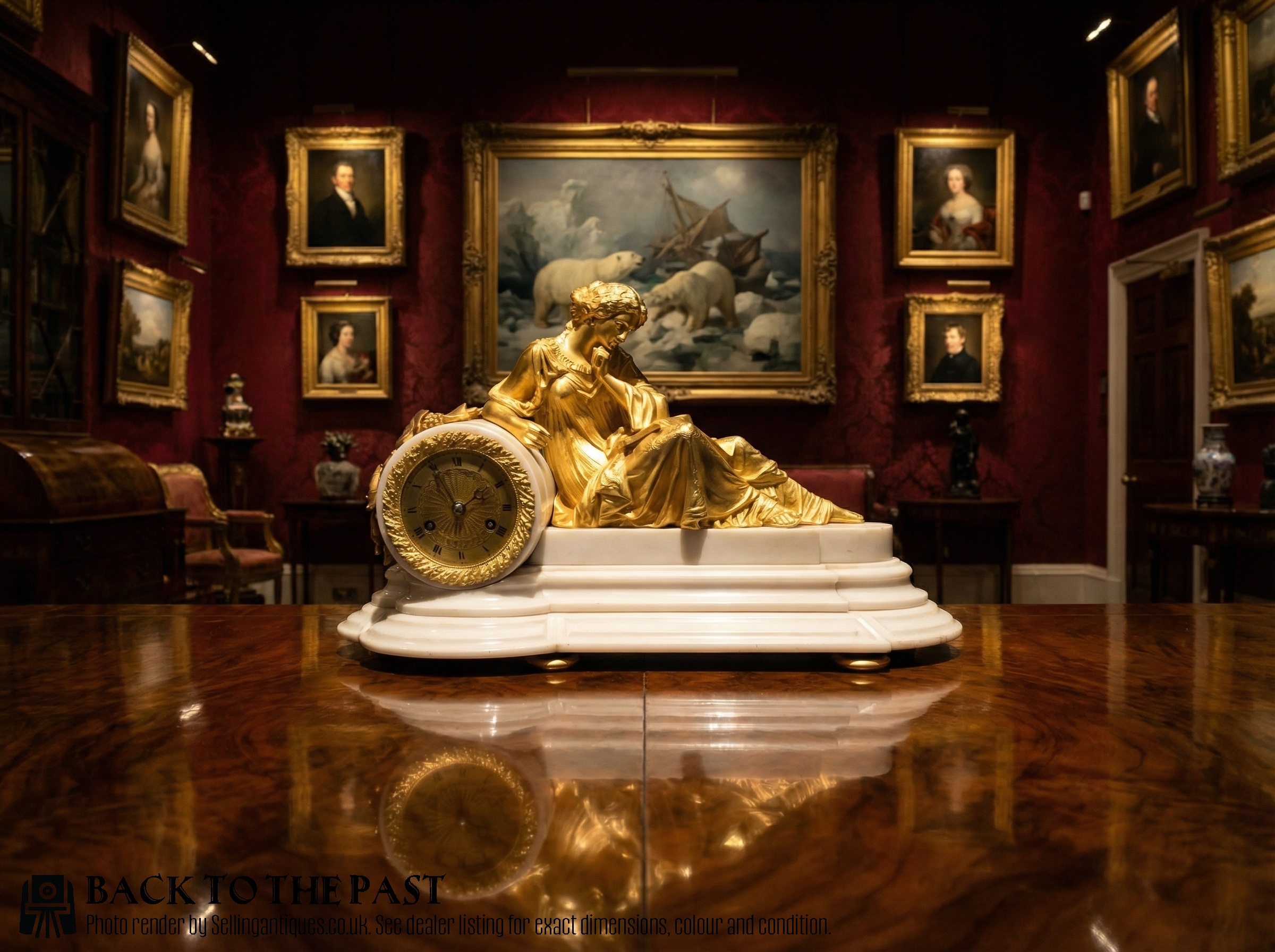
A classical figure mantel clock combines a mechanical timekeeper with a cast metal or carved stone sculptural subject, anchored firmly in nineteenth-century production. These pieces frequently draw upon French Neoclassical, Louis XVI, and Empire design vocabulary, depicting literary, mythological, or historical figures alongside the dial.
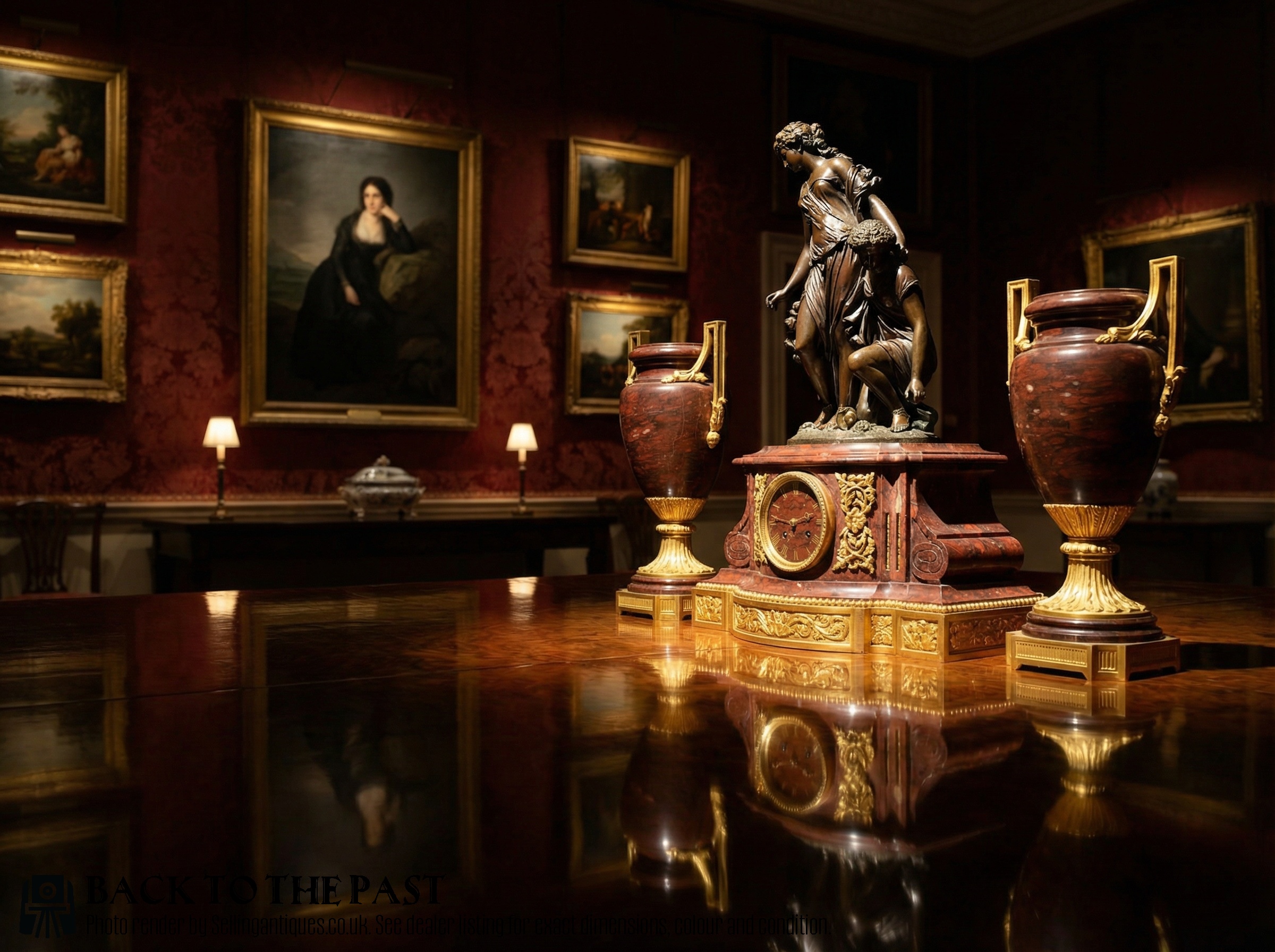
The version most commonly met on this page is a French production from the Victorian era or the Regency period, often featuring patinated bronze figures contrasted against gilded ormolu mounts. Many examples appear within clock garniture sets, accompanied by matching side ornaments or candelabra.
Makers and retailers placed these objects on domestic chimney pieces and console tables, where their eight-day movements regulated household time while their sculptural subjects signalled cultural literacy. The integration of the clock face into the wider bronze or marble composition dictates the overall character of each piece.
How they were made
Foundries utilised lost-wax and sand-casting techniques to shape bronze and brass into intricate figural and architectural components, subsequently applying mercury gilt or ormolu finishes to create a golden lustre. Patinated bronze provided a dark, nuanced contrast against the bright gilt surfaces and the dense grain of white, black, or rouge marble bases.
Movements were mechanically engineered to run for eight days, frequently striking on bells or gongs, and were paired with enamel dials marked with Roman or Arabic numerals. Glazed bezels and protective glass domes completed the housing for delicate porcelain elements and intricate metalwork.
Classical Figure Mantel Clock Retail Price Guide 2026
Typical asking prices for classical figure mantel clock among the pieces listed under this phrase on Sellingantiques today, from the lower quarter to the upper quarter. They describe what is for sale here now, not the wider market.
Several clocks depict literary and classical study themes, ensuring domestic mantelpieces have quietly encouraged intellectual pursuit since the Victorian era.
What varies in quality
The definition and crispness of the bronze chasing separate standard production from exceptional studio work, revealing the hand of the artisan in the drapery of a figure or the acanthus leaves of an ormolu mount. Heavy cast marble bases and substantial bronze weights indicate higher material investment than lighter alloy or hollow sheet alternatives.
The integration between the named maker's movement and the sculptural housing governs the integrity of the piece, with signed dials and backplates from established Parisian workshops conferring greater authority to the object.
Etienne Lenoir·Deniere Et Fils·Japy Freres·Lemerle Charpentier
The Classical Figure Mantel Clock Glossary
- Ormolu
- Gilded bronze produced by applying a mercury and gold amalgam to a bronze base and heating it until the mercury vaporised. This historic technique creates a durable, warm golden finish characteristic of nineteenth-century French luxury goods.
- Garniture
- A set of matching decorative objects designed to be displayed together on a mantelpiece, typically comprising a central clock flanked by two urns, candelabra, or matching side pieces.
- Fusee
- A conical pulley used inside certain clock movements to equalize the declining power of the mainspring as it unwinds. This mechanism improves timekeeping accuracy across the duration of the eight-day run.
- Patinated bronze
- Bronze that has been chemically or naturally treated to produce a controlled dark surface coloration. It creates visual depth when contrasted against bright ormolu mounts.
- Bezel
- The metal ring that holds the glass protecting the clock dial. In better examples, it is hinged and fitted with a small latch for easy access to the hands.
Classical Figure Mantel Clock: Frequently Asked Questions
How do I wind a classical figure mantel clock?
Most pieces utilise a double-ended key inserted into winding holes on the enamel dial to tension the springs behind the movement.
Care must be taken not to overwind the mechanism, stopping as soon as resistance is felt.
Were these clocks made as sets?
Many nineteenth-century examples were produced alongside matching side ornaments as a unified decorative garniture.
These sets balanced the mantelpiece visually by placing matching urns or candelabra on either side of the central timekeeper.
What is the difference between Empire and Louis XVI styles?
Louis XVI style pieces draw on ancient Greek and Roman motifs with restrained symmetry, delicate ormolu swags, and classical columns.
Empire style objects feature heavier military and Napoleonic symbolism, with robust patinated bronze figures and bolder architectural masses.
How do I care for ormolu surfaces?
Ormolu requires gentle dusting with a soft dry brush to prevent abrasive particles from scratching the delicate gold layer.
Moisture and modern chemical cleaners must be avoided entirely to preserve the historic mercury gilt finish.