


Classical Figure Candle Holders
Classical figure candle holders bring sculptural presence to a room, cast in bronze and marble through centuries of neoclassical taste.
Classical Figure Candle Holders
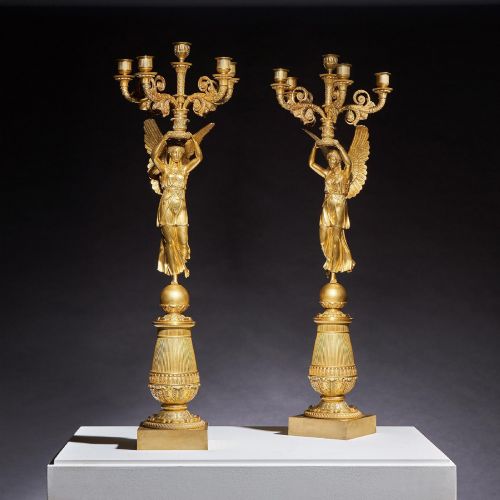
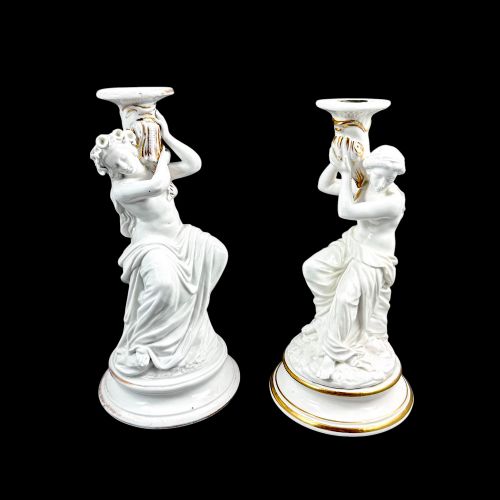
Classical figure candle holders combine functional lighting with sculptural human or mythological forms, taking the shape of candlesticks, candelabra, and torcheres. When searching for classical figure candle holders, buyers encounter varied expressions from the Regency, Victorian, and nineteenth-century periods, alongside continental European designs.
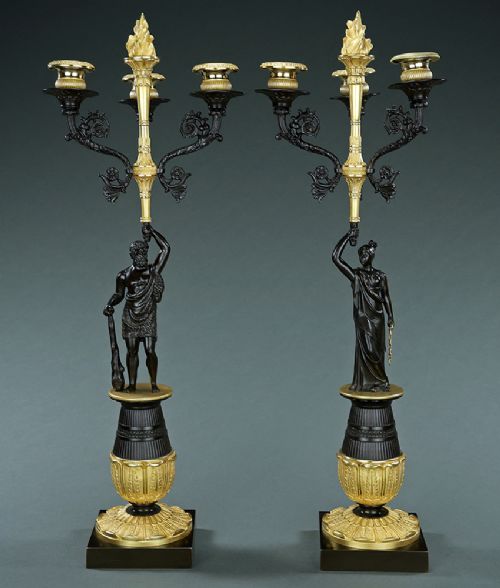
The objects frequently depict mythological figures, puttis, caryatids, and allegorical representations like the Four Seasons. French Empire and Swedish Empire styles dominate the selection, often rendered in pairs intended for mantlepieces or side tables.
Materials and construction
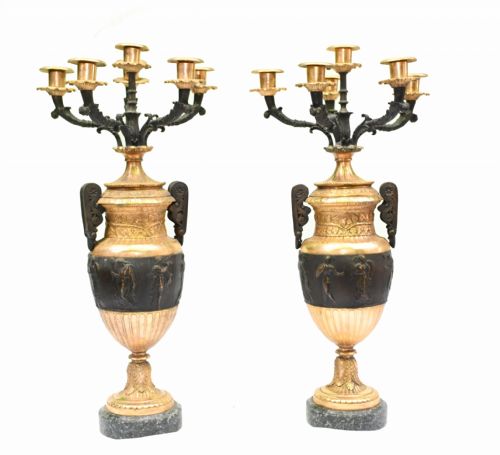
Maker workshops utilised combination metals, pairing ormolu and gilt bronze with patinated bronze to create contrasting textures on figures and bases. Slate, marble, and onyx frequently serve as heavy foundational socles to support the weight of the metalwork.
Listings feature pieces spanning from the mid-eighteenth century to the early twentieth century, encompassing Regency, Victorian, and Empire styles.
The markers of distinction
Quality rests in the crispness of the chasing on bronze surfaces and the smoothness of the patination applied to the metal figures. Superior examples display intricate detailing in the hair, drapery, and anatomical proportions of the classical subjects.
The integration of the figure with its base demonstrates the maker's skill, particularly where bronze meets marble, slate, or onyx. Matching pairs with unified patination and well-preserved gilding command greater attention than mismatched components.
Pierre Philippe Thomire·Thomas Hope·Humphrey Hopper·Sutherland and Sons·Decoro England
The Classical Figure Candle Holders Glossary
- Ormolu
- Gilt bronze produced by applying a finely ground high-carat goldmercury amalgam to a bronze object. The mercury is then driven off by heat, leaving a rich golden coating.
- Caryatid
- A sculpted female figure serving as an architectural support taking the place of a column or pillar. In these pieces, the figure often forms the central shaft holding the candle socket.
- Patinated bronze
- Bronze treated with chemical solutions to produce a specific surface colour such as dark brown or green. This treatment contrasts sharply with bright sections of gilding.
- Torchere
- A tall stand or candlestick designed to carry a single light. The form derives from ancient lighting stands used in classical interiors.
- Socle
- A short plinth or pedestal supporting a statue, vase, or candlestick. It provides stability and visual elevation to the figural base.
Classical Figure Candle Holders: Frequently Asked Questions
How do I identify French Empire style?
French Empire pieces reflect the neoclassical taste of the early nineteenth century, drawing direct inspiration from ancient Greek and Roman art. Look for strict symmetry, military motifs, and classical figures rendered in patinated and gilt bronze.
Materials like dark marble and slate frequently appear as bases to contrast with bright ormolu highlights.
Where were these pieces originally displayed?
These items stood primarily on mantelpieces, sideboards, and pier tables in grand nineteenth-century drawing rooms and dining rooms. Their reflective ormolu surfaces caught and multiplied the flickering light of candles during evening gatherings.
Paired arrangements were standard, placed symmetrically to frame mirrors or centrepieces.
How should I care for antique bronze and ormolu?
Dust surfaces gently with a soft, dry brush to prevent the accumulation of dirt in the chased recesses of the metal. Avoid abrasive cleaners, chemical polishes, and water, which can strip historic gilding and damage delicate patination.
Handle pieces by their solid stone or metal bases rather than by delicate arms or protruding figures.
What distinguishes Regency period metalwork?
Regency metalwork combines classical antiquity with a bold use of contrasting materials like dark bronze and brilliant ormolu. Figures often reference classical mythology, history, or allegorical themes.
British interpretations from this era frequently share design characteristics with contemporary French Empire output.