



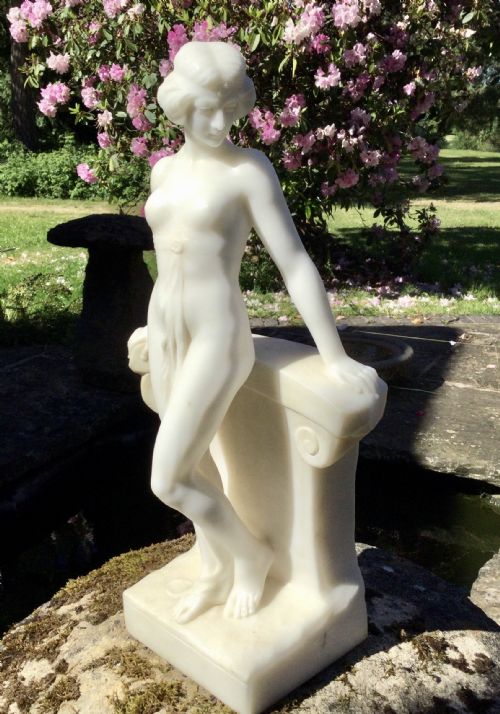

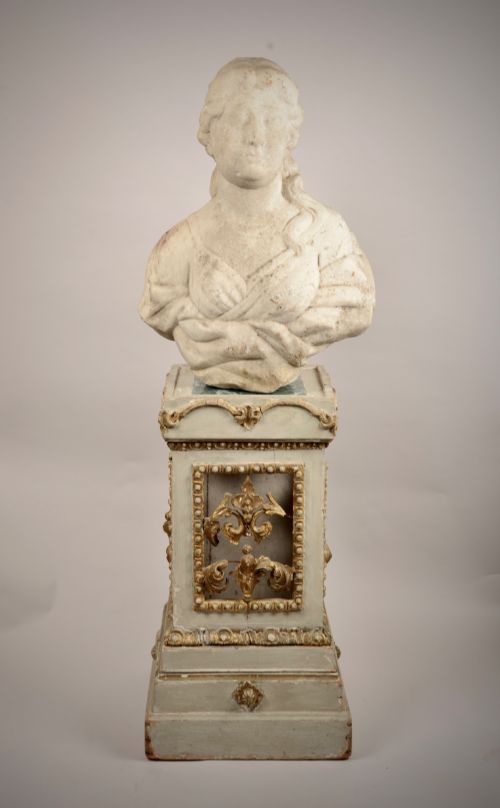


Classical Female Marble Statue
A classical female marble statue brings the quiet dignity of antique mythology and portraiture straight into a room.
Classical Female Marble Statue
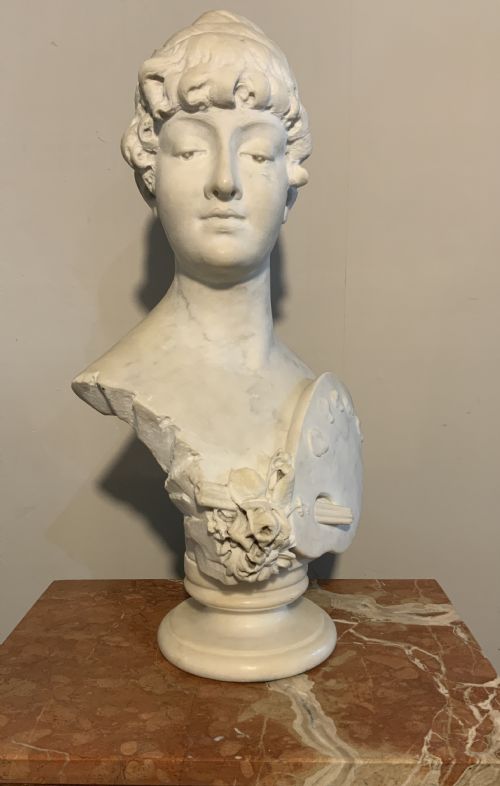
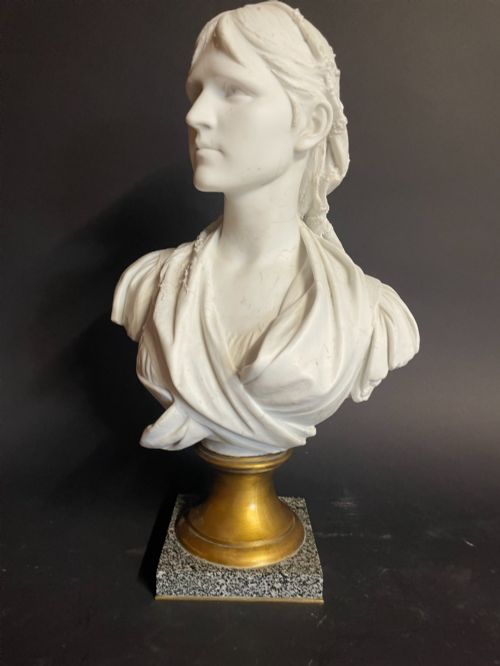
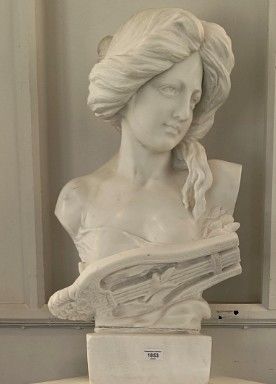
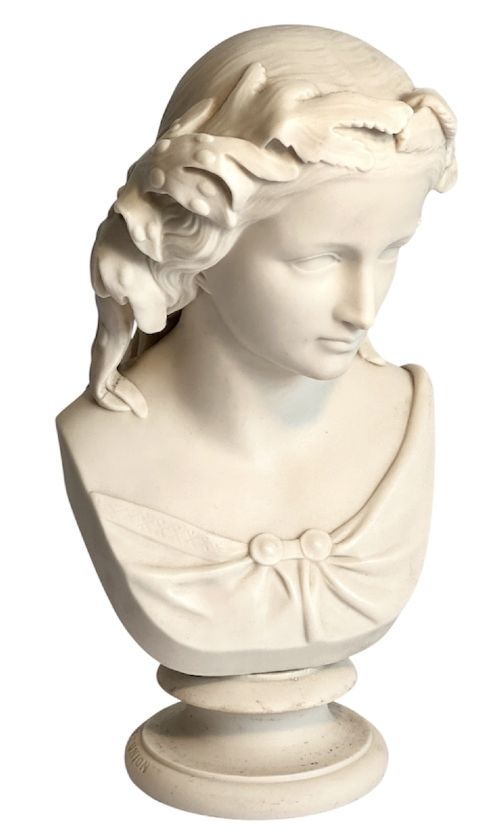
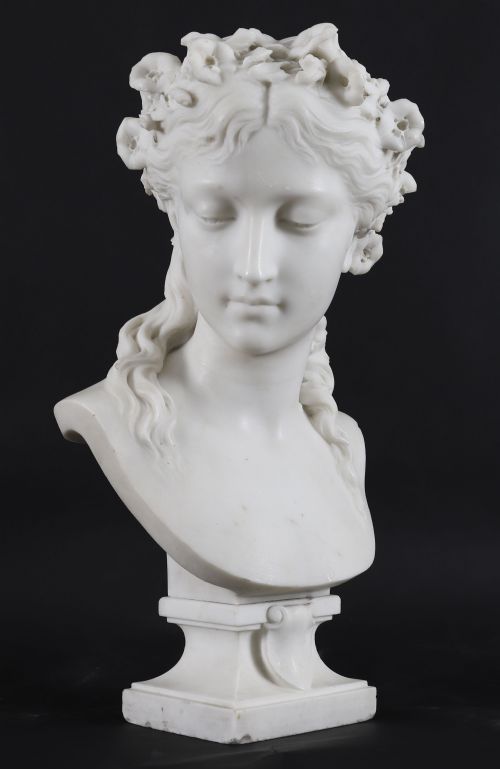
A classical female marble statue represents figures from history, literature, and mythology carved in stone during the nineteenth century and the early decades of the twentieth century. These works range from grand Grand Tour souvenirs to substantial portrait busts of unknown ladies and muses.
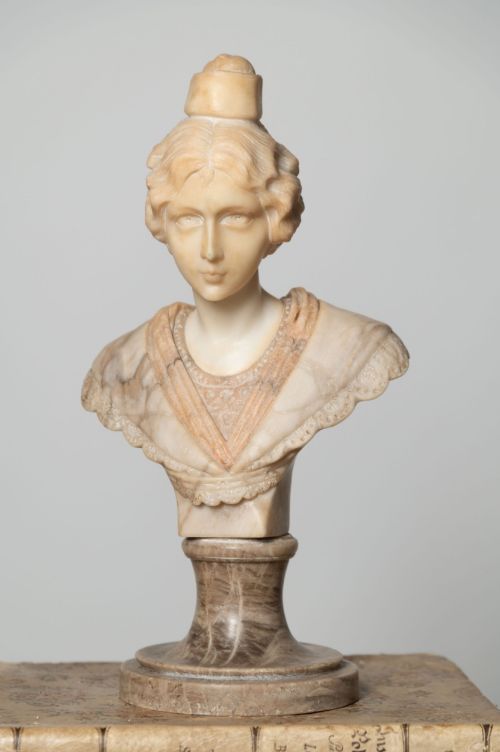
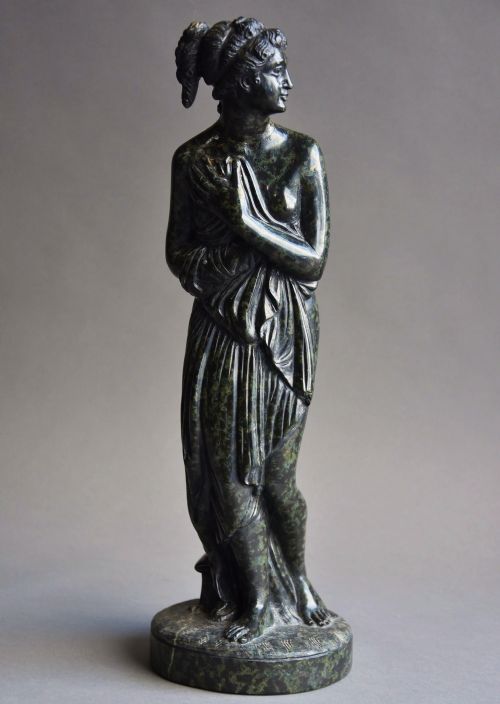
Buyers exploring this selection encounter solid white marble, translucent alabaster, and Carrara marble carved into full-length statues, reclining nudes, and detailed busts. The styling follows Neoclassical, Art Nouveau, and Art Deco movements, capturing subjects such as Greek goddesses, dancers, and allegorical figures.
Materials and Technique
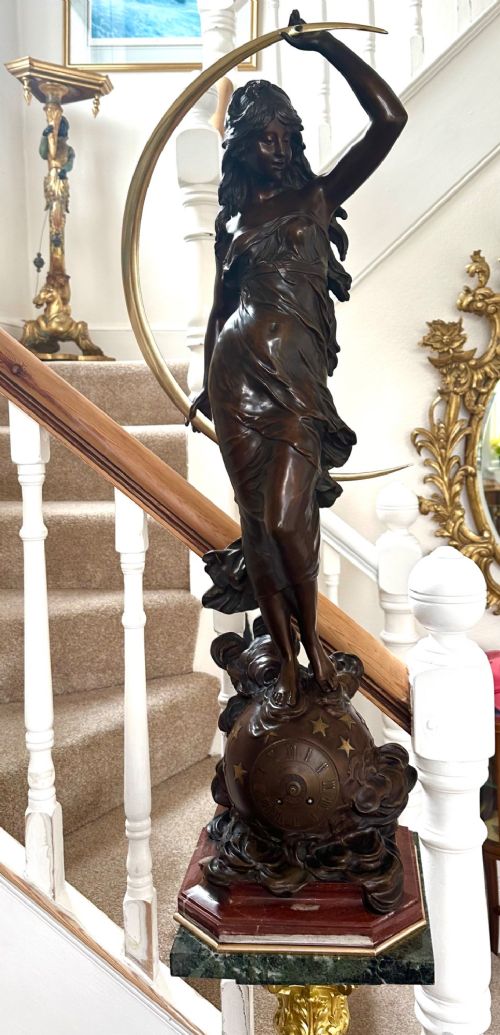
Sculptors shaped these figures from blocks of marble, alabaster, and stone using traditional hand-carving methods, frequently mounting the finished statues on contrasting bases. Bronze and Parian porcelain also appear alongside stone, utilising casting techniques for intricate figures and lamps.
Makers achieved lifelike drapery, hair, and facial expressions by employing fine chisels, rasps, and polishing abrasives. Some bronze and mixed-media pieces incorporate cold painting or multi-coloured stone elements to add visual depth.
Several ladies depicted in these antique stones hold hoops, lyres, or lift heavy veils to reveal themselves to the room.
Assessing Quality
The choice of material also dictates distinction, with fine-grained Carrara marble and translucent alabaster commanding greater visual presence than simpler stone. Signed works by documented sculptors carry a distinct level of craftsmanship compared to anonymous studio pieces.
Pierre le Faguays·August Moreau·Antonio Canova·Eugene Aizelin·Carrier-Belleuse·Fritz Kochendorfer·Ernst Barrias·Pugi
The Classical Female Marble Statue Glossary
- Carrara marble
- A type of white or blue-grey marble quarried in the city of Carrara in Tuscany, widely favored by European sculptors for its fine grain and durability.
- Grand Tour
- A traditional trip of Europe undertaken by upper-class young European men of means in the eighteenth and nineteenth centuries, resulting in the acquisition of small-scale sculptures and busts.
- Neoclassical
- A Western cultural movement drawing on the art and culture of classical antiquity, emphasising restraint, symmetry, and mythological themes.
- Alabaster
- A fine-grained, translucent stone often used for nineteenth-century carved figures, lamps, and decorative busts due to its softness and warm glow.
- Parian porcelain
- A type of biscuit porcelain developed in Britain during the nineteenth century that resembles carved marble, frequently utilised for portrait busts and literary figures.
Classical Female Marble Statue: Frequently Asked Questions
Where were these statues made?
Many of these pieces originated in European workshops, particularly in Italy and France, where stone carving traditions thrived throughout the nineteenth century.
British manufacturers also produced comparable figures using Parian porcelain and bronze during the Victorian era.
How do I clean marble?
Dust marble and alabaster surfaces regularly with a soft, dry cloth to prevent dirt buildup.
Avoid using water, chemical cleaners, or abrasive agents, as these can damage the polished finish of the stone.
Are these pieces signed?
Certain statues and busts bear signatures or foundry marks inscribed directly into the marble, bronze, or base.
Many antique and Grand Tour sculptures remain unsigned, having been produced as decorative studio pieces.
What is the Grand Tour context?
Grand Tour items were acquired by travellers visiting cultural sites in Italy and Greece as portable reminders of classical antiquity.
These reductions of famous antiquities allowed collectors to display classical art within their private homes.