
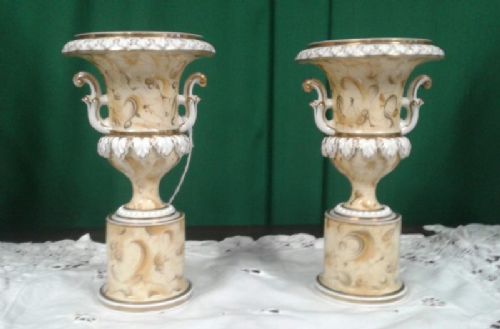


Classical Decorative Vases
Classical decorative vases bring ancient forms and architectural presence into a room, drawing on centuries of revival design.
Classical Decorative Vases
Classical decorative vases cover a diverse group of ornamental vessels inspired by antiquity, including urns, campana shapes, and ewers. When you search for classical decorative vases, you encounter pieces designed primarily for display rather than utility, often appearing in symmetrical pairs intended for mantelpieces or pedestals.
The objects on this page date predominantly from the nineteenth century, spanning Victorian, Regency, and Empire periods. They reflect a sustained European fascination with classical antiquity, manifested through grand tour souvenirs and revivalist studio productions.
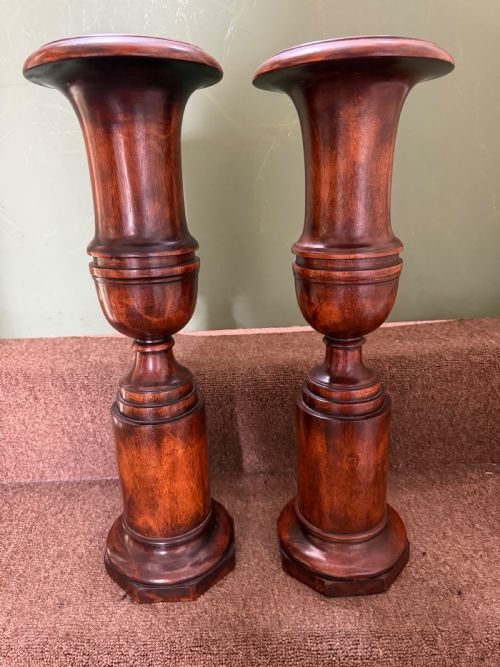
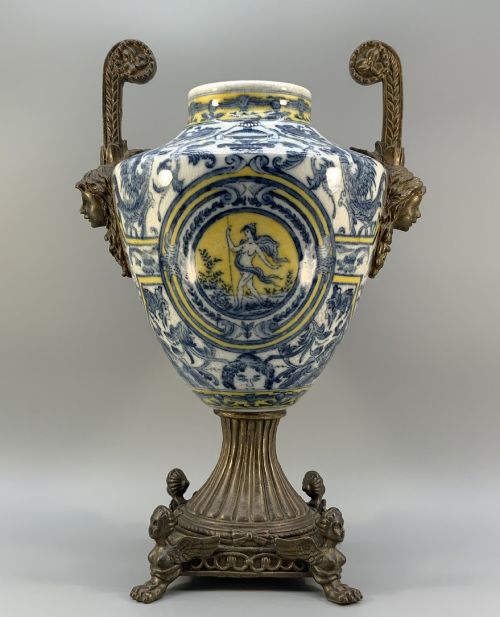
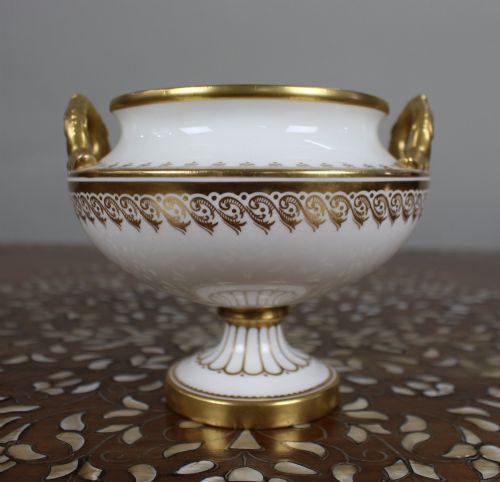
Forms range from heavy cast iron garden vessels and turned walnut bodies to delicate porcelain shapes. Many items integrate figural handles, mythological motifs, and classical architectural proportions drawn directly from Greek and Roman archetypes.
Materials and construction methods
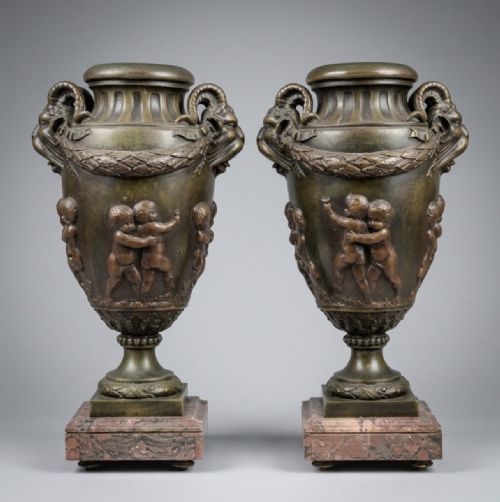
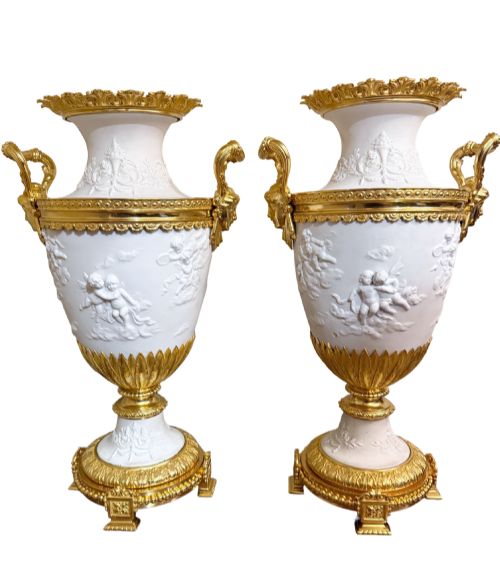
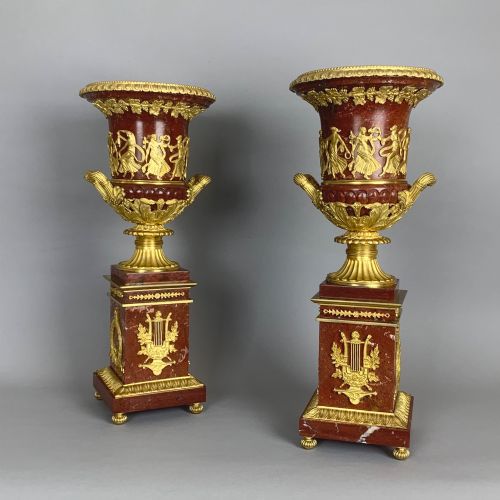
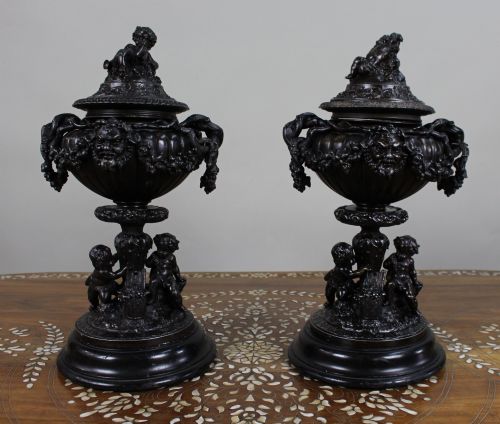
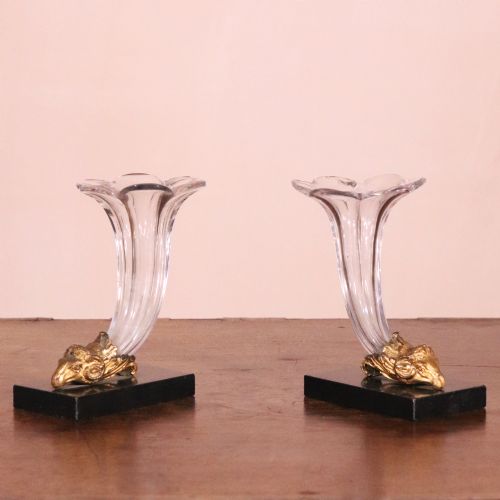
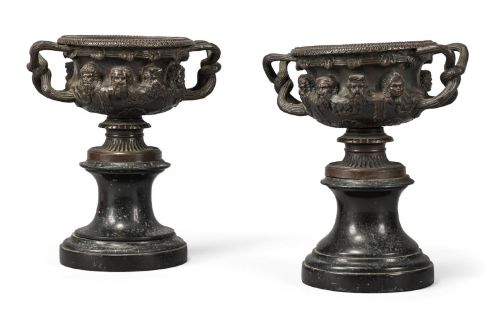
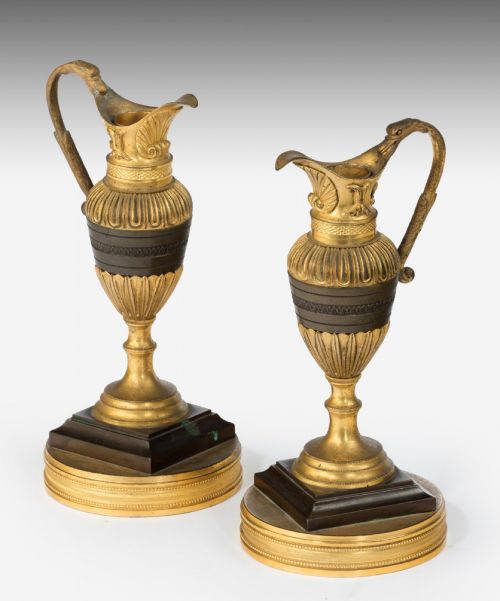
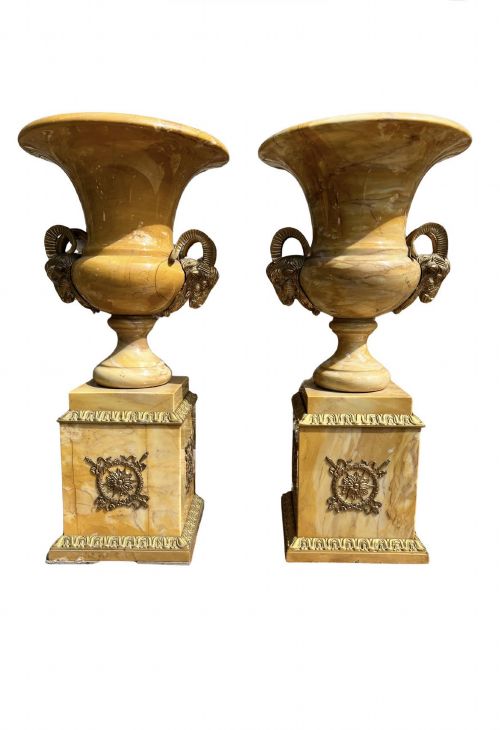
Makers utilised a combination of cast metals and carved stones, pairing bronze, brass, and spelter with marble, white onyx, and sienna bases. Gilt bronze and ormolu mounts often accent patinated metal bodies or porcelain vessels.
Ceramic examples combine fired paste bodies with hand-painted decoration, enamel work, and applied white bas-reliefs. Wood turning and carved lime-wood provide structural alternatives for domestic interior displays.
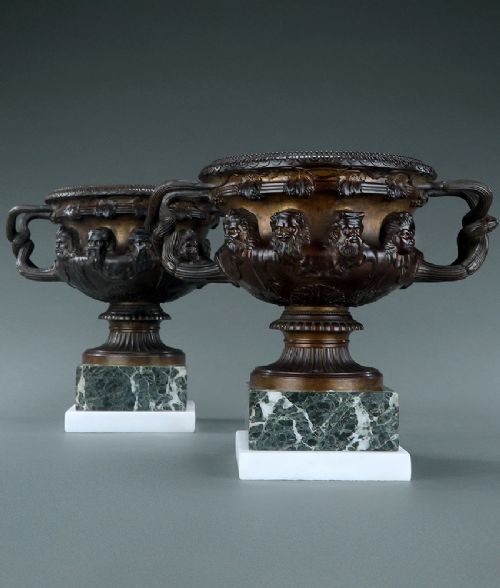
Foundry work involved lost-wax or sand casting for metal figures and campana urns, followed by chased surface detailing and applied patination to simulate antiquity.
Listings feature 19th-century periods including Victorian, Regency, and 1890, utilising bronze, porcelain, marble, and ormolu.
Judging quality and execution
Quality rests upon the crispness of the casting and the depth of the metal patination. Finer examples display sharp relief in decorative friezes and mythological masks, whereas inferior pieces rely on soft, blurred surface details.
The integration of varied media defines the upper tier of objects, such as hand-painted porcelain combined with heavy, fire-gilded bronze mounts rather than plated substitutes. Heavy gauge materials and substantial marble or onyx bases indicate superior weight and stability.
Proportion and architectural balance separate standard production items from distinguished studio pieces. The alignment of handles, mounts, and pedestals reveals the precision of the original workshop.
Sevres·Ridgeways·Capodimonte·Wedgwood·Royal Vienna·Dresden
The Classical Decorative Vases Glossary
- Campana
- A bell-shaped vessel with an everted rim and a footed base. This form originates from ancient pottery and bronze prototypes.
- Ormolu
- Finely ground high-carat gold applied to a bronze object using a mercury amalgamation technique. It provides a durable, bright golden surface layer.
- Spelter
- A zinc alloy used as a cheaper alternative to bronze. It is often patinated to imitate heavier, more valuable metals.
- Jasperware
- A fine-grained stoneware developed by Josiah Wedgwood, characterised by a matte surface and contrasting applied white relief figures.
- Ewer
- A large jug with a wide spout and a decorative handle, historically used for pouring water but replicated purely for display in nineteenth-century interiors.
Classical Decorative Vases: Frequently Asked Questions
What are campana urns?
Campana urns are bell-shaped decorative vessels featuring a flared rim and a pedestal foot. They were modeled after ancient pottery excavated in Italy.
During the nineteenth century, these vessels became popular mantelpiece ornaments, cast in bronze, iron, or formed in porcelain and jasperware.
How do you date nineteenth-century bronzes?
Dating bronze objects involves examining the quality of the casting, the nature of the patination, and the assembly methods. Older pieces often show hand-chasing beneath the patina.
Stylistic cues such as Neoclassical or French Empire details help narrow the production window alongside any foundry marks or exhibition stamps.
What was a grand tour souvenir?
A grand tour souvenir was a portable work of art acquired by wealthy young travellers touring cultural sites in Italy and France. These items included miniature bronzes and carved marble vases.
Collectors sought accurate miniature representations of famous ancient sculptures and architectural ruins to display in their home studies and libraries.
Where should I place decorative urns?
Decorative urns suit prominent architectural locations like mantelpieces, console tables, and pedestals. Their balanced proportions work well as symmetrical pairs framing a mirror or clock garniture.
Larger iron and stone versions function as focal points in garden settings or entrance halls, providing height and structural interest.