




Classical Crest Wall Mirror
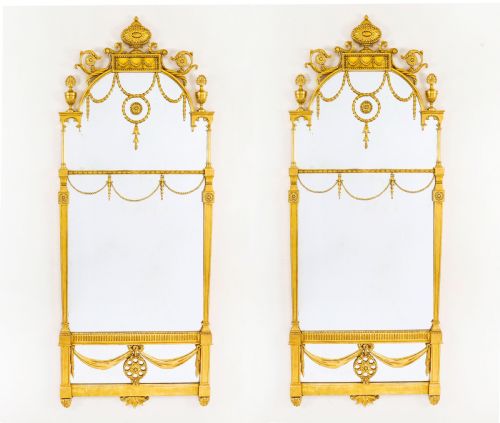
A classical crest wall mirror brings architectural proportion and gilded light to a room, drawing the eye upwards with urns, swags, and classical motifs.
Classical Crest Wall Mirror
A classical crest wall mirror sits on the boundary between furnishing and architecture, using motifs borrowed from antiquity to anchor a room. When you search for a classical crest wall mirror, you encounter forms that range from restrained Georgian rectangles to ornate Victorian overmantels.
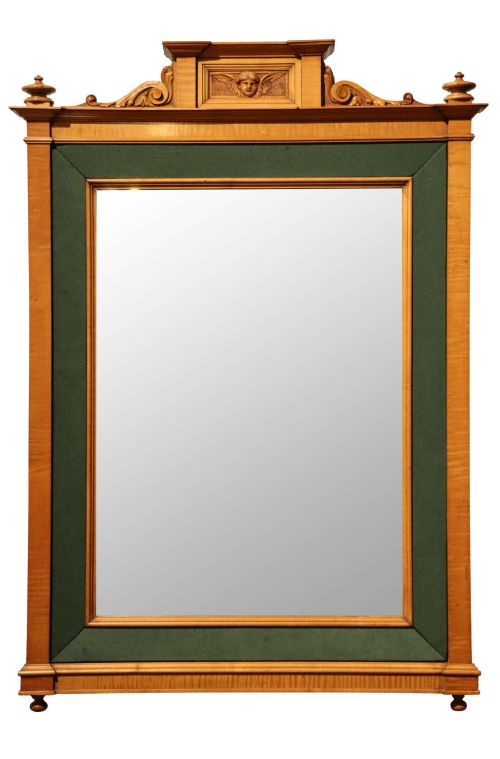
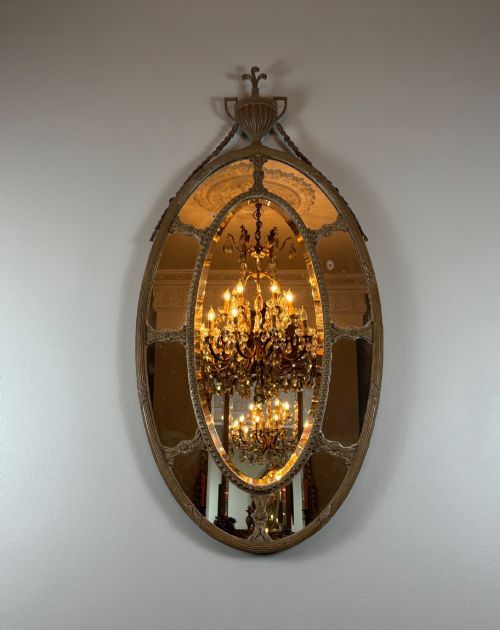
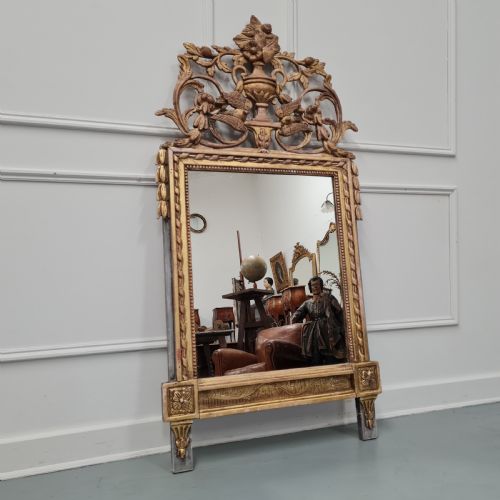
The pieces on this page lean heavily towards the 19th century, particularly Victorian interpretations of Adam Revival and Neoclassical styles. You will find oval border glasses, large arch top overmantels, and rectangular frames crowned with urns, putti, and carved foliage.
Origins stretch from British workshops following George III and Regency traditions to French chateau and Italianate pieces. Wall mirrors and overmantels dominate the selection, often designed to hang above a fireplace or serve as a principal focal point in a hallway.
Distinguishing quality
Quality in these mirrors rests on the crispness of the carving and the depth of the gilding. Hand-modelled gesso crests with sharp undercutting and layered gold leaf separate superior pieces from simpler moulded reproductions.
The integration of the crest to the main frame demonstrates the maker's hand, where classical proportions remain balanced even on large overmantel scales. Surviving original mirror glass and well-preserved gilt surfaces hold greater authority for the collector.
Listings span from the 18th century through the 1920s, dominated by Victorian interpretations of Adam Revival and Neoclassical styles.
The Classical Crest Wall Mirror Glossary
- Giltwood
- Wood that has been coated with gold leaf over a prepared ground. This technique creates a rich, metallic finish that catches and reflects ambient light.
- Gesso
- A plaster-like mixture applied to wood frames and carved or moulded into relief details. It forms the base for subsequent gilding.
- Overmantel Mirror
- A large mirror specifically proportioned to hang on the wall directly above a fireplace mantelpiece. These often feature extended horizontal formats.
- Putto
- A representation of a bare-bodied young child, often winged, derived from classical art. They frequently appear perched within the cresting of Victorian mirrors.
Classical Crest Wall Mirror: Frequently Asked Questions
How do I hang a heavy overmantel mirror?
These heavy frames require secure fixing directly into wall studs or masonry using substantial brackets. The weight of giltwood and gesso demands professional installation to ensure safety.
Distributing the load across multiple points protects both the wall structure and the antique frame from undue stress.
What is an Adam Revival mirror?
An Adam Revival mirror follows the neoclassical design vocabulary popularized in the 18th century and revisited later in the Victorian era. It utilises urns, swags, and ribbons in symmetrical arrangements.
These pieces emphasise refined classical geometry over heavy, florid ornamentation.
Are these mirrors original to the 19th century?
The selection includes pieces originating from the Georgian period through the late Victorian and Edwardian eras. Dating relies on construction methods, wood types, and the composition of the gesso.
Stylistic revivals during the 19th century frequently reinterpreted earlier neoclassical forms.
Can I clean the gilt leaf surface?
Gilt leaf requires gentle dusting with a soft, dry brush to remove accumulated particles. Moisture and chemical cleaners damage the delicate metallic surface.
Preserving the original gold or silver leaf maintains the historical integrity of the piece.