

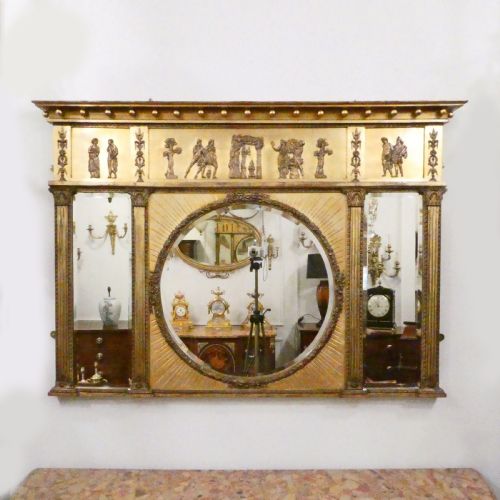


Classical Column Wall Mirror
A classical column wall mirror brings architectural order and reflected light into a room, drawn from nineteenth-century Regency and Victorian periods.
Classical Column Wall Mirror
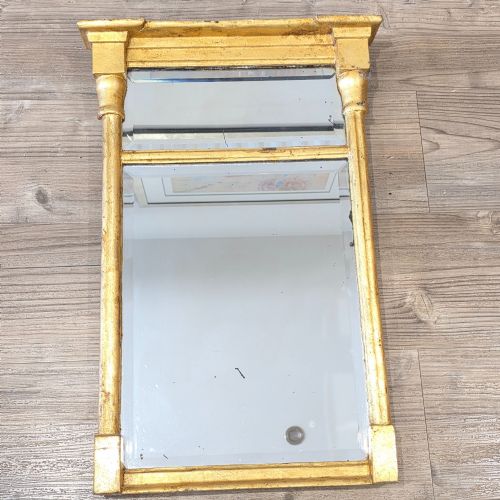
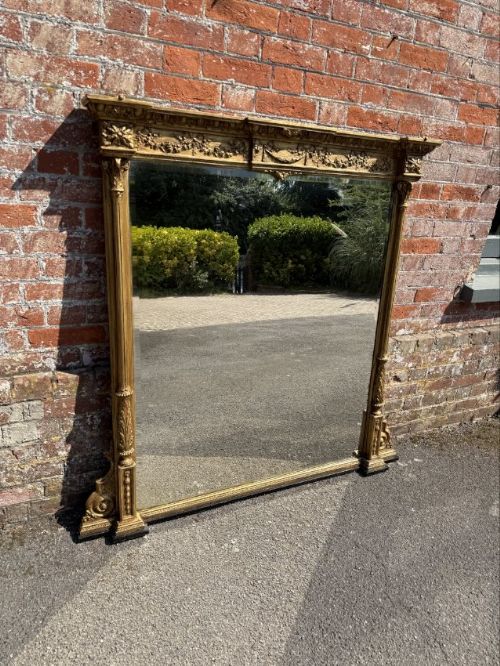
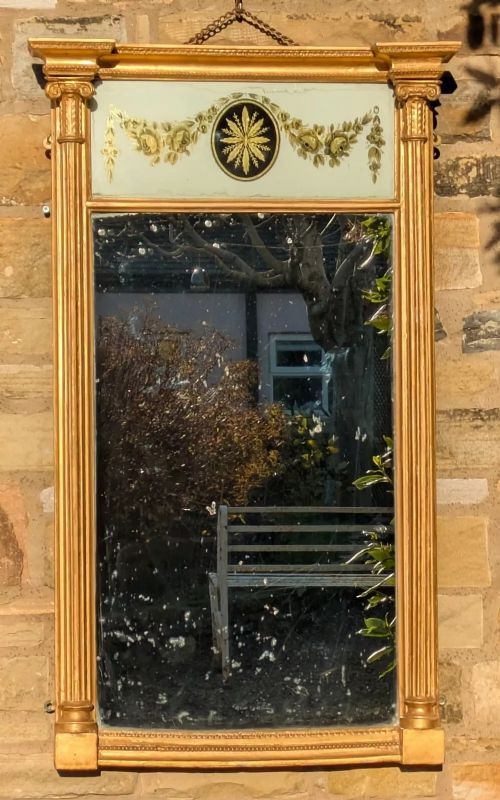
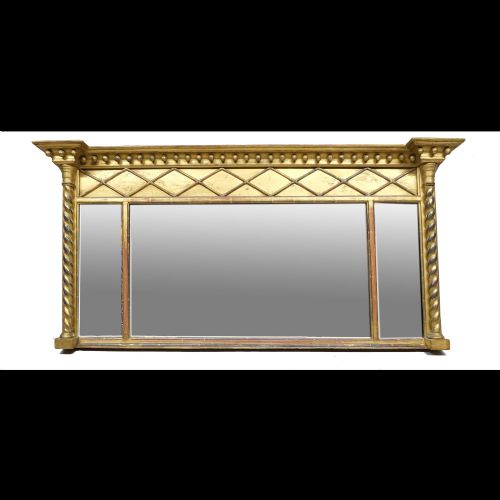
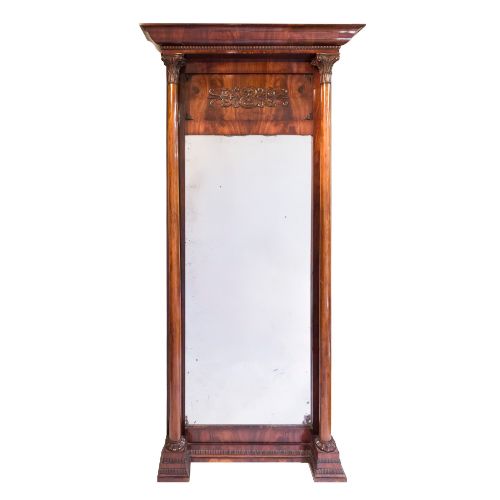
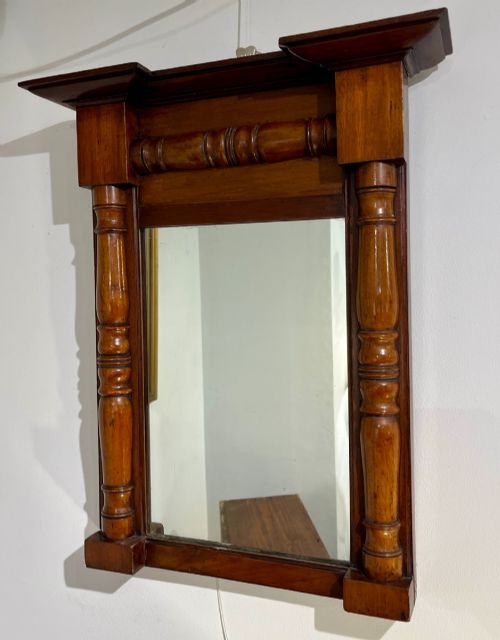
A classical column wall mirror is a framed looking glass defined by structural pilasters or columns flanking the plate. When you search for a classical column wall mirror, you encounter tall overmantels, pier mirrors designed for the narrow space between windows, and landscape formats.
The pieces on this page originate primarily from the nineteenth century, spanning Regency, Victorian, and Empire eras, alongside revival styles. Formats vary from neat triptych plates to very tall architectural frames intended to anchor a principal room.
Makers and craftsmen of the period utilised architectural principles to frame glass, often incorporating lion masks, verre eglomisé panels, or carved details. Most surviving examples display either giltwood surfaces or dark timbers such as mahogany.
Materials and construction methods
Makers constructed the foundational frames using carved wood, gesso, and timber such as mahogany, walnut, or ebonised wood. Giltwood and gold leaf were applied over gesso grounds to create brilliant reflective surfaces that caught candlelight and daylight.
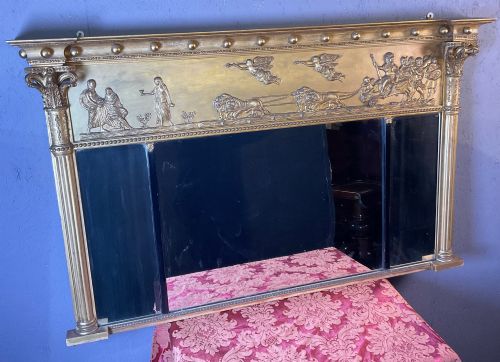
Mirror plates were set into the frames either as single sheets or as triple plate arrangements, sometimes accompanied by decorative verre eglomisé panels at the upper sections. Carved details like ribbed columns and lion masks were applied to the wood structure before gilding or painting.
Several mirrors depict unexpected scenes in their upper panels, including a chariot race carrying Anania right above the mantel.
Distinctions in quality
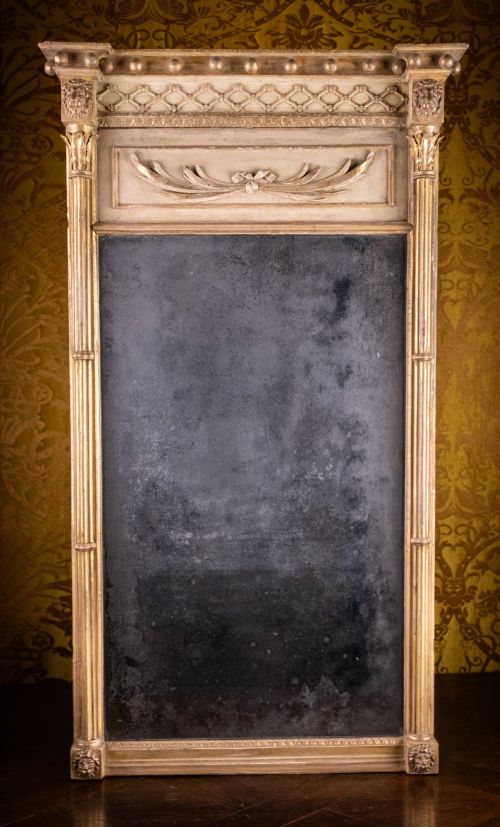
The standard of a classical column wall mirror rests on the crispness of the carved wood and gesso ornamentation. Superior examples display sharply defined column capitals, clean fluting, and deeply modelled architectural elements rather than soft, obscured plasterwork.
The integration of the frame components and the clarity of the original mirror glass or multi-plate division define the upper range. Pieces retaining their original gilding, parcel-gilt highlights, or specialised glass panels command greater attention from collectors.
The Classical Column Wall Mirror Glossary
- Pier mirror
- A tall glass designed specifically to hang on the wall space between two windows. These mirrors often match the height of the windows to maximise light reflection.
- Overmantel mirror
- A wide landscape-format mirror intended to be hung directly above a fireplace mantelpiece. They frequently feature multiple plates side by side.
- Gesso
- A plaster-like material applied to wood frames and carved before gilding. It provides a smooth base for gold leaf and intricate surface decoration.
- Verre eglomisé
- A process of cold painting and gilding on the reverse side of glass. It creates a decorative panel with a reflective, metallic finish.
- Triptych plate
- A mirror glass divided horizontally or vertically into three distinct sections within a single frame. This configuration was popular in Regency overmantels.
Classical Column Wall Mirror: Frequently Asked Questions
Where should I hang a classical column wall mirror?
These mirrors suit principal living spaces, hallways, or above a fireplace mantel where their architectural proportions can organise the surrounding wall.
Because many examples were originally designed as pier mirrors or overmantels, they work best hung at eye level to reflect natural light across the room.
How do I distinguish Regency from Victorian examples?
Regency mirrors often display cleaner classical restraint, utilising convex mouldings, ebonised details, and verre eglomisé panels inspired by ancient Roman and Greek architecture.
Victorian pieces from later decades tend to introduce heavier gesso ornamentation, richer carved wood depth, and broader proportions while maintaining the column motif.
Are the mirror plates original?
Many nineteenth-century mirrors retain their original glass, which often exhibits minor foxing, subtle distortion, or age spots due to historical silvering techniques.
Original plates contribute significantly to the character of the piece, showing authenticity that modern replacement glass simply does not replicate.
How are these large mirrors supported safely?
Due to the substantial weight of carved wood, gesso, and thick glass plates, these frames require secure wall fixings into masonry or structural studs.
Professional installation utilising appropriate mirror plates or hanging brackets ensures the weight distributes evenly across the wall structure.