

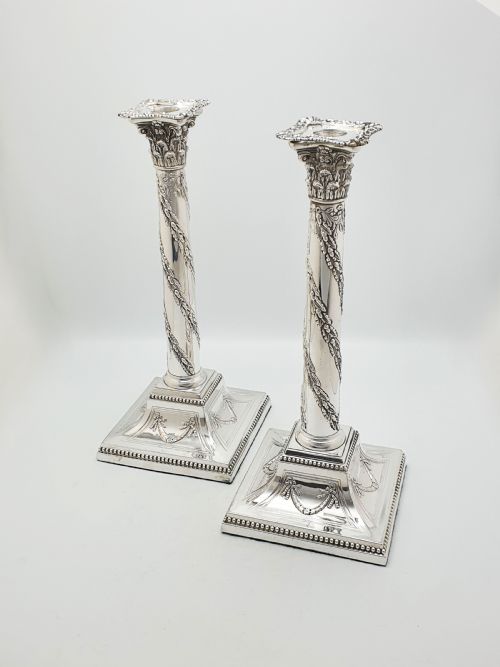


Classical Column Candle Holders
Classical column candle holders bring architectural symmetry to a room, channelling antique proportions into domestic lighting.
Classical Column Candle Holders
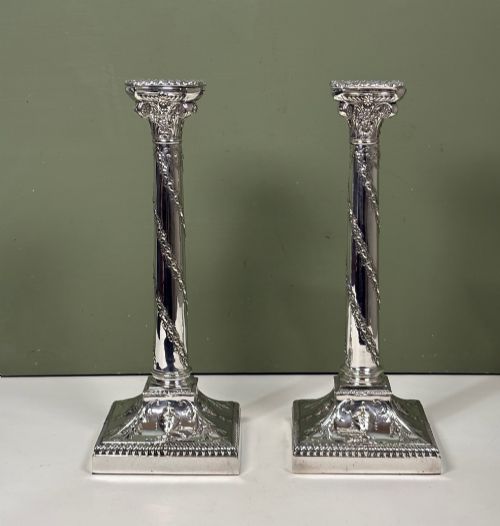
Classical column candle holders draw upon architectural forms originating in ancient Greece and Rome, echoing the ordered dignity of ancient stone shafts. When searching for classical column candle holders, buyers encounter varied expressions of this design vocabulary across different eras.
The selection here spans several centuries, drawing heavily upon the nineteenth and early twentieth centuries alongside earlier Georgian and eighteenth-century examples. Victorian and Edwardian interpretations sit alongside Regency and Empire designs, demonstrating a persistent taste for architectural symmetry.
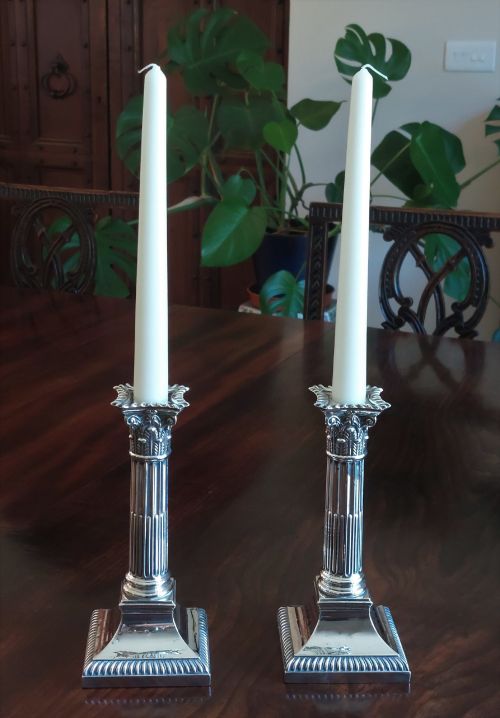
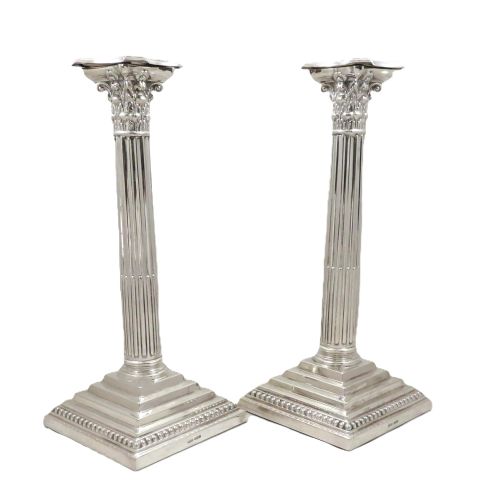
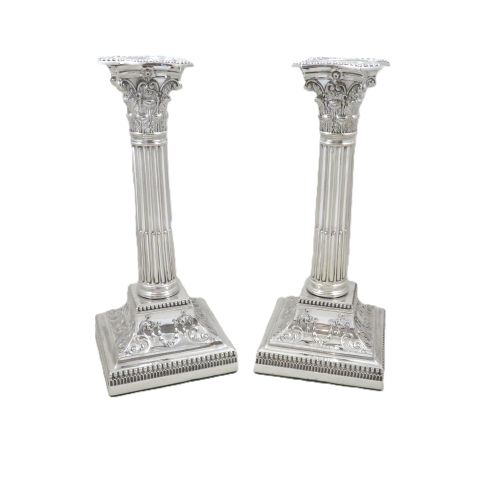
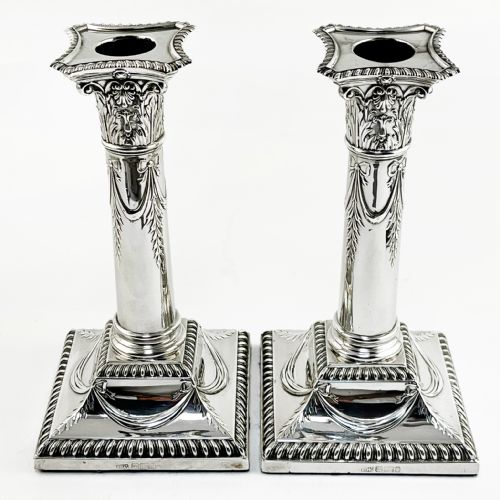
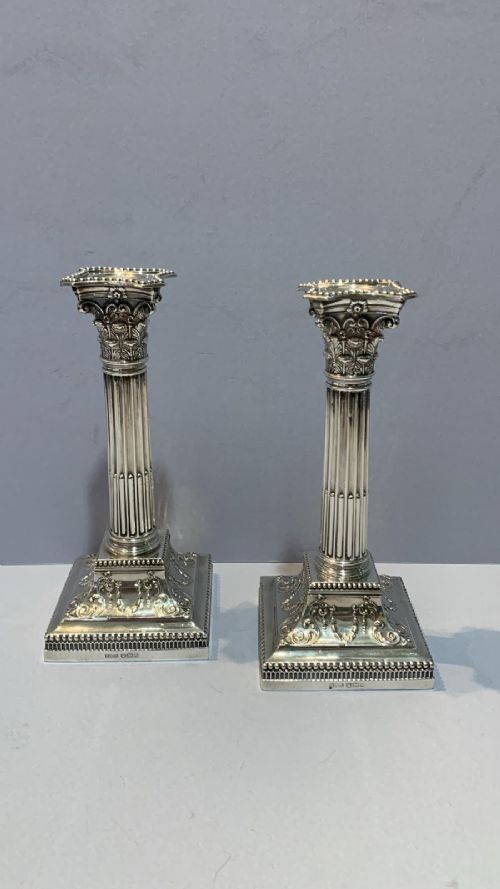
Most pieces take the form of paired candlesticks, often featuring Corinthian capitals and fluted shafts. Alongside standard candlesticks, variations include torcheres, table lamps, and larger five-light candelabras.
Materials and construction
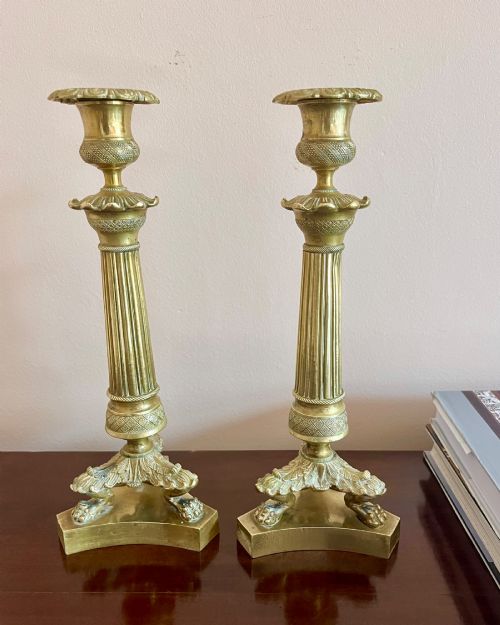
Makers utilised metals such as brass, cast brass, and various silver applications, including sterling silver, silver plate, and Old Sheffield silver plating. Gilt bronze and silvered bronze also appear, alongside fabric components.
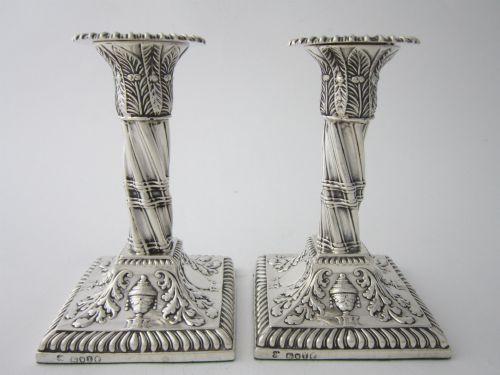
Cast construction allowed workshops to produce precise column shafts and detailed capitals with acanthus leaf decoration. Plating techniques applied precious metal layers over base metals to achieve the lustre of solid silver at a different scale of production.
Some tall brass examples stand ready to illuminate a grand hall, despite having spent most of their lives simply looking stately on a mantelpiece.
Judging the work
Quality rests upon the crispness of the casting in the capitals and the weight of the metal used in the shaft and base. Finer examples display sharp detail in the acanthus leaves and fluting without softening from repeated polishing or worn plating.
Maker attribution elevates certain pieces, particularly those bearing the marks of established silversmiths or bronze founders. The integrity of construction, from the stability of the weighted base to the alignment of the column, distinguishes standard production from superior workshop output.
Garrard & Co·J. Miller·Humphrey Hopper·John Pound & Co·Ferdinand Barbedienne
The Classical Column Candle Holders Glossary
- Corinthian column
- An architectural order marked by a slender fluted shaft and an ornate capital decorated with rows of acanthus leaves. This motif appears frequently on silver and brass candlesticks.
- Neoclassical
- A style spanning the eighteenth and nineteenth centuries that revived the classical forms of antiquity. It prioritises symmetry, straight lines, and architectural restraint.
- Old Sheffield plate
- An early form of composite metal made by fusing a thin sheet of silver to a thicker copper base. It predates modern electroplating.
- Torchere
- A tall standing candlestick or pedestal designed to support a light source. The form originates from tall torch holders used in large interiors.
- Capital
- The uppermost member of a column that mediates between the shaft and the load resting upon it. On these pieces, the capital often takes the Corinthian form.
Classical Column Candle Holders: Frequently Asked Questions
How do I date silver candlesticks?
Dating relies primarily upon hallmarks stamped into the metal, which indicate the assay office, year, and maker. Stylistic clues such as the weight of the base and the shape of the capital also help narrow the period.
Silver plate often lacks full hallmarks, requiring buyers to look at manufacturing techniques and retailer stamps instead.
Are these candlesticks usually sold as pairs?
Many examples survive and are offered as matched pairs for mantelpiece or table symmetry. Single items and occasional sets of four also appear in the listings.
Matching pairs command higher interest because original domestic settings required balanced lighting arrangements.
What is the difference between silver and silver plate?
Solid sterling silver pieces consist of precious metal throughout, usually marked with a lion passant or standard purity numbers. Silver plated items use a base metal like brass or copper coated with a thin layer of silver.
Both materials achieve a bright metallic finish, but solid silver carries intrinsic material value.
How should I clean antique brass?
Gentle dusting with a soft cloth preserves the patinated surface developed over centuries. Avoid harsh abrasive cleaners that strip away the aged character.
Unlacquered brass naturally darkens over time, which many collectors prefer to maintain.