



Classical Children Figure
A classical children figure captures youth through enduring neoclassical and Renaissance forms in bronze, marble, and oil paint.
Classical Children Figure
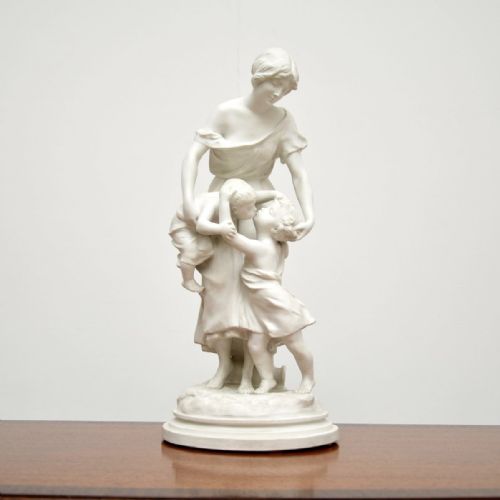
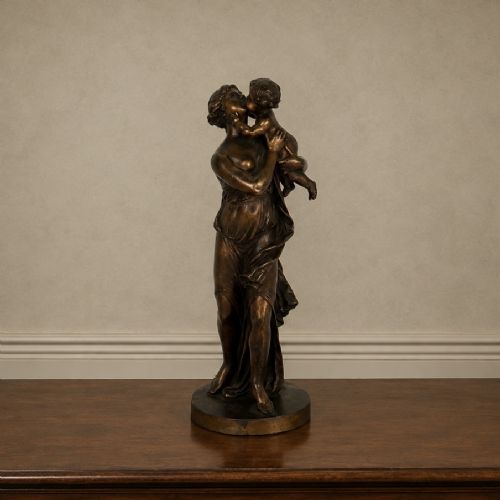
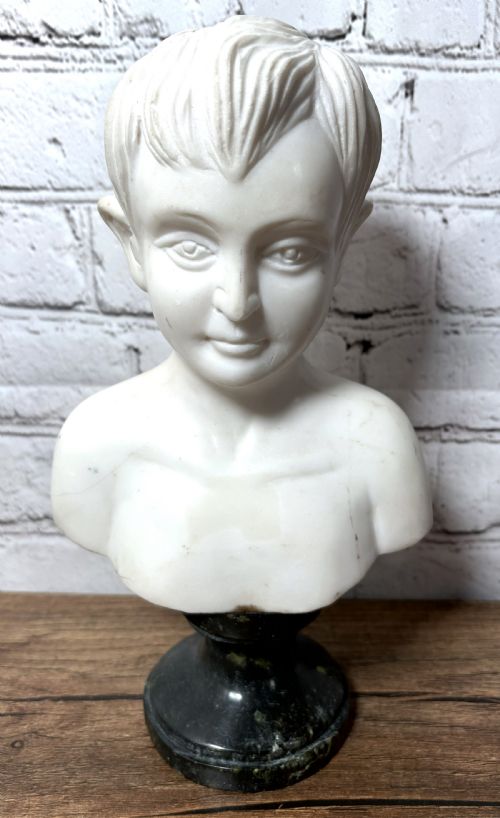
A classical children figure brings together sculptural busts, full-length statues, and painted compositions centred on youths, cherubs, and mother-and-child pairs. These pieces span the eighteenth century, the nineteenth century, and the early twentieth century, drawing heavily on Neoclassical and Renaissance ideals.
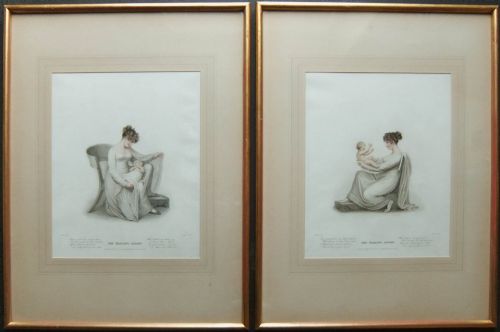
The versions most commonly met on this page include nineteenth-century French and Italian bronzes, carved marble library busts, terracotta studies, and framed engravings after earlier masters. Subjects range from allegorical youths and Biblical scenes to Grand Tour souvenirs and playful children with animals.
Materials and methods
Sculptural works rely on cast bronze, carved marble, alabaster, and terracotta, often shaped by named European founders and modellers. Bronze pieces utilise traditional lost-wax casting, frequently finished with rich patination or silvering.
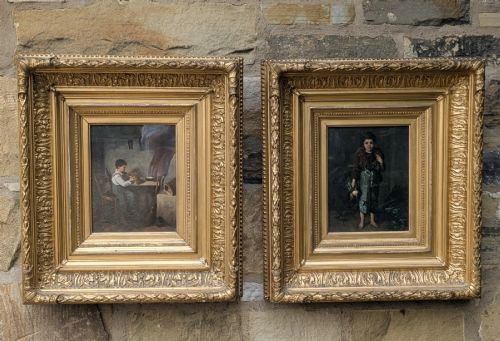
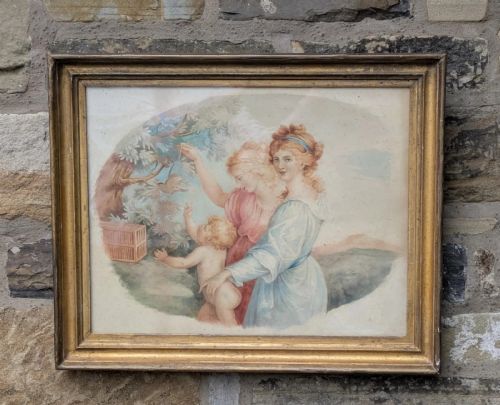
Two-dimensional representations employ oil on canvas, watercolour, mezzotint, and engraving on paper. These paintings and prints capture detailed portrait studies and religious scenes, often referencing historic compositions by artists such as Raphael and Sir Joshua Reynolds.
Materials across the listings include bronze, marble, wood, oil on canvas, glass, terracotta, giltwood, and paper.
Distinctions in quality
Quality rests upon the crispness of the carving in marble and alabaster, where the smoothness of a child's skin and the definition of hair demonstrate the sculptor's hand. In bronze castings, the subtlety of the chasing and the depth of the patina separate standard production pieces from finer studio works.
For paintings and prints, the finesse of the brushwork or the clarity of the impression dictates the piece's standing. Signed works by documented makers command closer attention for their distinct sculptural execution.
Luca Madrassi·Auguste Moreau·Antonio Rossellino·Joseph Gott·Pugi
The Classical Children Figure Glossary
- Grand Tour
- A traditional trip through Europe undertaken by upper-class young men in the eighteenth and nineteenth centuries. Travellers frequently collected small bronzes and marble busts as tangible mementos of classical art.
- Patina
- The surface sheen or colour developed on bronze over time or through chemical treatment. A well-maintained patina enhances the contours of a figure.
- Terracotta
- Fired clay used extensively for sculptural models and finished figures. Its warm reddish-brown tone allows for expressive, direct modelling by the artist.
- Mezzotint
- A printmaking process of the intaglio family where the plate is roughened to achieve rich tonal gradations. It was frequently used to reproduce oil paintings of classical and historical subjects.
- Alabaster
- A fine-grained mineral stone prized for its translucency and softness. Sculptors utilise it for delicate portrait busts and small decorative items.
Classical Children Figure: Frequently Asked Questions
What periods do these pieces date from?
The listings span from the eighteenth century through the nineteenth century and into the early twentieth century. Many objects reflect earlier Renaissance and Baroque revivals.
Items range from eighteenth-century oil paintings to Victorian bronzes and Edwardian marble busts.
Are these sculptures made of solid bronze?
The evidence records various bronze objects, including statues, plaques, and lamp bases, alongside silvered bronze and gilded bronze. Methods vary from standard foundry casts to detailed chased studies.
Many bear signatures from European workshops and named sculptors active in the nineteenth century.
What subjects are common in these artworks?
Common subjects include young boys and girls, sleeping cherubs, and mother-and-child groupings inspired by classical motifs. Scenes of children with animals, grapes, or flowers also appear frequently.
Religious compositions such as the Madonna and Child with Saint John the Baptist draw directly on Renaissance sources.
How do marble and alabaster pieces differ?
Marble provides a dense, durable medium suitable for garden statues, library busts, and architectural carvings such as Carrara marble. Alabaster offers a softer, more translucent quality often chosen for interior busts and small figurative studies.
Both materials were carved extensively during the nineteenth and early twentieth centuries.
Where do the paintings and prints originate?
The works on paper and canvas include oil paintings, watercolours, mezzotints, and engravings. Several pieces reference historic compositions by artists like Raphael, Sir Joshua Reynolds, and Bartolomeo Schedoni.
Subjects range from direct portrait studies to narrative classical scenes.