



Classical Candle Light
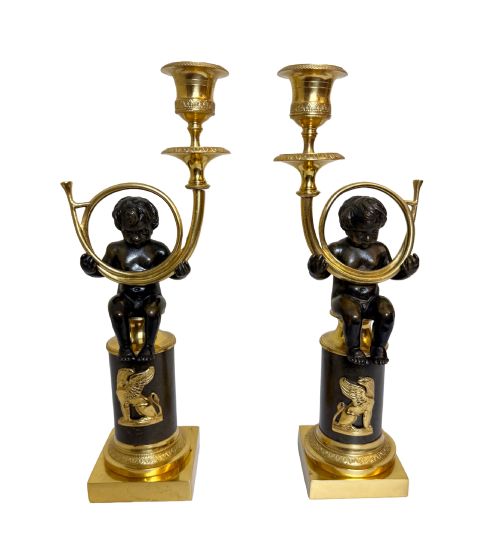
Classical candle light illuminates rooms through cast bronze, polished brass and carved marble shaped into candelabra, wall lights and chandeliers.
Classical Candle Light
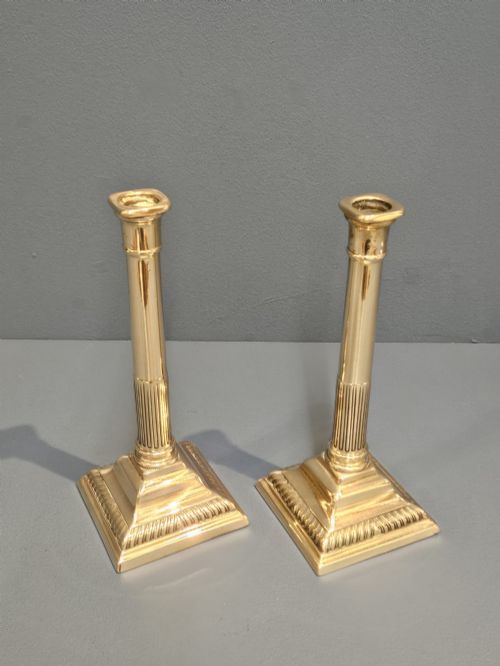
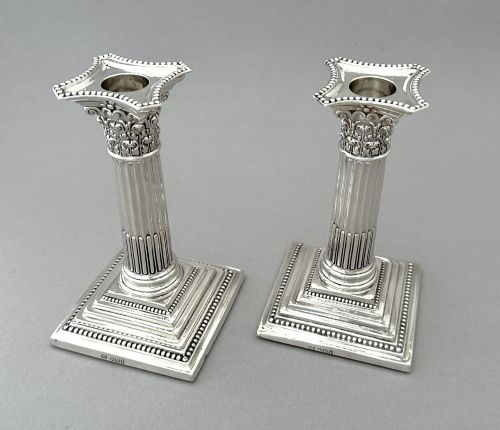
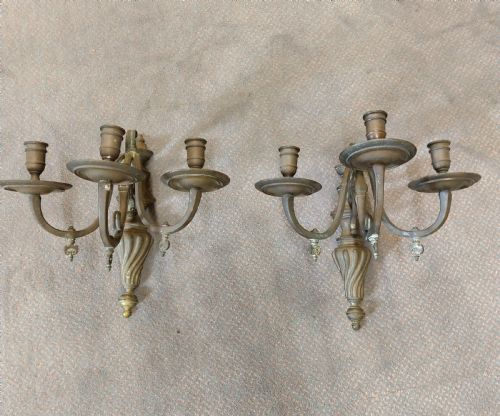
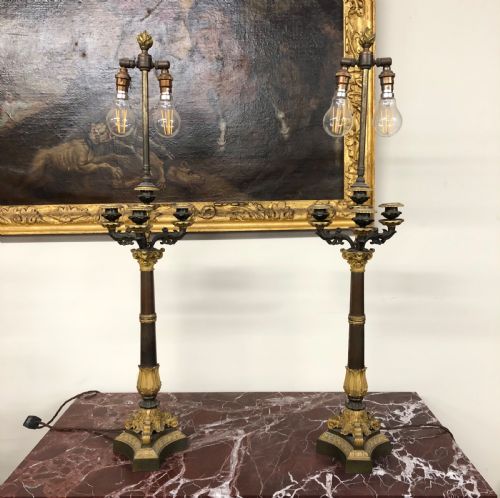
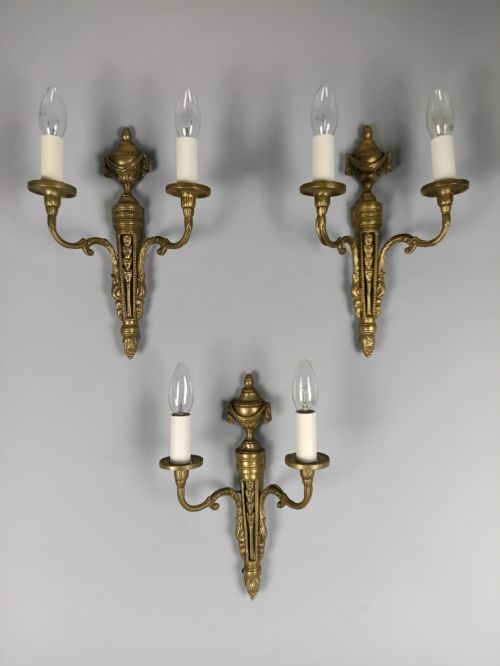
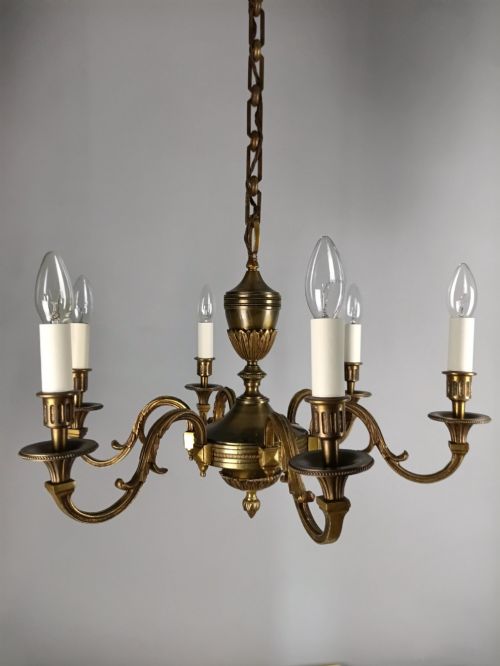
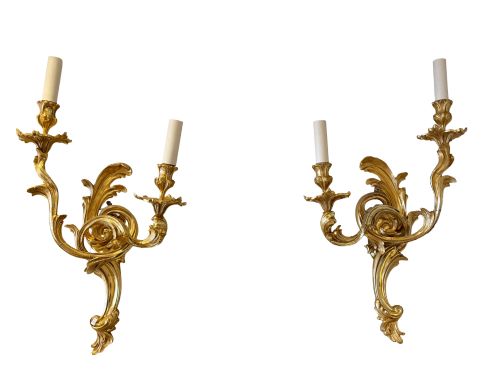
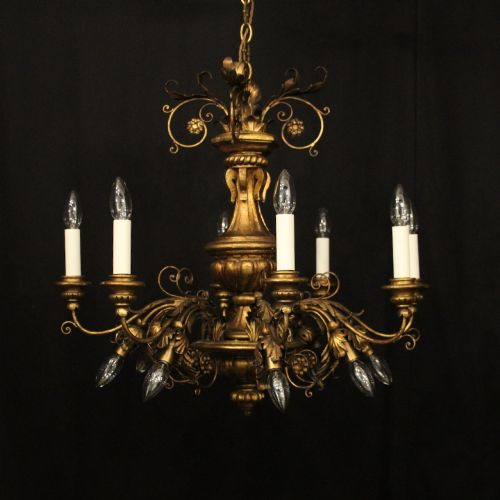
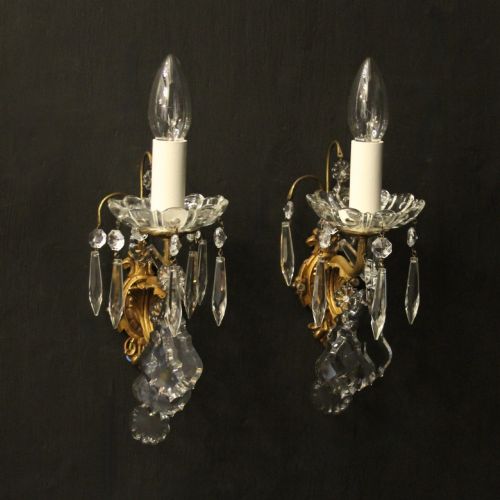
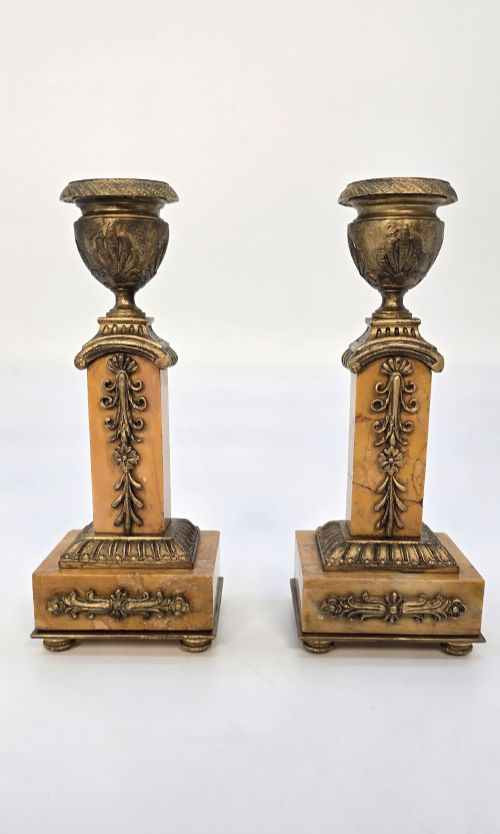
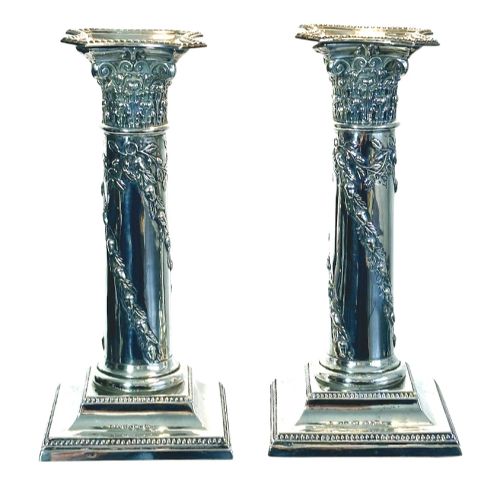
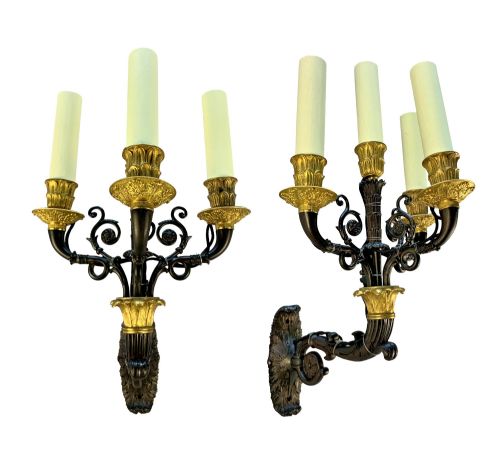
Classical candle light encompasses lighting fixtures designed to hold candles or configured for electricity, spanning candlesticks, candelabra, wall sconces and chandeliers. Buyers seeking classical candle light encounter pairs of gilt bronze and marble candlesticks alongside multi-branch wall lights and heavy chandeliers.
The objects originate from various periods including the Regency era, the nineteenth century and the early twentieth century. French Empire and Louis XVI styles frequently appear alongside Victorian and Edwardian examples.
Materials and construction
Metalwork dominates these pieces, utilising cast bronze, gilded brass, ormolu, silver plate and sterling silver. Gilt bronze and ormolu provide a rich surface finish that reflects candlelight effectively.
Combination with other materials occurs often, pairing metals with Carrara marble, white marble, crystal drops and carved giltwood. These mixed media constructions require precise joinery to secure heavy bronze mounts to stone bases.
Classical Candle Light Retail Price Guide 2026
Typical asking prices for classical candle light among the pieces listed under this phrase on Sellingantiques today, from the lower quarter to the upper quarter. They describe what is for sale here now, not the wider market.
Some nineteenth-century candelabra depict mythological figures like Hercules and Hesione holding up the branching lights.
Judging quality
Quality rests upon the crispness of the casting and the depth of the gilding or ormolu work. Finer pieces display sharp chased details on figures, acanthus leaves and fluted columns, whereas lesser items show softer contours from worn moulds.
The weight and selection of supplementary materials also divide the range. Solid marble bases and heavy gauge metals indicate superior craftsmanship compared to thin pressings and hollow components.
Pierre Philippe Thomire·Thomas Hope·F. & C. Osler
The Classical Candle Light Glossary
- Ormolu
- A technique of applying finely ground high-carat gold to a bronze object. This mercury gilding imparts a warm, durable lustre.
- Candelabra
- A branched candlestick holding multiple candles or light fittings. They often feature central columns flanked by symmetrical arms.
- Wall Sconce
- A wall-mounted lighting fixture designed to project illumination forward into a room. These fixtures utilise one or more arms attached to a backplate.
- Carrara Marble
- A type of white or blue-grey marble quarried in the city of Carrara in Tuscany. It provides a dense, smooth base for bronze mounts.
Classical Candle Light: Frequently Asked Questions
How were multi-branch candelabra used?
Multi-branch candelabra stood upon dining tables, mantelpieces and sideboards to provide ambient illumination during the evening. Their multiple arms allowed several candles to burn simultaneously, increasing the light output in large reception rooms.
Many surviving examples have been adapted for electricity while retaining their original branch configurations. This allows modern interiors to utilise them safely without open flames.
How do I identify a Regency period piece?
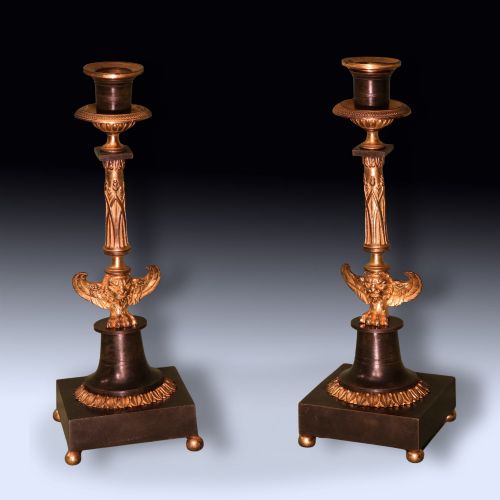
Regency items often incorporate classical motifs inspired by ancient Rome and Greece, such as draped figures, patinated bronze and contrasting ormolu mounts. The forms tend to display geometric clarity and restrained ornamentation compared to later Victorian exuberance.
Material combinations from this era frequently pair dark patinated bronze with bright gilded highlights. Examining the joinery and chasing quality helps confirm the period of manufacture.
Where should wall lights be placed?
Wall lights suit flanking positions beside mirrors, fireplaces or architectural doorways where they can cast balanced illumination. Pairs of twin-arm or multi-light sconces create symmetry on either side of a focal point in a room.
Height placement depends on the ceiling proportion and the height of surrounding furniture. Positioning them at eye level ensures the light source is distributed effectively across the wall surface.