


Classical Bronze Wall Plaque
A classical bronze wall plaque brings antique sculptural form into a room, offering tactile relief work rooted in historical motifs.
Classical Bronze Wall Plaque
A classical bronze wall plaque represents a sculptural relief panel designed for interior display, drawing heavily on ancient themes and revivalist aesthetics. These pieces typically take the form of roundels, rectangular plates, or cast portraits that echo antique statuary and architectural friezes.
The versions most commonly met on this page date from the nineteenth century, reflecting periods such as the Victorian era, Classical Revival, and French Empire. Makers produced these works in bronze, copper, and cast metals, frequently patinated to simulate ancient artefacts collected during the Grand Tour.
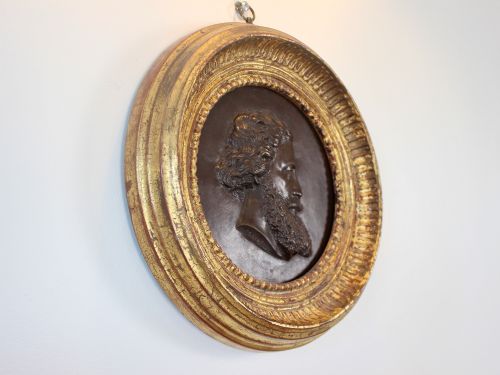
Subjects range from mythological figures like Diana the huntress and Bacchus to portraits of bearded gentlemen, muses, and religious scenes derived from earlier masters. Their primary function remains decorative, serving as focal points on wood-panelled walls or within domestic display spaces.
Materials and production methods
Makers utilised casting techniques in bronze, brass, and copper to achieve durable relief panels, occasionally employing repousse methods to push decorative designs forward from thin sheet metal. Patination treatments were applied to the metal surfaces to darken high points or create aged verdigris effects, mimicking the appearance of excavated antiquities.
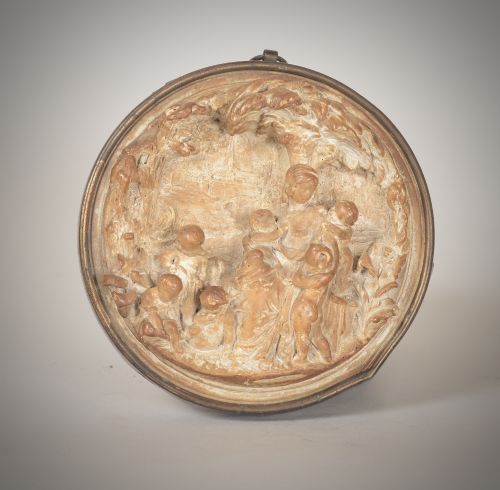
Many metal reliefs were mounted onto supportive backings such as turned wood and giltwood frames, enhancing their depth and suitability for wall hanging. Plaster and lead compositions also appear, sometimes treated with bronze finishes to imitate heavier cast metal work at a different scale.
Napoleon and Marie-Louise peer perpetually from within turned mahogany frames.
Factors of distinction
The sophistication of the patination and the quality of the secondary materials, such as finely turned mahogany frames or integrated suspension rings, elevate the overall presence of the object. Signed works or those linked to specific foundries and exhibitions carry greater documentary interest for collectors.
MAINFROY·Smith, Beck & Beck·Gian Federigo Bonzagna·Coalbrookdale
The Classical Bronze Wall Plaque Glossary
- Patination
- The surface coloration and chemical ageing applied to bronze or copper. This process alters the raw metal tone to replicate historical weathering.
- Repousse
- A metalworking technique where the artisan hammers the design from the reverse side to create a raised relief on the front. It allows for intricate dimensional work in thinner sheets of metal.
- Grand Tour
- A traditional educational trip across Europe undertaken by young upper-class men in the eighteenth and nineteenth centuries. Travellers frequently purchased small antiquities, bronzes, and architectural models as souvenirs.
- Roundel
- A circular panel or decorative work of art. These pieces often feature profile portraits or classical figural scenes contained within a circular border.
- Maquette
- A small preliminary model or sketch made by a sculptor prior to executing the final full-scale work. They reveal the initial exploratory stages of sculptural design.
Classical Bronze Wall Plaque: Frequently Asked Questions
What is a classical bronze wall plaque?
A classical bronze wall plaque is a cast metal relief panel depicting historical, mythological, or portrait subjects in a traditional style. These pieces were designed to be mounted on interior walls as decorative art.
They draw on ancient Greco-Roman motifs and later revivals, making them popular additions to nineteenth-century domestic interiors.
How do I hang a wall plaque?
Most antique plaques feature integrated loops, hanging rings, or substantial frames equipped for wall suspension. It is important to assess the weight of the metal and use appropriate fixings suited to your wall type.
Ensure the hanging wire or bracket is secure, as cast bronze and framed metal reliefs can be surprisingly heavy.
What periods do these pieces date from?
The pieces listed primarily date from the nineteenth century, encompassing styles such as Victorian Neoclassical, French Empire, and Renaissance Revival. Some items reference earlier eighteenth-century compositions or classical antiquity.
Craftsmanship from this era often reflects nineteenth-century fascination with historical scholarship and the Grand Tour tradition.
Are all plaques made of solid bronze?
Not all pieces are cast from solid bronze; materials vary across the listings to include copper, brass, patinated lead, and cast plaster with metal finishes. Frames are frequently constructed from wood or giltwood to complement the central plaque.
Checking the material description for each individual item clarifies its specific composition and weight.