



Classical Bronze Mantel Ornaments
Classical bronze mantel ornaments bring architectural gravity and mythological presence to a room, cast in heavy metal and mounted on stone.
Classical Bronze Mantel Ornaments
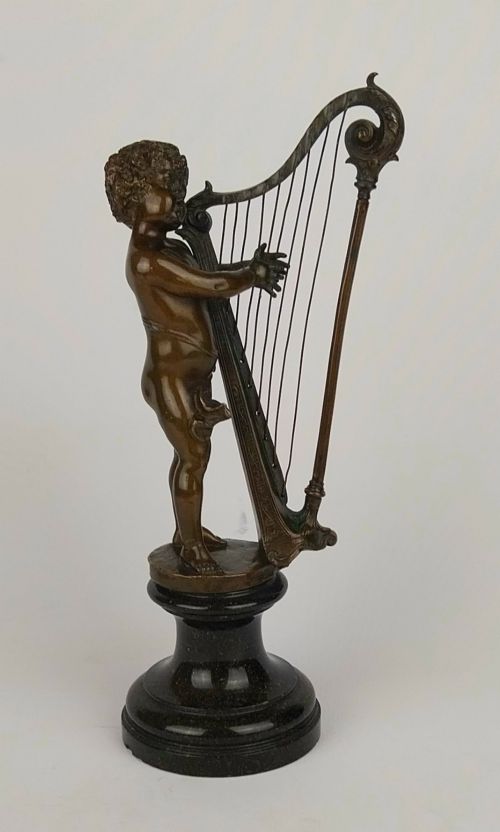
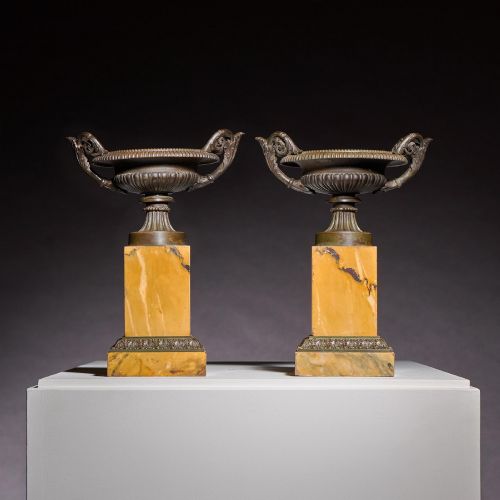
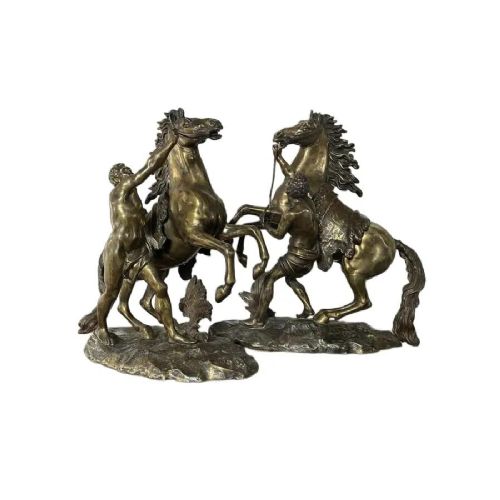
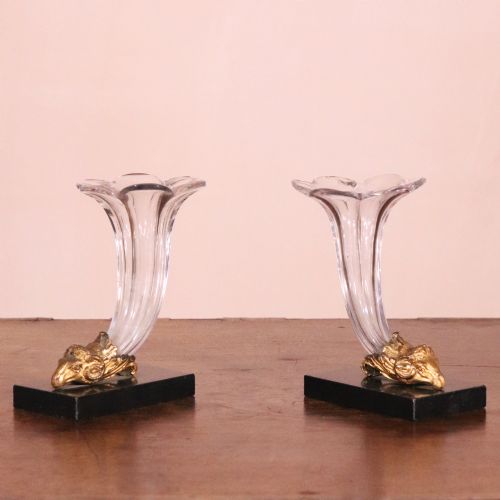
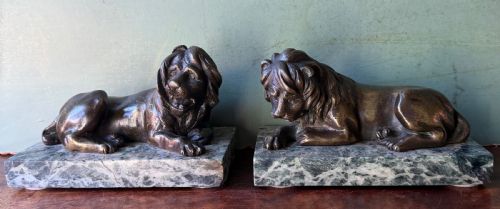
Classical bronze mantel ornaments take the form of figures, pairs of lions, campana-shaped urns, tazzas, and cornucopias designed to sit on a chimney piece. These decorative objects draw heavily on Regency, Victorian, and French Neoclassical styles, frequently pairing cast metal with contrasting stone bases.
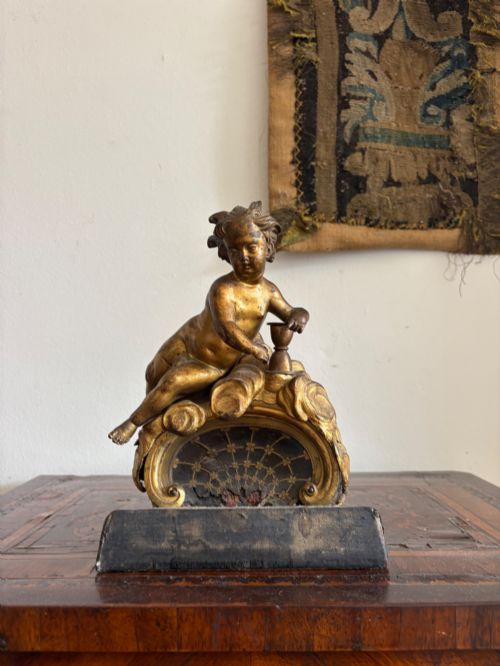
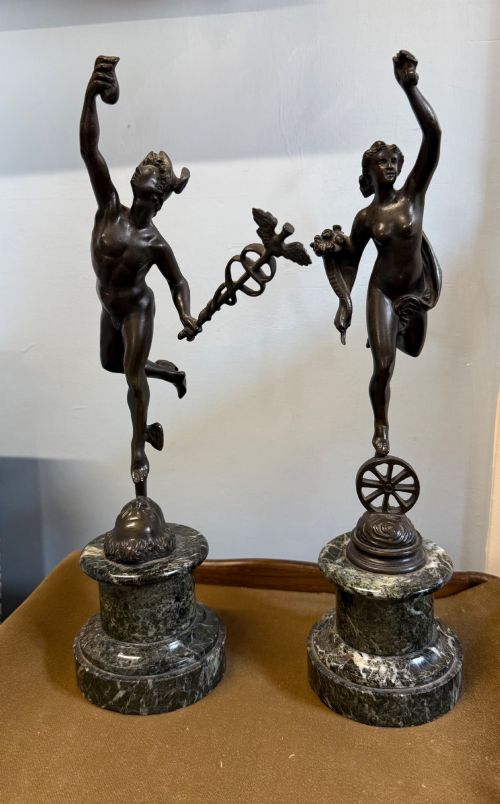
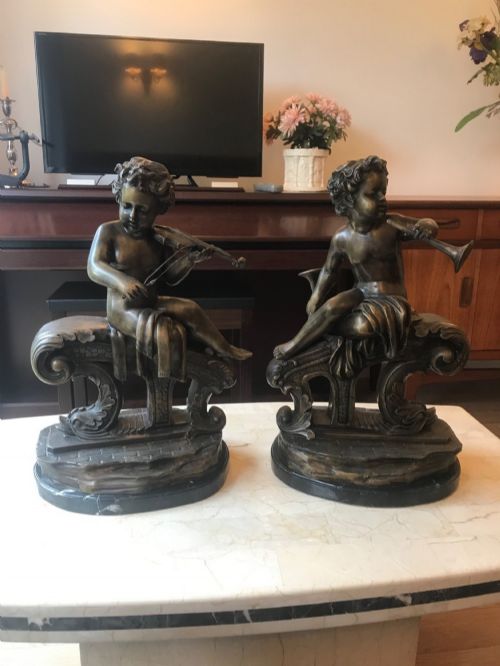
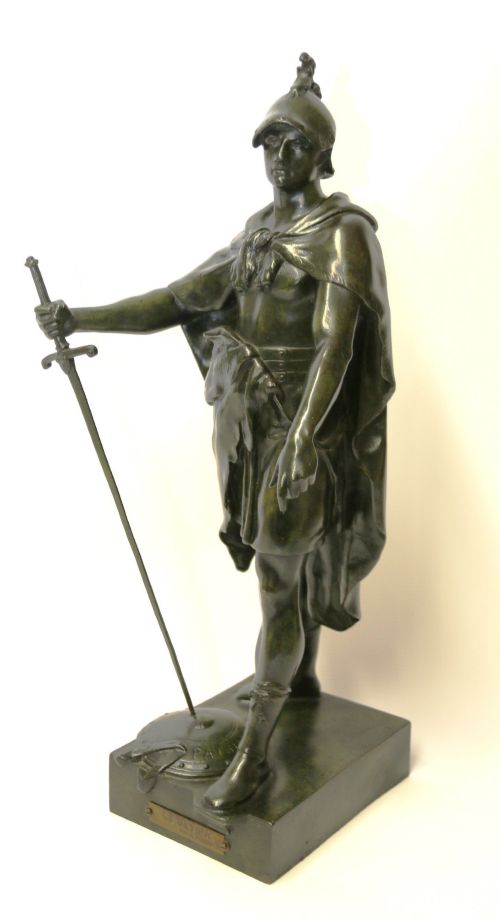
The versions most commonly met on this page date from the nineteenth century, including Grand Tour pieces and French castings depicting mythological figures, putti, and Roman soldiers. Makers frequently mounted these bronzes on antico verde or Siena marble plinths, creating stable ornaments with substantial physical weight.
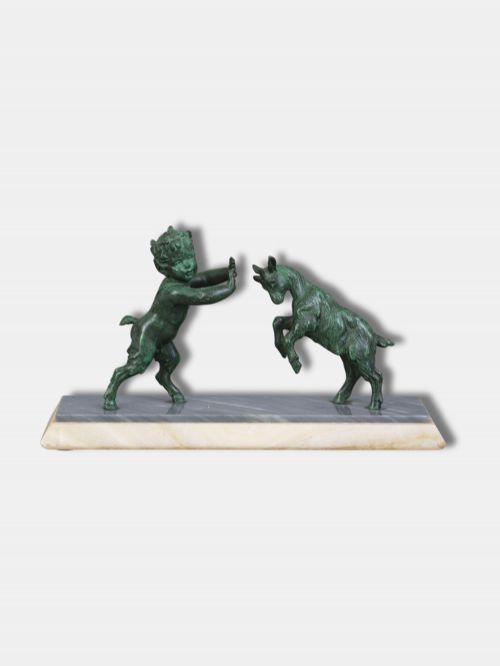
Compositions range from single figural statues and portrait busts to symmetrical pairs of ewers and decorative vases. The decorative vocabulary borrows directly from classical antiquity, incorporating cherubs, fauns, and heroic figures into domestic settings.
Materials and casting techniques
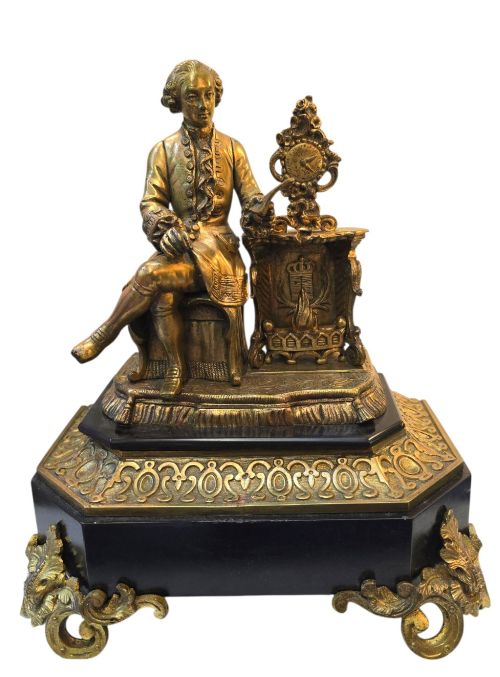
Foundries utilised traditional bronze casting methods to create these ornaments, sometimes applying mercury gilding or ormolu finishes to highlight specific details of the figures and mounts. Patinated bronze surfaces contrast with areas of polished metal or silvering to define the drapery and musculature.
Many ornaments incorporate natural stone elements, combining cast bronze components with turned bases of Siena marble or antico verde. Alternative metal alloys such as spelter or cast metal also appear in place of solid bronze on certain decorative campana urns and statues.
Classical Bronze Mantel Ornaments Retail Price Guide 2026
Typical asking prices for classical bronze mantel ornaments among the pieces listed under this phrase on Sellingantiques today, from the lower quarter to the upper quarter. They describe what is for sale here now, not the wider market.
Listings feature 19th-century French and Regency pieces cast in bronze, gilt bronze, and ormolu, mounted on marble bases.
Distinctions in execution and finish
The integration between the bronze casting and its marble base indicates the original ambition of the piece, with tightly fitted mounts and heavy pedestals showing greater care than lighter composite constructions.
Émile Louis Picault·Emile Carlier·Clodion·Claire Colinet·Emmanuel Villanis
The Classical Bronze Mantel Ornaments Glossary
- Ormolu
- Gilded bronze, where a layer of gold amalgam is applied to the metal surface through heat treatment. This technique produces a warm, enduring golden finish often found on nineteenth-century French mounts.
- Antico verde
- A dark green decorative marble featuring pale green and white veining. It was frequently utilised for architectural bases and pedestals during the Regency and Victorian periods.
- Tazza
- A shallow cup or bowl raised on a stem and foot, usually serving a decorative purpose in classical interiors. These items were popular souvenirs from the Grand Tour.
- Cassolette
- A decorative vessel shaped like a vase or urn featuring a reversible lid that functions either as a solid cover or a candle socket. They often form matching pairs on mantelpieces.
- Patination
- The surface coloration and texture developed naturally over time or applied chemically to bronze. A controlled patina deepens the shadows and highlights the contours of figural sculpture.
Classical Bronze Mantel Ornaments: Frequently Asked Questions
How do I clean antique bronze?
Dust the surface gently with a soft, dry brush to prevent dirt accumulation in the crevices of the casting. Avoid chemical polishes that strip away the historical patination.
Apply a very thin coat of microcrystalline wax if the metal requires protection against atmospheric moisture. Buff lightly with a clean cloth after application.
What is a Grand Tour ornament?
Grand Tour ornaments are decorative pieces purchased by wealthy travellers visiting classical sites in Italy and France during the nineteenth century. They served as portable reminders of classical sculpture and architecture.
These objects include reduction bronzes of famous statues and marble-mounted tazzas designed for domestic display.
How can I date a bronze casting?
Examine the underside of the piece for casting seams, tool marks, and the type of fixings securing the bronze to the marble base. Hand-chased details and warm, complex patination typically indicate nineteenth-century production.
Signatures or foundry marks stamped into the metal can also narrow down the date of manufacture when cross-referenced with known artist working periods.
Where should I place these ornaments?
Position pairs symmetrically on a mantelpiece, sideboard, or bookcase where their weight and height provide architectural balance. Ensure the supporting furniture is sturdy enough to hold heavy marble and bronze assemblies.
Keep them away from direct heat sources and strong sunlight to preserve the stability of the stone bases and the integrity of the patinated surfaces.