


Classical Bronze Desk Ornament
A classical bronze desk ornament brings antiquity and mythological figures into the study, cast in metal and mounted on stone.
Classical Bronze Desk Ornament
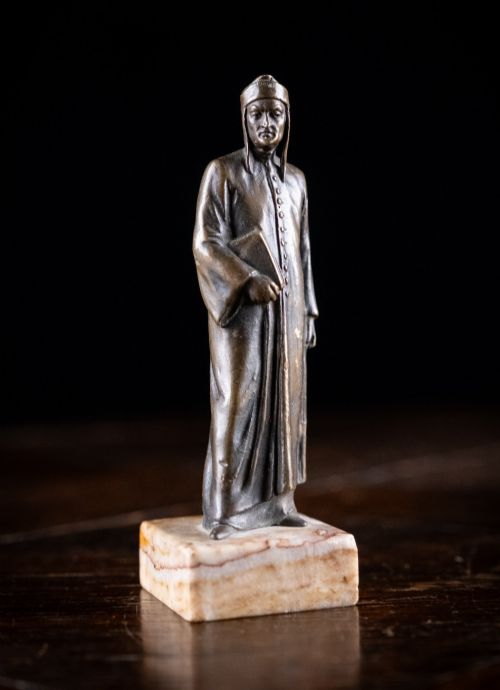
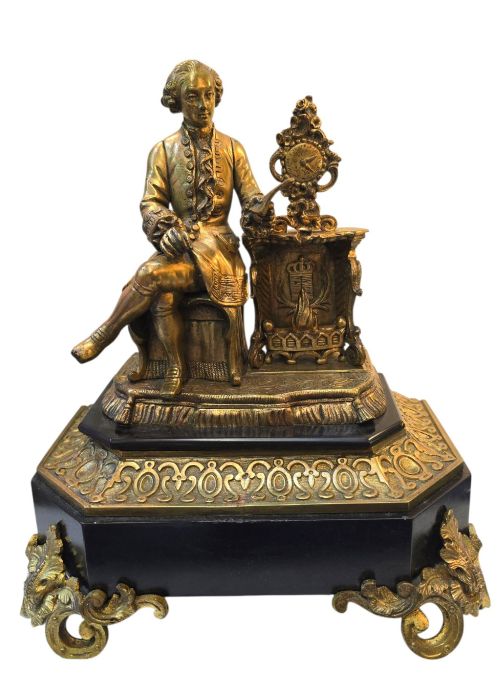
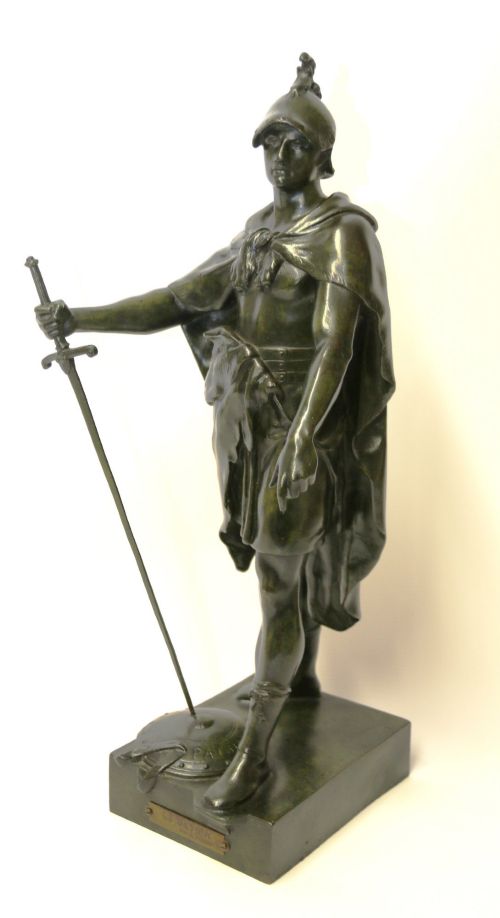
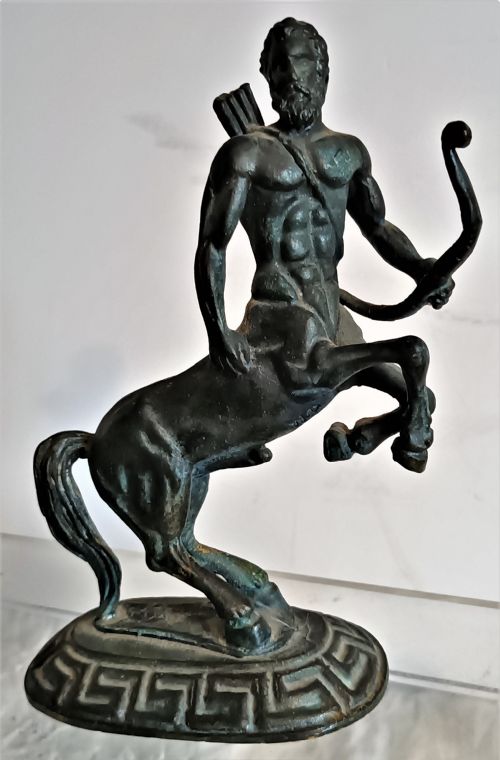
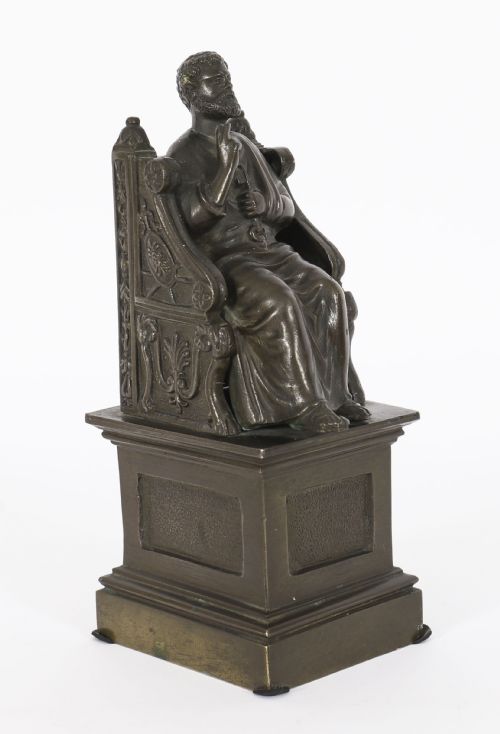
A classical bronze desk ornament takes the form of small sculptures, statuettes, architectural models and inkwells created to sit upon a library table or writing surface. These objects draw heavily on classical antiquity, depicting mythological figures, lions, historical personages and architectural models derived from Grand Tour travels.
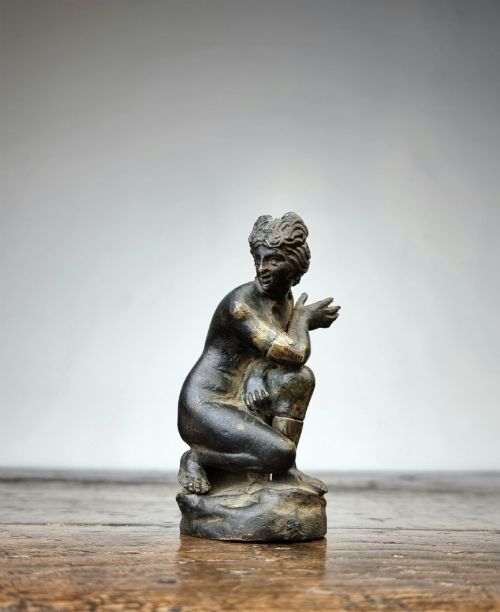
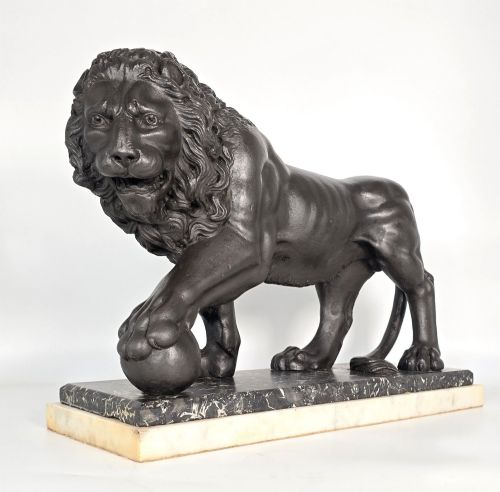
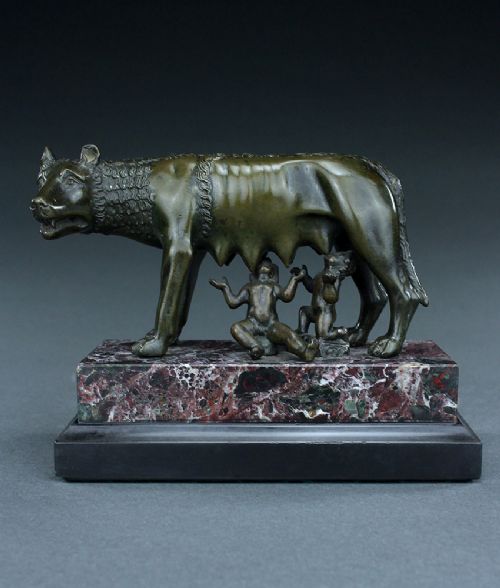
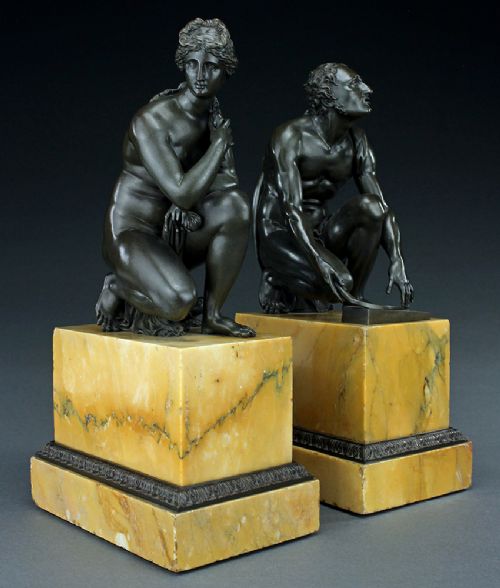
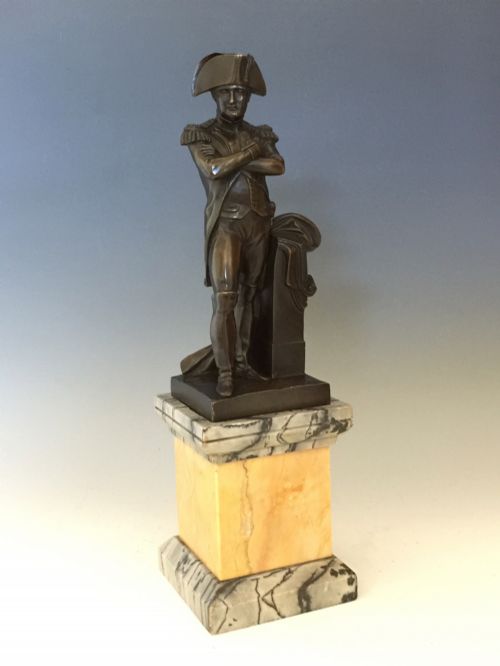
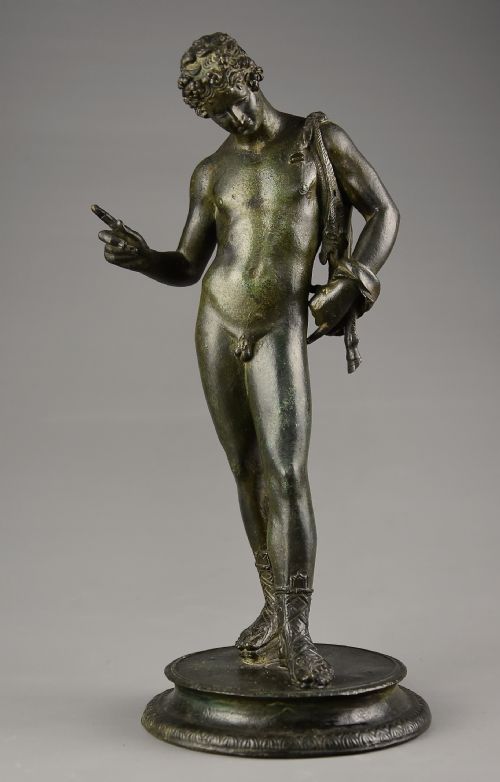
The pieces appearing most frequently belong to the nineteenth century, often reflecting French academic sculpture, Grand Tour taste or Neoclassical design. Makers cast figures such as Venus, Narcissus, Napoleon and the Medici lion, frequently mounting them on marble plinths.
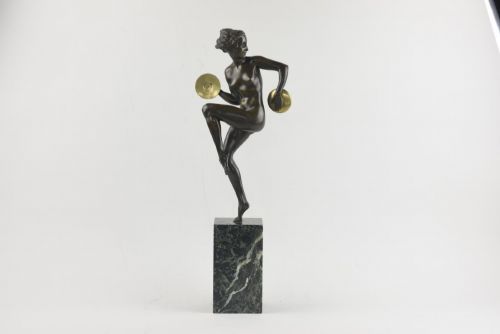
Beyond standalone figures, functional items such as gilt bronze and marble inkwells serve the desk alongside decorative statuettes. The tradition spans from seventeenth-century small bronzes through to Art Deco dancers and twentieth-century Olympian studies.
Materials and technique
Foundry workers cast these ornaments in bronze, sometimes employing gilt bronze, ormolu or patinated bronze to achieve varied surface finishes. Dark green patination and rich brown tones bring out the modelling of the figures.
Many works combine metal with heavy stone bases, notably Siena marble and other decorative varieties that anchor the lighter bronze sculpture above. Wood and brass also appear in the construction of desk pieces and their mounts.
Some nineteenth-century sculptors cast musical cherubs and pipers playing to fawns, bringing a touch of pastoral mischief directly to the desk.
Variations in quality
Quality rests in the crispness of the casting and the sensitivity of the chiselling applied after the metal leaves the mould. Better examples retain sharp details in hair, drapery and facial expressions without losing form in softening metal.
The integration between the bronze figure and its marble plinth indicates the care taken during assembly. Superior patination shows depth and varied tone rather than a flat, uniform lacquer.
Pierre-Augustin Caron de Beaumarchais·Émile Louis Picault·Aurore Onu·Eugène Désiré Piron·Carl Kauba·Paul Fournier·Moreau·Aug. Moreau
The Classical Bronze Desk Ornament Glossary
- Patinated bronze
- Bronze treated with chemicals to produce a specific surface colour, commonly deep brown or dark green. This finish protects the metal and defines sculptural contours.
- Grand Tour
- A cultural journey undertaken by wealthy young Europeans visiting classical sites in Italy. Souvenirs included small bronzes and architectural models.
- Ormolu
- Finely ground high-carat gold applied to a bronze object using mercury amalgamation. The technique yields a bright golden finish seen on decorative mounts and inkwells.
- Siena marble
- A yellow-gold ornamental limestone quarried in Italy, frequently used as a contrasting base for nineteenth-century bronze sculptures.
- Neoclassical
- A style inspired by the art and architecture of classical Greece and Rome, prominent during the eighteenth and nineteenth centuries.
Classical Bronze Desk Ornament: Frequently Asked Questions
What is a classical bronze desk ornament?
It is a small sculpture, statuette or inkwell cast in bronze, often depicting mythological subjects, historical figures or architectural models.
These pieces were designed to decorate desks and writing tables, drawing inspiration from classical antiquity and Grand Tour travels.
How were these bronzes mounted?
Many figures are secured to heavy stone bases, with Siena marble and other decorative varieties providing a stable foundation and visual contrast.
Some smaller pieces stand independently or incorporate functional elements like inkwells within their stone and metal designs.
What periods do these desk ornaments come from?
The selection spans several centuries, with a strong representation of nineteenth-century French and Grand Tour examples.
Earlier works include seventeenth-century figures, while later pieces extend into Art Deco and twentieth-century modernist styles.
How do you care for patinated bronze?
Patinated bronze requires gentle dusting with a soft, dry cloth to prevent the accumulation of grit and moisture.
Avoid chemical cleaners and polishes, which can strip away the historical patination and damage the underlying metal finish.