



Classical Bronze Candelabra Pair
A classical bronze candelabra pair brings commanding neoclassical dignity and warm illumination to a mantelpiece or side table.
Classical Bronze Candelabra Pair
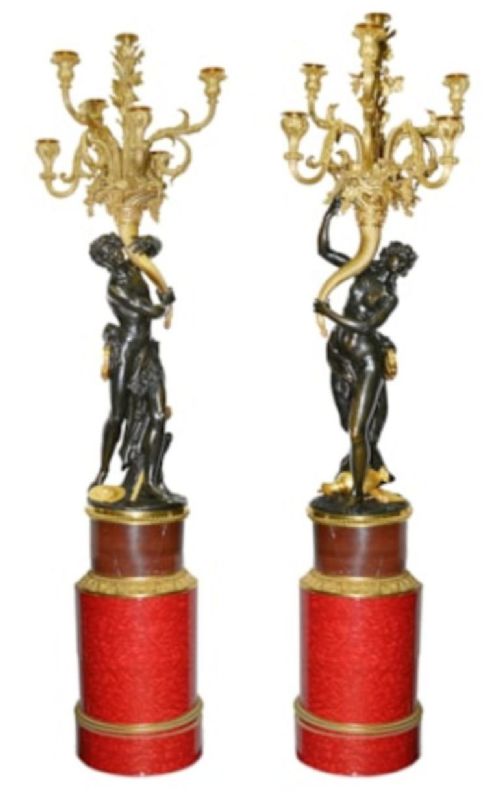
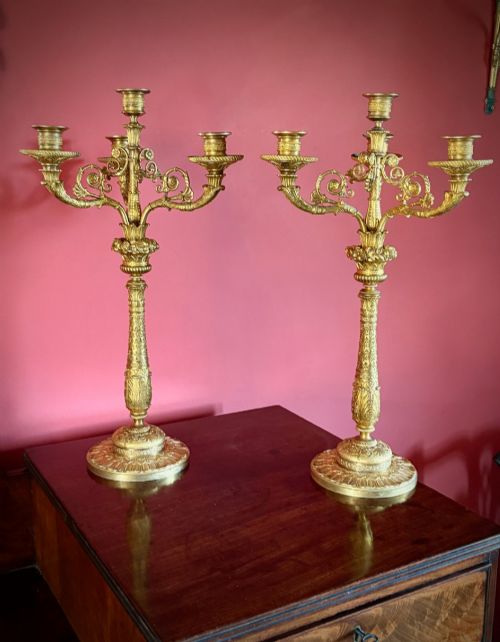
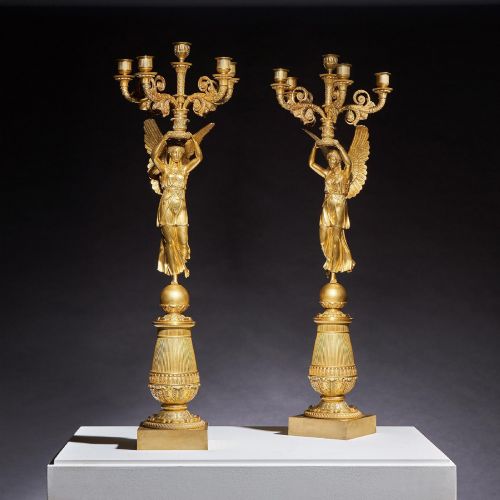
When looking for a classical bronze candelabra pair, collectors encounter matching multi-light candleholders dominated by nineteenth-century French Empire, Regency, and Louis XVI styles. These decorative lighting pieces frequently combine cast metal figures with stone bases, reflecting classical mythologies and Greco-Roman design themes.
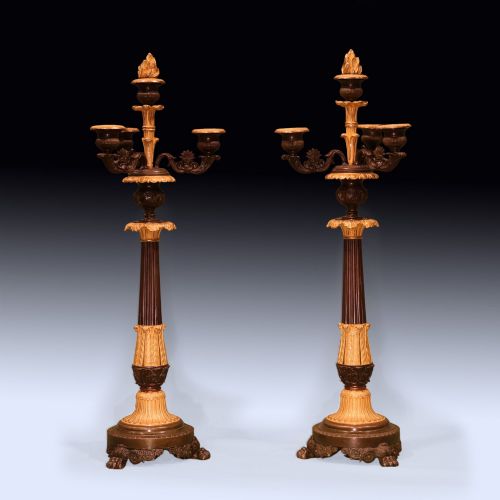
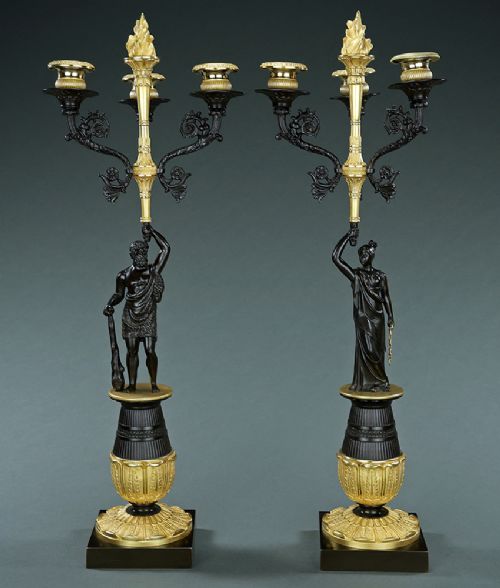
The selections available range from sturdy four-arm Regency ormolu examples to elaborate French figural torchères featuring cherubs, maidens, and mythological subjects like Hercules. Most items date from the nineteenth century, capturing periods of intense revivalism across English and continental workshops.
Alongside standard candelabra forms, the listings include related lighting fixtures such as wall sconces, candlesticks, and occasional lamp conversions designed for domestic display. These pieces function as sculptural centrepieces that anchor a room's decorative scheme through symmetry and rich metallic surfaces.
Materials and construction methods
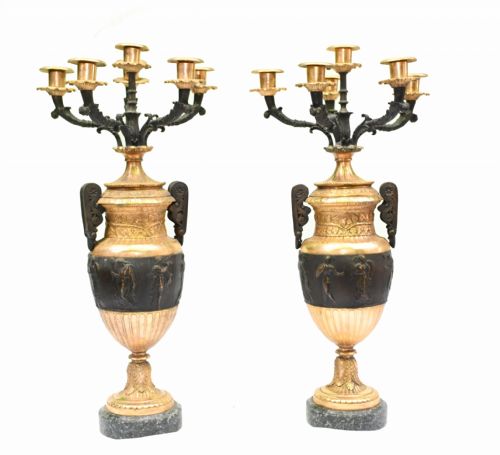
Foundries produced these objects by casting bronze, brass, or gilt metal components, combining patinated dark surfaces with gleaming ormolu highlights. Artisans mercury-gilded the bronze portions to achieve a brilliant golden finish that contrasted sharply against the dark patination of the main figural elements.
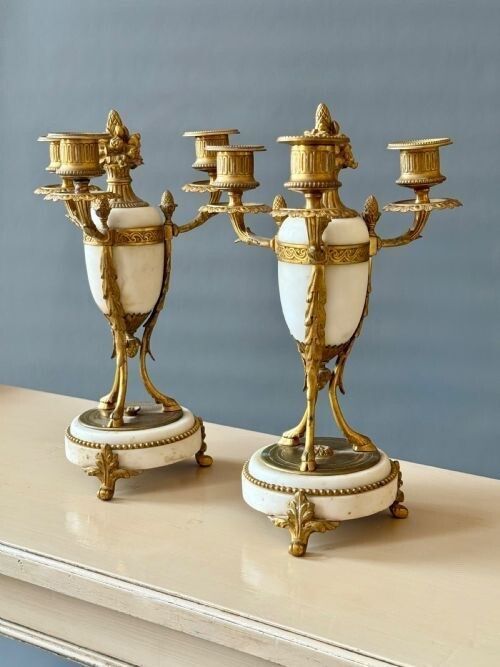
Many items incorporate heavy natural stones, pairing the metalwork with bases carved from white marble, porphyry, onyx, or slate. These mineral plinths provided structural stability while adding weight and textural variety to the composition.
The listings span from the Regency era through the late nineteenth century, predominantly featuring French Empire and Louis XVI revival styles.
Distinctions in craftsmanship and execution
The finesse of the chasing and hand-finishing marks the difference between standard production and top-tier workshop output. Superior examples display sharply rendered facial expressions, deeply etched drapery folds, and meticulously detailed ornamentation on the cast limbs.
Attribution to documented makers or prominent foundries elevates an item significantly, as seen in signed works by skilled artisans. Furthermore, the harmonious integration of multiple materials, such as well-fitted marble socles and robust, balanced branch assemblies, distinguishes the finest creations.
Pierre Philippe Thomire·Rabiat·François Christophe Armand Toussaint
The Classical Bronze Candelabra Pair Glossary
- Ormolu
- Gilt bronze produced by applying a finely ground mercury and gold amalgam to a bronze base and heating it. This technique creates a durable, luminous golden coating characteristic of fine antique metalwork.
- Patinated bronze
- Bronze treated with chemical solutions or heat to produce a controlled surface colour, typically dark brown or greenish-black. This dark finish provides contrast against bright gilt details.
- Grand Tour
- Eighteenth and nineteenth-century travel practice where wealthy young Europeans collected art and antiquities. Souvenirs from these journeys often inspired classical sculpture and decorative objects.
- Torchère
- A tall ornamental stand or candlestick designed to hold a light source. In classical pairings, these frequently take the form of standing figural columns bearing multiple branch holders.
Classical Bronze Candelabra Pair: Frequently Asked Questions
Were these originally wired for electricity?
Nineteenth-century lighting pieces were built exclusively to hold wax candles or oil before modern electrification existed.
Many surviving examples have since been adapted as table lamps while retaining their original sculptural branches and candle nozzles.
How can I tell Empire style from Regency?
French Empire pieces often lean heavily into martial motifs, Roman iconography, and mythological figures tied to Napoleon's reign.
Regency items share similar classical inspirations through English interpretations, occasionally incorporating native woods or distinct architectural detailing.
Where should I display heavy marble-based candelabra?
Place them on sturdy surfaces like large sideboards, mantelpieces, or dedicated console tables that easily support substantial stone and metal weight.
Ensure the location protects the piece from accidental bumps while allowing natural light to catch the contrasting ormolu and patinated surfaces.