
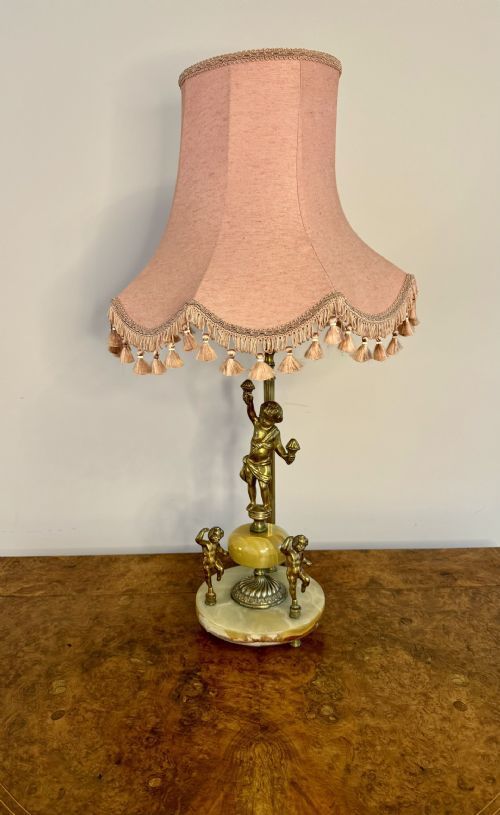


Classical Brass Side Lamp
These classical brass side lamps bring steady, warm illumination and formal proportion to a room, drawing on centuries of neoclassical design.
Classical Brass Side Lamp
When searching for a classical brass side lamp, buyers encounter lighting fixtures rooted in nineteenth and early twentieth century domestic interiors. These pieces typically take the form of table lamps, often adapted from earlier candlesticks, candelabra or oil fittings.
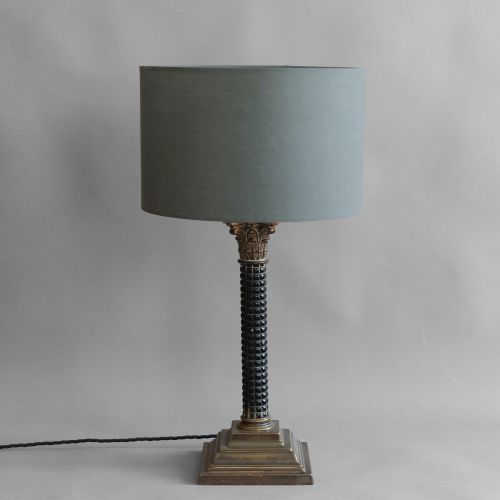
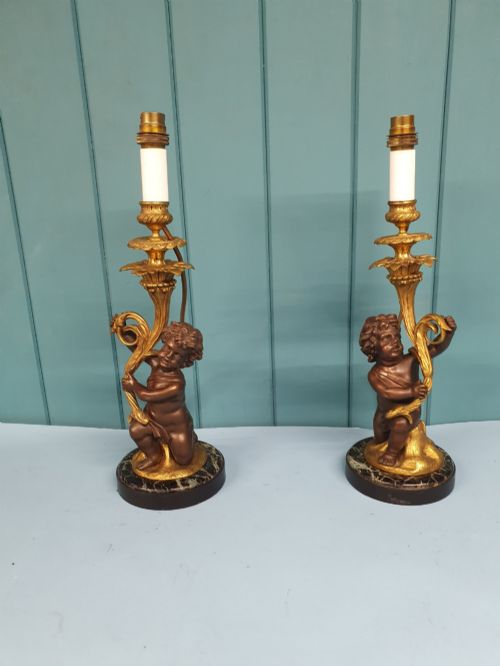
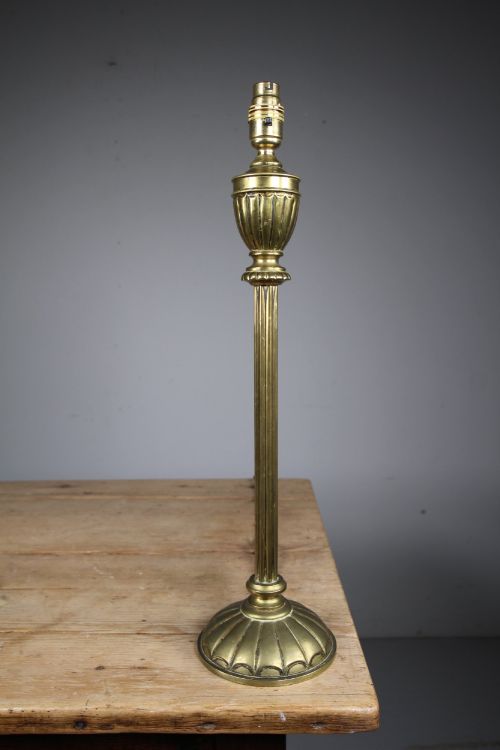
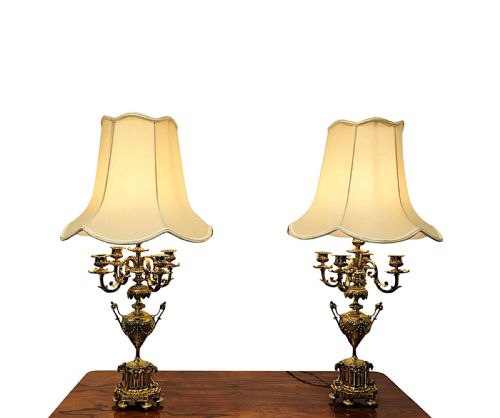
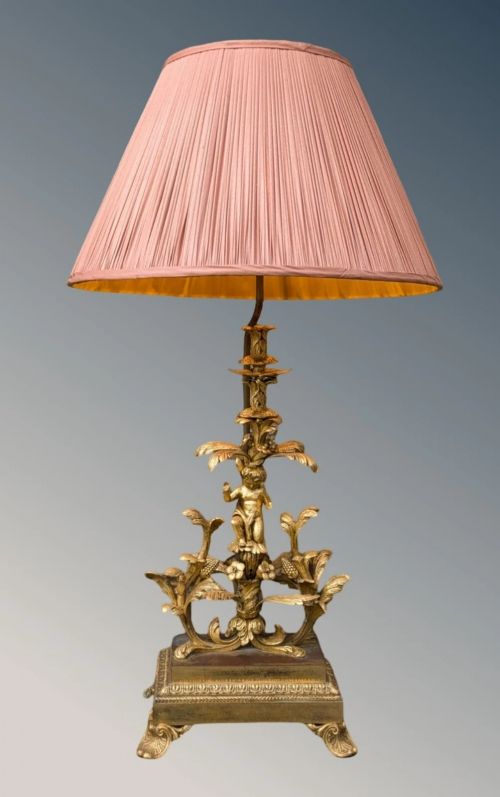
The selection on this page leans heavily toward period brass, bronze and ormolu examples dating from the nineteenth century through the Edwardian era and the 1920s. Alongside standard brass columns, buyers find figural works featuring cherubs, classical figures and architectural motifs.
While primarily designed as table lamps for sideboards, desks or occasional tables, many pieces reflect specific stylistic revivals including French Empire, Regency and Neoclassical design. These items serve both a practical lighting function and a decorative role within traditional room schemes.
How they were made
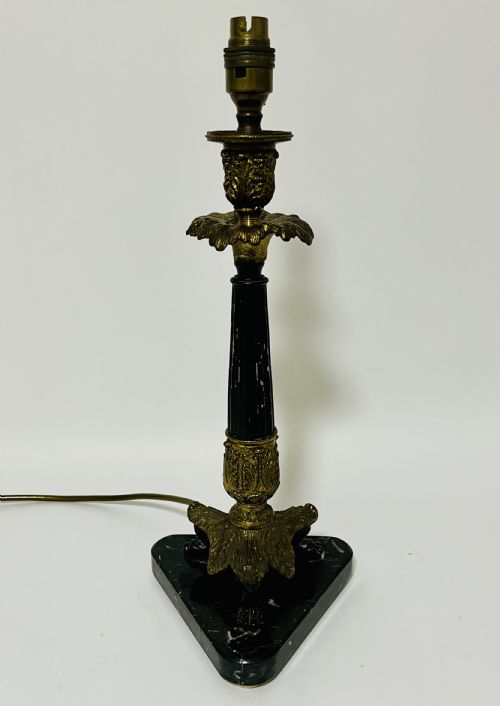
Makers utilised cast brass, bronze and ormolu as primary structural metals, frequently combining them with white marble, onyx or Siena marble bases for added weight and visual contrast. Gilt finishes were applied through mercury gilding or modern electroplating methods to achieve a rich metallic lustre.
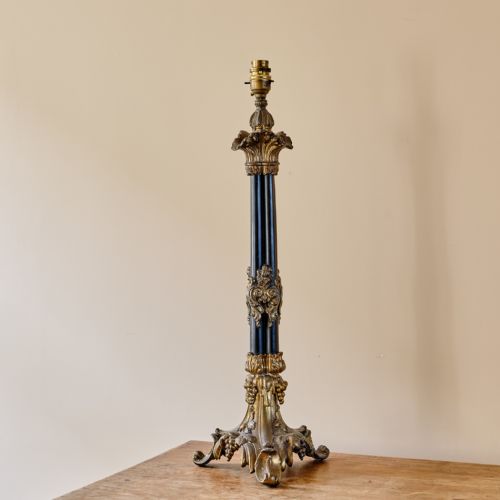
Many classical lamps began life as functional candlesticks or candelabra before undergoing conversion to electrical fittings during subsequent decades. Details such as Corinthian capitals, fluted columns and figural casts were produced via traditional sand casting and hand chasing techniques.
Listings incorporate nineteenth-century Regency and Victorian periods alongside Edwardian and 1920s examples, utilising brass, marble, bronze and ormolu.
What varies in quality
The distinction between standard production and superior examples lies in the crispness of the metal chasing and the depth of the gilding. Fine castings retain sharp architectural details on column capitals and clean definition in figural elements like cherubs or drapery.
Material selection also dictates the hierarchy, with heavy solid brass, genuine marble or onyx bases, and well-preserved fire gilding or ormolu standing apart from lighter spelter alternatives with painted finishes.
The Classical Brass Side Lamp Glossary
- Ormolu
- Finely ground high-carat gold-mercury amalgam applied to a bronze base. This historic technique creates a warm, enduring golden surface distinctive of French decorative metalwork.
- Corinthian column
- An architectural column order featuring an ornate capital decorated with acanthus leaves. Lamps utilising this form draw directly on classical stone architecture.
- Spelter
- A zinc alloy frequently used as a cheaper substitute for bronze or brass. It takes plating well but lacks the structural weight and resonance of genuine bronze.
- Cassolette
- A decorative vase or vessel fitted with a reversible lid that functions either as a burner or a solid urn. Many nineteenth-century examples were later adapted into table lamps.
- Gueridon
- A small occasional table supported by one or more columns, originating in seventeenth-century France. These surfaces frequently hold classical side lamps in traditional interiors.
Classical Brass Side Lamp: Frequently Asked Questions
Are these lamps wired for modern use?
Many period pieces arrive with rewiring documented in their descriptions, though buyers should verify electrical components with a qualified professional upon acquisition.
Original fittings are frequently updated to meet contemporary safety standards while preserving the antique metalwork and overall aesthetic.
How do I identify a French Empire style lamp?
French Empire pieces typically incorporate heavy cast bronze or ormolu, classical architectural motifs, and frequently pair with contrasting dark patination or marble bases.
These designs reflect the neoclassical taste favoured during the early nineteenth century under Napoleonic influence.
What is the difference between brass and ormolu?
Brass is an alloy of copper and zinc used widely for structural components and turned columns, offering a bright metallic finish that polishes easily.
Ormolu refers specifically to gilded bronze where a layer of gold amalgam is bonded to the bronze substrate, yielding a deeper, richer golden tone.
Where should I place a classical side lamp?
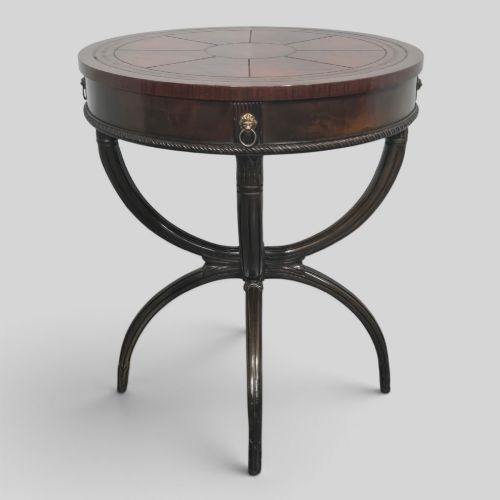
These lamps suit side tables, mahogany occasional tables, and bedside cabinets where their vertical proportions provide balanced illumination.
Their classical detailing complements traditional living rooms, studies, and formal hallways.