



Rewired Brass Lamps
Rewired brass lamps bring period character and modern safety together, offering dependable illumination across floor, table, and wall fixtures.
Rewired Brass Lamps
Rewired brass lamps cover a broad spectrum of lighting forms, ranging from towering floor standards and student reading lights to delicate wall sconces and heavy carriage lamps. Buyers searching for rewired brass lamps seek functional period lighting that has been updated with modern electrical flex to meet current safety standards while retaining historic metalwork.
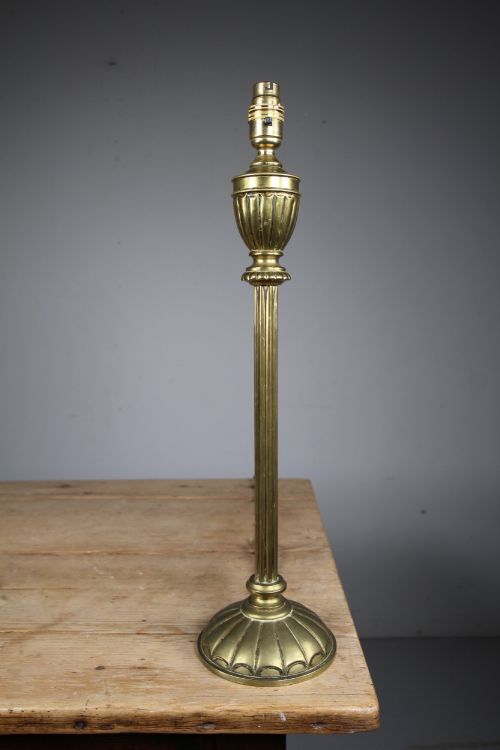
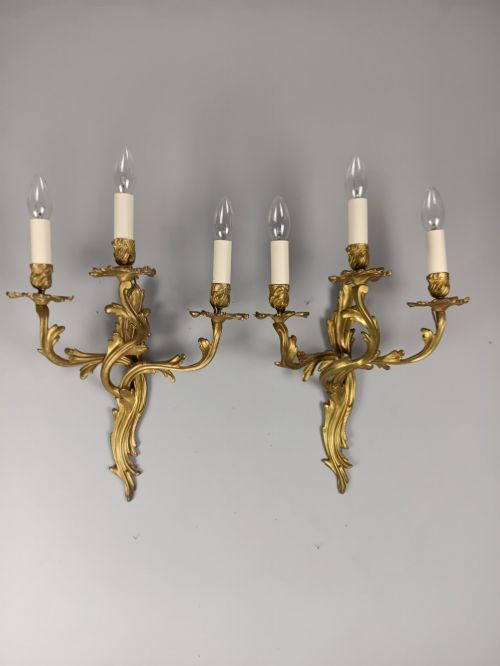
The selections span distinct historical periods including the Edwardian era, the nineteenth century, and the nineteen-thirties. Forms vary from simple telescopic standard lamps to elaborate French rococo triple-arm lights and chinoiserie table lamps.
Most pieces encountered on this page belong to the Edwardian period or the nineteenth century, utilising base metals that range from plain brass and silver plate to gilt bronze, ormolu, and metal. Many incorporate functional elements like glass shades, crystal drops, or fabric flex.
How they were made
The construction of these pieces relies heavily on brass and related metalworking techniques, utilising cast and turned components that provide structural stability and weight. Gilt bronze and ormolu add decorative surface richness, while silver plate offers a brighter metallic finish.
Many fixtures integrate glass elements, such as etched glass shades and crystal drops, which complement the metallic frames. Modern fabric flex is subsequently introduced during the rewiring process to connect the historic body to contemporary electrical systems.
Rewired Brass Lamps Retail Price Guide 2026
Typical asking prices for rewired brass lamps among the pieces listed under this phrase on Sellingantiques today, from the lower quarter to the upper quarter. They describe what is for sale here now, not the wider market.
What varies in quality
Quality in these lighting fixtures depends on the weight and thickness of the metal casting, as well as the crispness of any applied chased or moulded ornamentation. Superior examples display refined proportions and robust construction, particularly in articulating joints such as those found on telescopic standards and student lamps.
The integrity of the secondary materials, including the clarity of glass shades, the cut of crystal drops, and the quality of applied gilding or silver plating, determines the distinction between standard utilitarian pieces and finer decorative works.
The Rewired Brass Lamps Glossary
- Ormolu
- A gilded bronze technique used extensively in French decorative lighting to create a rich, gold-colored metallic finish. This process involves applying finely ground high-carat gold to a bronze base.
- Student lamp
- A nineteenth-century adjustable desk or table lamp featuring a burner or bulb arm extended to one side for reading. These pieces often include telescopic shafts for height adjustment.
- Gilt bronze
- Metal cast in bronze and subsequently covered with a thin layer of gold leaf or gold paint. It provides durable ornamentation across various nineteenth-century lighting styles.
- Telescopic standard lamp
- A floor-standing lighting fixture with an adjustable shaft that extends upward. This mechanism allows the overall height of the lamp to be altered according to requirements.
- Carriage lamp
- A heavy-duty lantern originally designed for mounting on horse-drawn vehicles. These pieces typically feature robust metal frames and protective glass panels.
Rewired Brass Lamps: Frequently Asked Questions
What periods do these lamps come from?
The lighting fixtures span several distinct eras, with significant representation from the Edwardian period and the nineteenth century. Additional examples originate from the nineteen-thirties and around nineteen hundred.
Each period brings specific stylistic traits, ranging from Victorian neoclassical designs to French rococo and twentieth-century modernist forms.
Are these lamps safe to use now?
Yes, because every piece has been rewired to modern electrical standards using contemporary components such as fabric flex. This ensures that the internal wiring meets current safety requirements while the exterior metalwork remains entirely period.
Buyers receive functional lighting that combines historical aesthetics with modern operational reliability.
What types of lighting are available?
The selection includes a diverse array of forms designed for different settings around the home. Options range from tall floor standards and reading lamps to table lamps, wall sconces, pendant lights, and convex lanterns.
Specialised items such as carriage lamps and student reading lights also appear among the offerings.
How do I identify an Edwardian lamp?
Edwardian lighting often favors specific proportions and materials, frequently utilising polished brass or silver plate. These pieces frequently manifest as tall table lamps or floor standards with clean, balanced lines.
Some Edwardian examples incorporate decorative motifs influenced by chinoiserie or classic Edwardian styles.