
Brass Reading Lamp Base
A brass reading lamp base gives height and steady illumination to a desk or table, drawing on Victorian and Edwardian forms.
Brass Reading Lamp Base
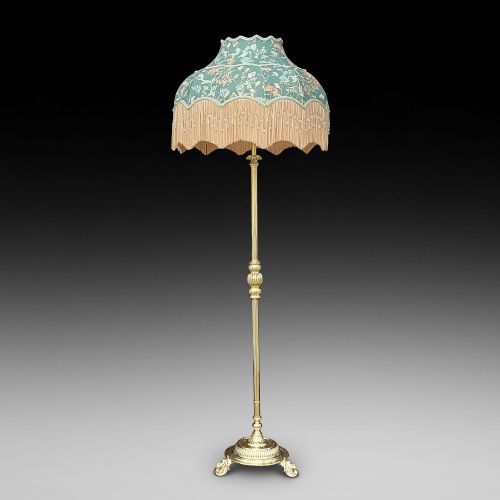
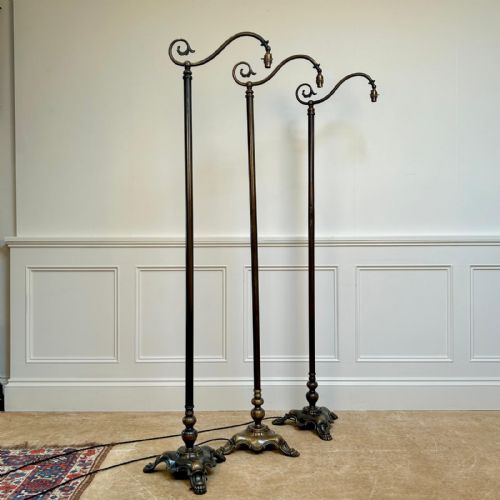
A brass reading lamp base provides the heavy foundation needed to support adjustable arms and heavy shades on a desk or table. These pieces emerge from the nineteenth century through the Edwardian period and into the Art Deco era, taking the form of standard lamps, floor lamps and smaller table lamps.
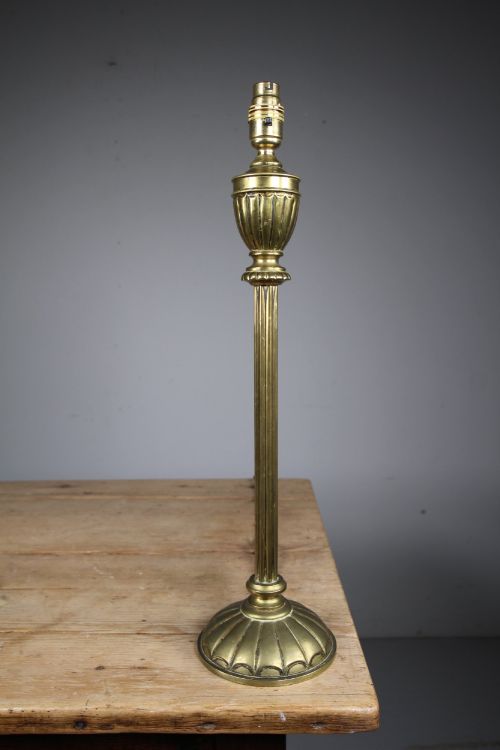
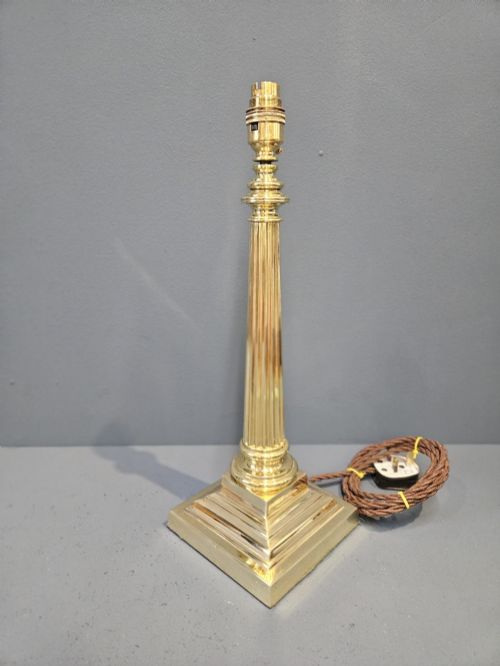
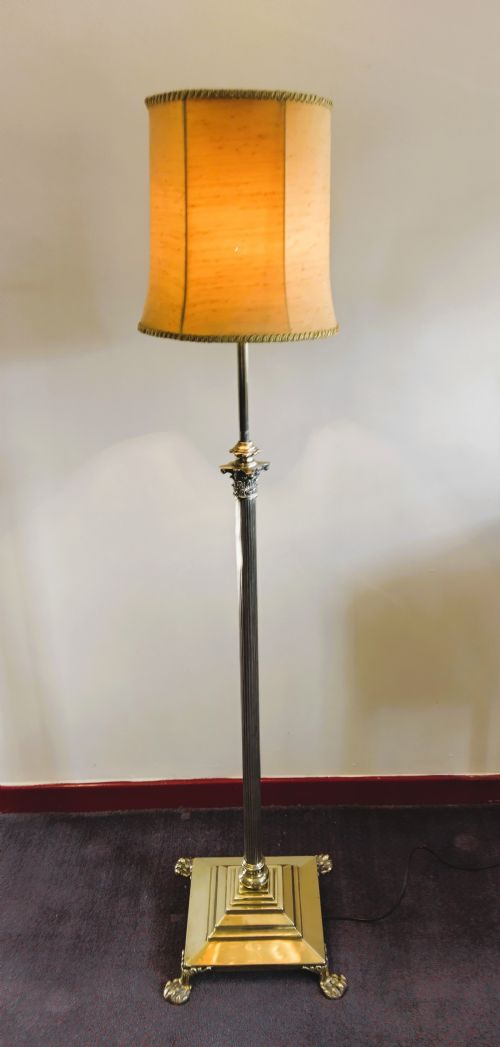
The most common examples on this page are classical columns and reeded shafts, often adapted from oil lamps or designed specifically for early electric fittings. Makers utilise heavy metals to ensure stability when the arm is extended over a book or workspace.
How they were made
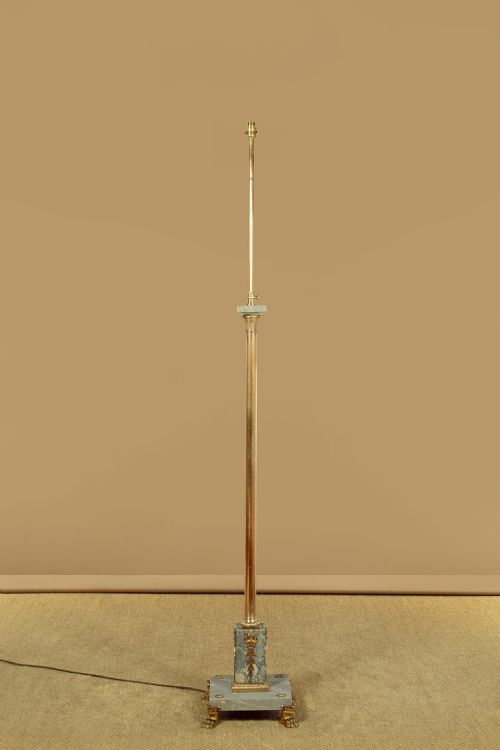
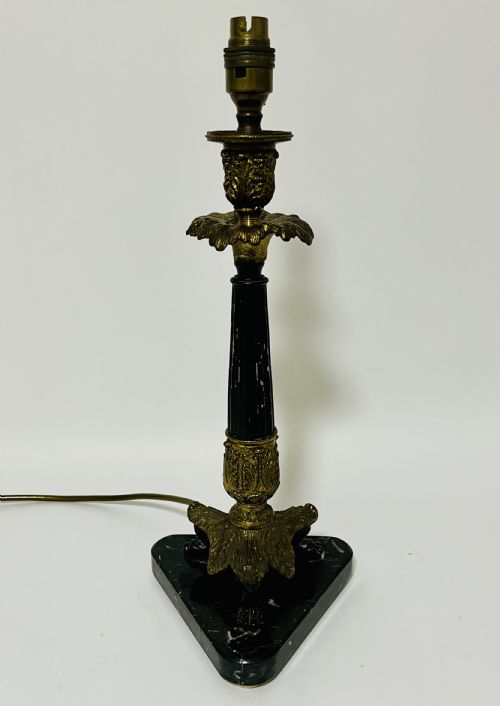
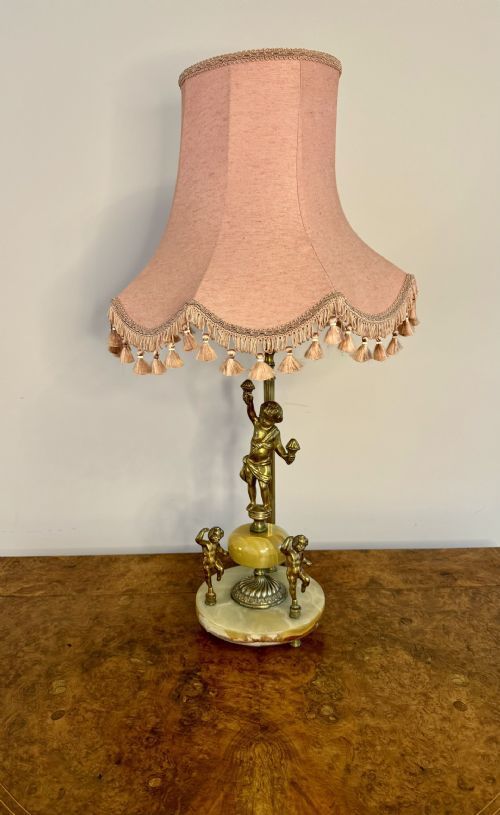
Foundries cast brass, bronze and ormolu into columns, balusters and ornate bases, frequently combining these metals with marble, onyx and glass components for added weight and visual contrast. Surface treatments range from polished gilding to patinated finishes that darken with age.
Adjustable mechanisms rely on sliding brass sleeves and threaded keys that allow the height and angle to shift. Wiring channels run down the centre of the column, though many early specimens began life as oil or candle lamps before conversion to electricity.
Listings span the Victorian, Edwardian and Art Deco periods, featuring materials such as brass, bronze, marble and opaline glass.
What varies in quality
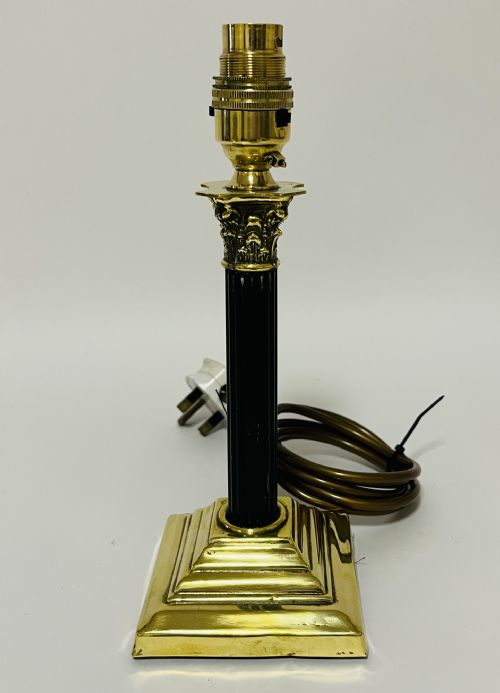
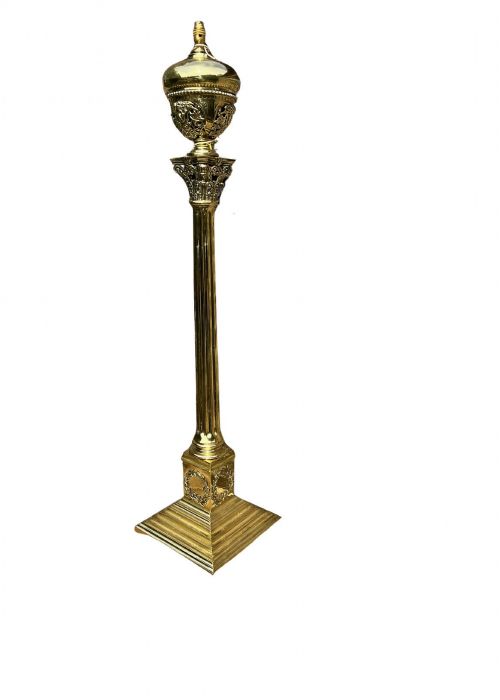
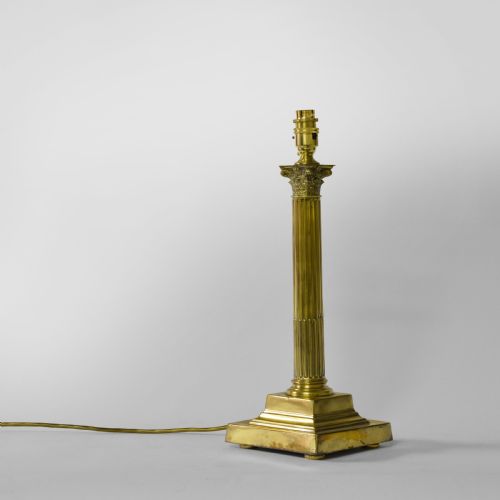
The distinction between ordinary production and finer work lies in the crispness of the casting and the thickness of the metal. Heavily cast brass columns retain sharp acanthus leaves on a Corinthian capital, whereas mass-produced late examples show softened detail and thin gauge metal.
Proportion and engineering dictate the better pieces. A well-balanced standard lamp uses a heavy cast iron weight hidden beneath a spun brass base to prevent tipping, while lesser items rely purely on a wide footprint.
WAS Benson·Faraday and Sons·Joseph Hinks
The Brass Reading Lamp Base Glossary
- Corinthian column
- A lamp shaft modelled on the ancient Greek architectural order, featuring ornate capitals decorated with carved acanthus leaves. This form appears frequently on Victorian and Edwardian desk lamps.
- Ormolu
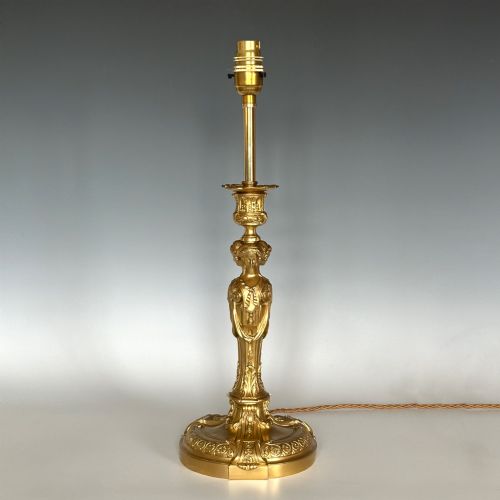
- Finely chopped high-zinc brass applied to objects via mercury amalgamation or electroplating to simulate solid gold. It gives French Empire pieces their bright, metallic lustre.
- Reeded column
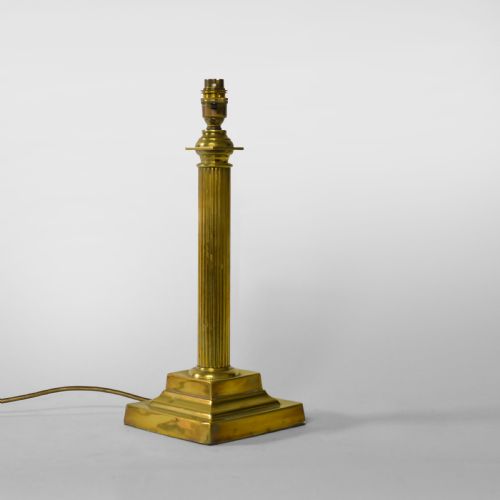
- A cylindrical shaft carved or cast with parallel convex mouldings running vertically. It adds texture and visual length to standard lamps.
- Bouillotte lamp
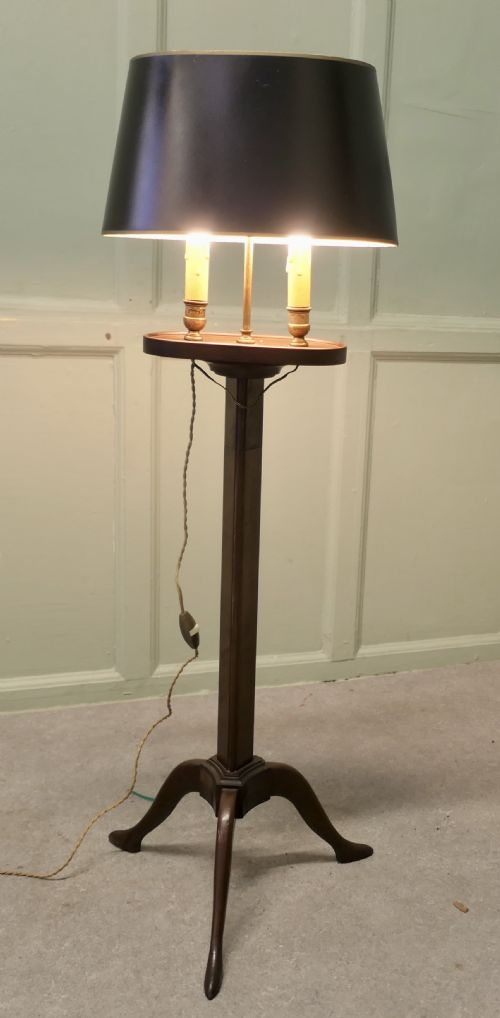
- A traditional French reading lamp featuring an adjustable central shade mounted over a basin base. These pieces often accommodate twin candle or electric burners.
- Baluster
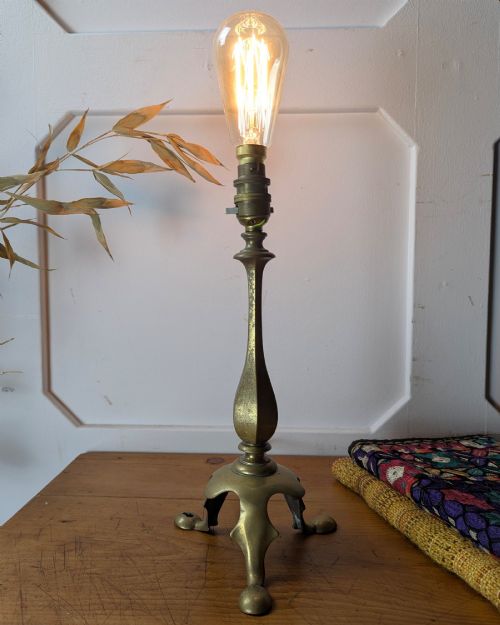
- A moulded shaft with a bulbous lower portion tapering toward the top. This shape provides a stable centre of gravity for table lamps.
Brass Reading Lamp Base: Frequently Asked Questions
How do I adjust the height?
Most adjustable examples use a central sliding stem secured by a thumbscrew or a friction collar near the top of the column. Loosening this collar allows the upper shaft to rise or descend.
Older pieces designed for oil often retain screw keys that must be turned carefully to release the inner sleeve without damaging the internal wiring channel.
Are these lamps converted from oil?
A significant portion of nineteenth-century and early twentieth-century examples began as oil or paraffin lamps before receiving electrical wiring later in life. You can often spot evidence of this in the burner galleries or fuel reservoirs adapted into switch housings.
Conversion work varies in execution, with professional rewiring ensuring the antique standard remains safe for daily desk use.
How do I clean antique brass?
Gentle dusting with a soft, dry cloth preserves the natural patina that accumulates over decades of handling. Avoid harsh chemical polishes that strip away the dark oxidation valued by collectors.
If the metal requires deeper cleaning, warm water with mild soap applied sparingly will remove grease without harming the underlying finish.
What is the difference between a standard lamp and a table lamp?
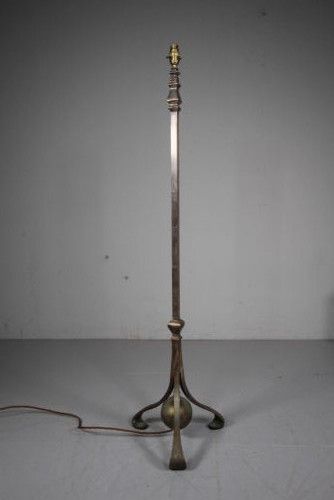
Standard lamps stand directly on the floor as tall reading lights, often featuring heavy weighted bases to support extended reach arms. Table lamps scale down these architectural motifs to sit comfortably on a desk or sideboard.
Both categories share similar column designs and metalworking techniques across the Victorian and Edwardian eras.