



Classical Architectural Wall Art
These pieces of classical architectural wall art bring ruins, temples and ancient orders into a room through engravings, oils and watercolours.
Classical Architectural Wall Art
Classical architectural wall art encompasses works that depict ancient buildings, ruins, and classical orders, often originating from Grand Tour travels or 18th-century archaeological publications. Buyers encounter framed engravings, oil paintings, and watercolours that record structures like the temples of Athens and the Roman forum.
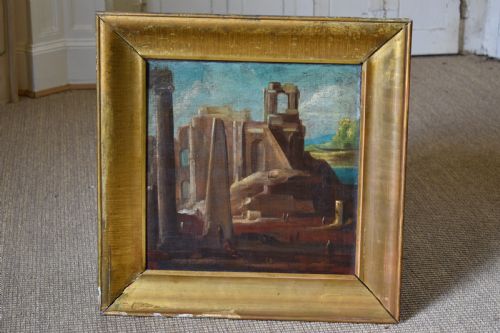
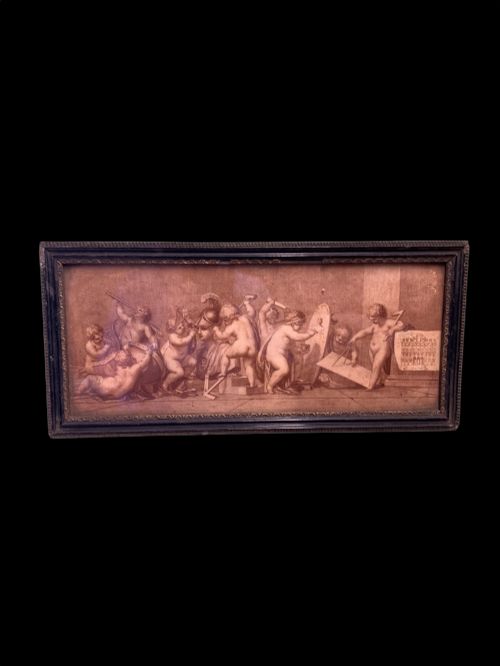
The pieces on this page span from the 18th century through the 19th and early 20th centuries, covering Georgian, Victorian, and revival periods. Engravings after Raphael and Piranesi sit alongside original landscape paintings featuring classical ruins and figures.
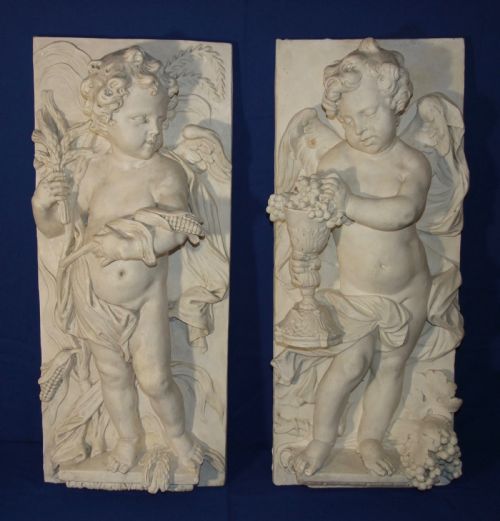
Framed prints and engravings dominate the selection, frequently appearing alongside oil paintings of Venetian canals or urban landscapes and watercolours of Pompeii. Relief panels, plaster casts, and wooden carvings also provide dimensional representations of classical subjects.
Materials and Techniques
Paper forms the base for the numerous engravings and watercolours, utilising ink and pigment to render fine architectural lines and classical figures. Artists applied watercolour over ink or worked directly on paper to capture the tones of southern European sites.
Oil on canvas provides the medium for larger landscape views and architectural scenes, employing rich pigments framed in wood. Plaster casts and marble dust reliefs introduce sculptural depth, shaped into wall friezes and mythical figures using traditional moulding methods.
Listings feature paper, ink, wood, glass, and gold leaf alongside oil on canvas and watercolour paintings.
Distinctions in Quality
The clarity of the printed line and the precision of the architectural draughtsmanship distinguish fine 18th-century engravings from later or softer impressions. Works produced by notable publishers or draughtsmen maintain sharper definition in the depiction of capitals, columns, and sculptural detail.
In oil paintings and watercolours, the handling of light across classical ruins and the naturalistic proportions of figures separate accomplished compositions from standard decorative works. The presence of contemporary framing and the preservation of the paper or canvas sheet contribute to the overall integrity of the piece.
James Basire·Giovanni Paolo Panini·Edward Rooker·Ottaviani·Francesco Piranesi
The Classical Architectural Wall Art Glossary
- Grand Tour
- A traditional trip through Europe undertaken by upper-class young men to absorb classical culture and art. Items brought back often included watercolours and architectural prints.
- Engraving
- A printmaking process where an artist cuts a design into a metal plate with a sharp tool. The resulting lines hold ink to be transferred onto paper under pressure.
- Neoclassical
- A style reviving the forms and motifs of ancient Greece and Rome. It appears frequently in architectural drawings, friezes, and paintings of ruins.
- Relief
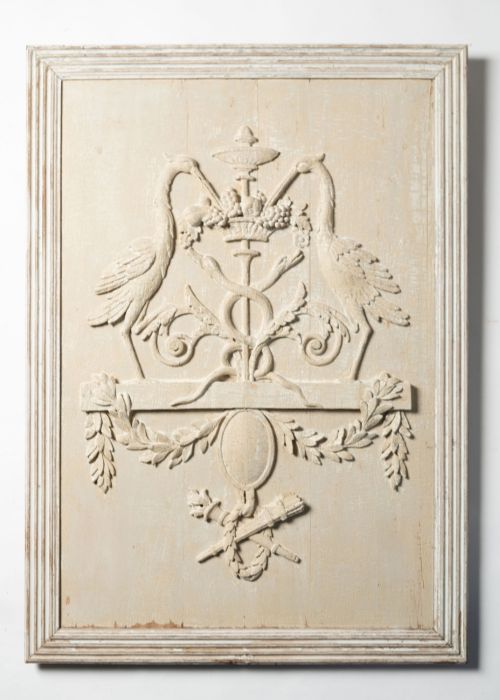
- A sculptural technique where figures or designs project from a flat background. Examples include plaster and marble dust wall friezes.
- Orders
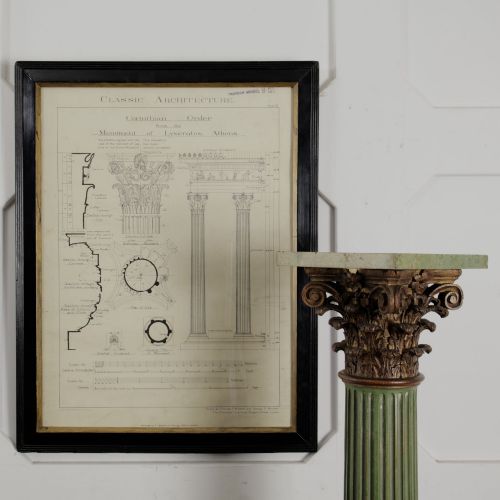
- The classical styles of architecture comprising Doric, Ionic, and Corinthian columns. Plates illustrating these appear in architectural studies.
Classical Architectural Wall Art: Frequently Asked Questions
What is classical architectural wall art?
These works are historical prints, drawings, and paintings that record ancient buildings, temples, and archaeological sites.
They capture the enduring influence of Greek and Roman architecture on European art through various decorative mediums.
How were these architectural prints used?
Learned travellers and collectors framed these plates to display an education in classical antiquity and architecture.
Many originate from multi-volume folios documenting Athenian and Roman monuments for domestic display.
How do I style these pieces at home?
These framed works suit traditional studies, libraries, or living spaces alongside period furniture and neutral walls.
Pairing engravings in matching frames creates a balanced display along a hallway or above a fireplace.
How can I tell an 18th-century print from a later copy?
Early impressions show plate marks in the paper and crisp ink lines without the dot matrix patterns of modern reproductions.
Paper stock from the period often exhibits watermarks and natural ageing consistent with 18th-century production.