

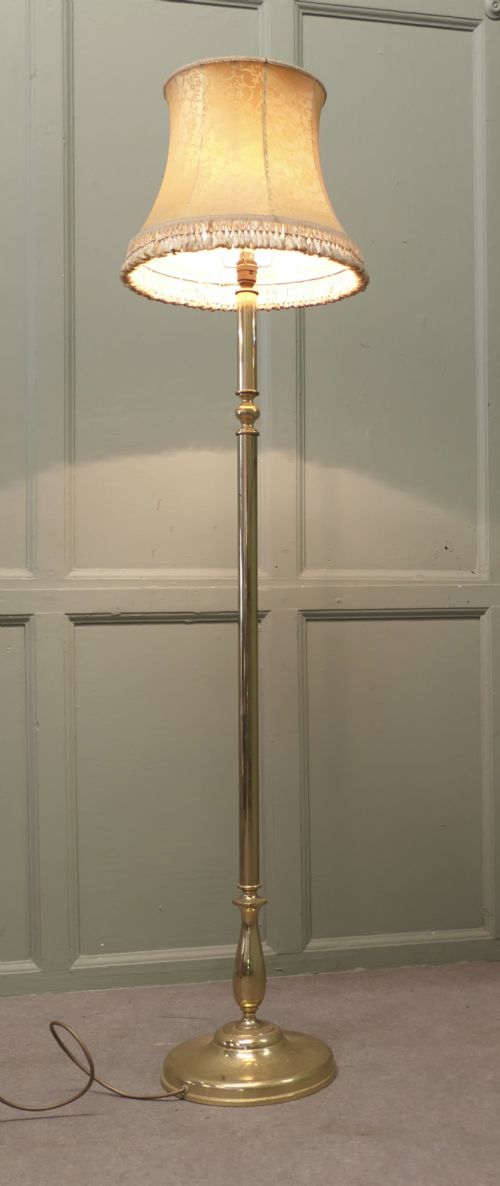


Classic Standing Lamp
These classic standing lamp examples bring height and focused light to a room, ranging from gleaming brass standards to polished mahogany columns.
Classic Standing Lamp
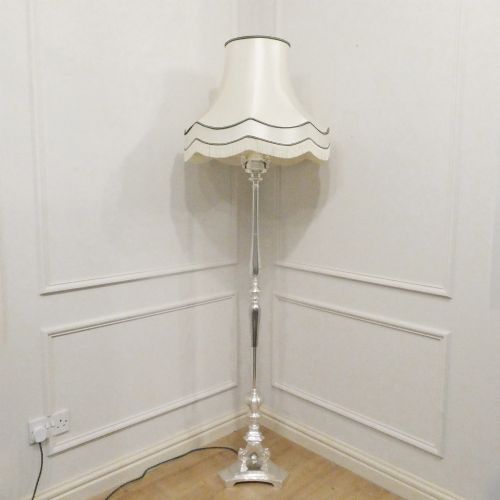
A classic standing lamp provides vertical illumination and decorative presence, appearing on this page primarily as floor lamps, standard lamps, and occasional or side tables adapted for illumination. You will frequently encounter brass standards and mahogany columns dating from the Victorian and Edwardian periods, alongside pieces from the 1920s and 1930s.
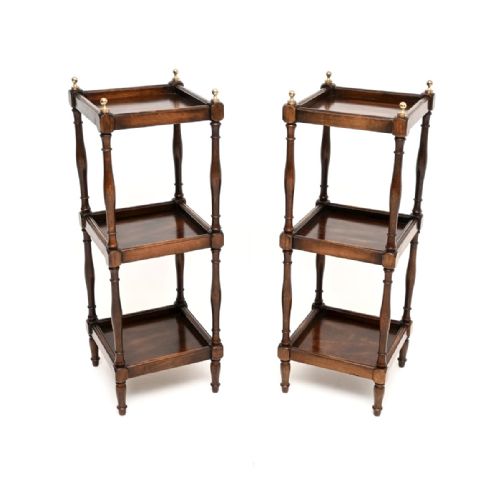
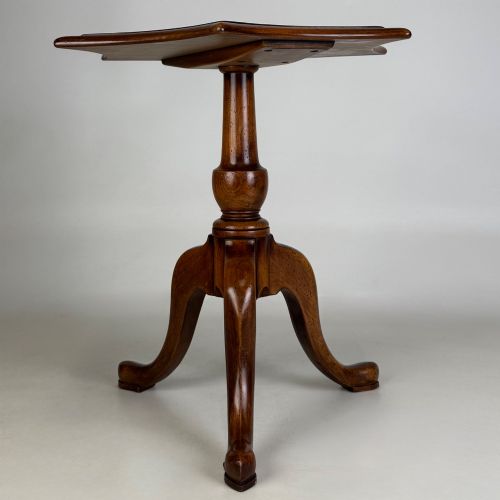
The form encompasses adjustable reading lights, telescopic brass shafts, and giltwood frames styled after Italian Baroque or French Chateau aesthetics. Alongside pure floor lamps, you find occasional tables and side tables in walnut and mahogany that serve a dual purpose for a room's seating area.
Origins stretch across the nineteenth and early twentieth centuries, drawing on Victorian Neoclassical, Edwardian, and Arts and Crafts design vocabularies. These pieces combine utility with period craftsmanship, utilising durable woods and metals designed to anchor a traditional interior scheme.
What varies in quality
Quality reveals itself in the weight and stability of the base, the precision of telescopic adjustment mechanisms, and the crispness of carved details in wood or giltwood. Substantial brass castings and finely turned timber columns distinguish superior examples from simpler utilitarian pieces.
The choice of materials and the integration of decorative elements, such as triple glass shades or inlaid mahogany, separate standard production from finer workshop output. Proportion and balance dictate the overall success of the piece, ensuring the lamp stands securely while maintaining an elegant profile.
One charming little boudoir reading lamp proves that even the smallest Victorian spaces deserved proper illumination.
The Classic Standing Lamp Glossary
- Standard lamp
- A traditional British term for a floor lamp, typically featuring a tall central wooden or metal column standing on a weighted base. These were designed to hold heavy fabric shades and provide ambient or reading light.
- Telescopic
- A construction method allowing the height of the lamp shaft to be adjusted via sliding metal tubes secured with a key or screw. This feature is common on adjustable brass reading lamps from the late nineteenth and early twentieth centuries.
- Giltwood
- Timber, often carved, that has been coated with a thin layer of gold leaf or metallic gilt paint. This finish appears frequently on Italian Baroque and French-influenced floor lamps.
- Occasional table
- A small, movable table designed for specific, intermittent use, such as a lamp table placed beside an armchair. Walnut and mahogany versions often accompany seating arrangements in period interiors.
- Neoclassical
- A style drawing inspiration from classical antiquity, characterised by symmetry, straight lines, and classical motifs such as fluting and urns. It appears on nineteenth-century brass lamp standards and torchere columns.
Classic Standing Lamp: Frequently Asked Questions
What is a standard lamp?
A standard lamp is simply the traditional British term for a floor lamp. These tall fixtures were designed to stand beside armchairs or in corners to provide ambient or task lighting.
They usually consist of a heavy base, a vertical wooden or metal shaft, and a large shade. Many historical examples feature adjustable heights to suit different seating arrangements.
How do I date a brass floor lamp?
Dating a brass floor lamp involves examining the manufacturing techniques, wiring components, and stylistic details. Victorian and Edwardian examples often display heavier cast bases and simple turned or reeded columns.
Later pieces from the 1920s and 1930s frequently incorporate telescopic mechanisms, Arts and Crafts influences, or different shade configurations like triple glass bowls.
Can I use a modern shade on an antique lamp?
You can use modern shades provided the fitter matches the gallery or harp dimensions of the antique fixture. Many period lamps survive with later or replacement shades suited to contemporary interiors.
When selecting a shade, consider the proportion of the tall base to ensure the overall height and width remain balanced.
Where should I place a standard lamp?
Standard lamps work best in corners, beside sofas, or next to reading chairs where they can cast light downwards. Adjustable brass models suit studies or sitting rooms where directional light is helpful.
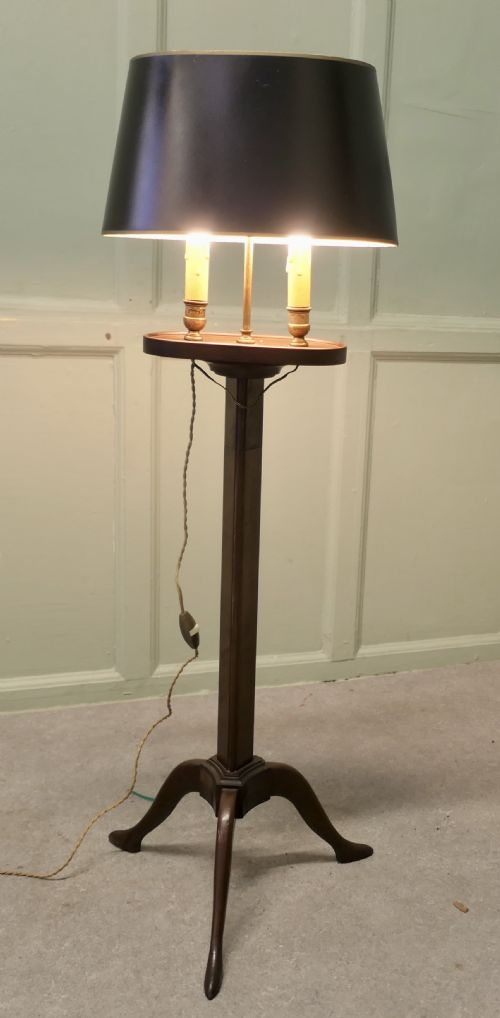
Occasional tables with integrated lamps offer a dual function, saving floor space while providing a surface for books or drinks.