

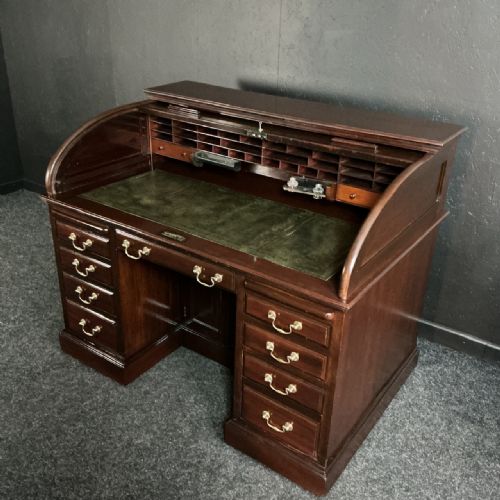


Classic Pedestal Desk
A classic pedestal desk provides a commanding writing surface anchored by twin stacks of drawers, built for serious work and traditional rooms.
Classic Pedestal Desk
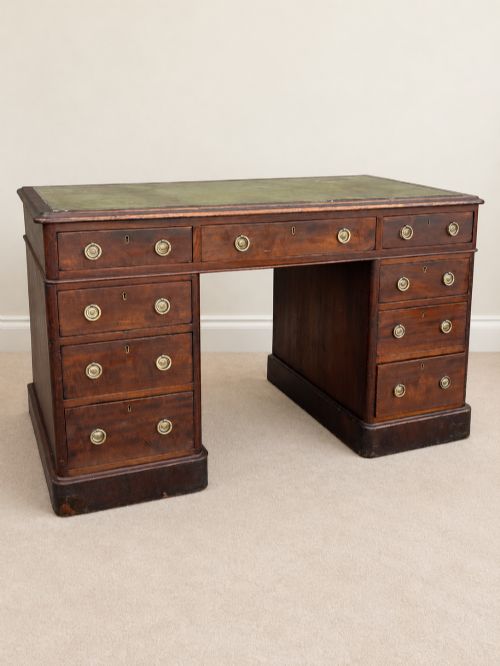
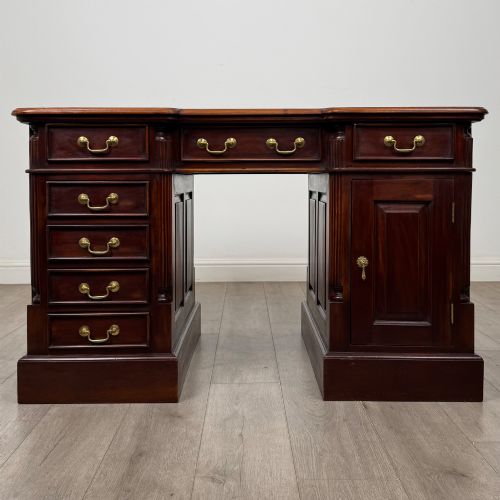
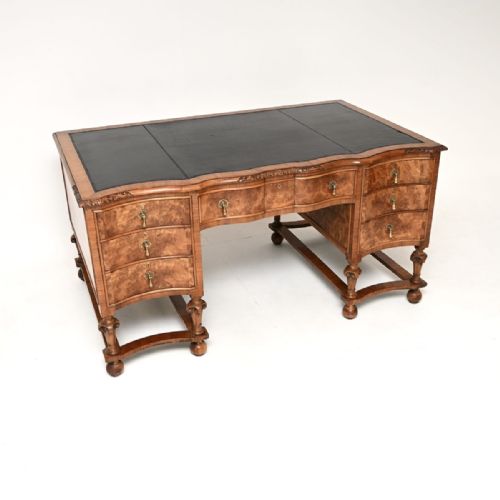
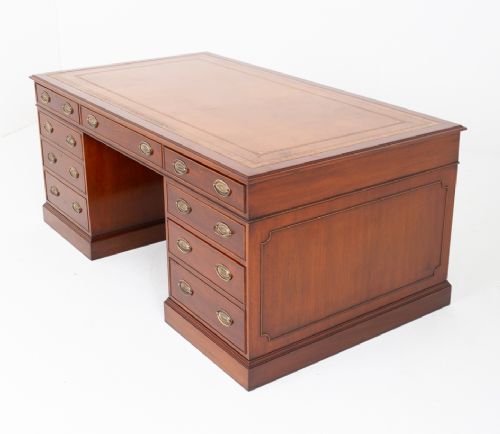
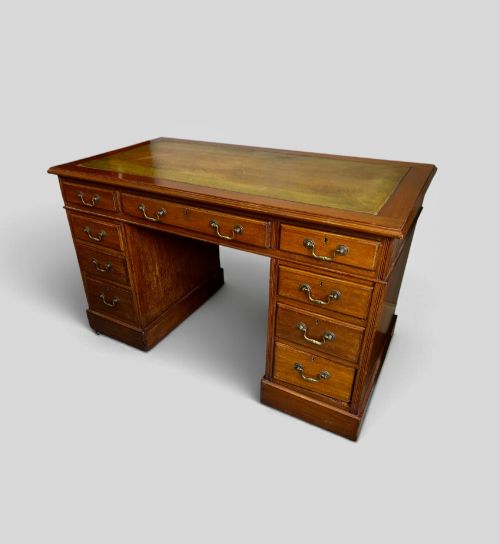
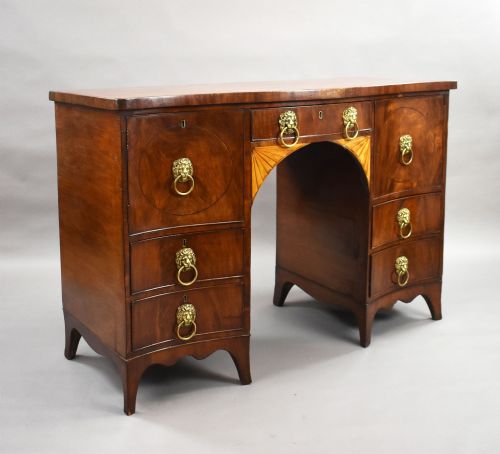
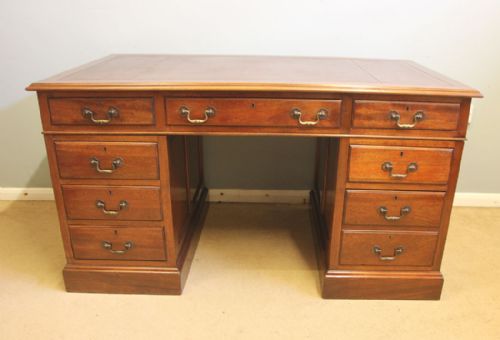
A classic pedestal desk organises a study with two matching banks of drawers supporting a heavy timber top, often inset with a writing surface. Buyers searching for a classic pedestal desk encounter substantial timber furniture designed to stand proudly in the centre of a room or against a wall.
The pieces appearing here span the Victorian and Edwardian eras alongside later revivals, executed predominantly in mahogany, walnut and oak. These heavy freestanding units offer deep storage in their pedestals while maintaining a formal architectural presence.
Victorian examples dominate the selection, frequently displaying practical proportions and inset leather writing panels. Makers of the period balanced functional storage with disciplined timber framing, ensuring the desk served both as a writing station and a focal point.
How they were made
Cabinet makers constructed these desks using solid timbers and carefully selected veneers, mounting mahogany and walnut over secondary woods. Drawers relied on traditional hand-cut joints, whilst brass handles and pulls secured the heavy panel work.
Writing surfaces were typically inset with tooled leather or fabric panels, framed by boxwood or satinwood stringing. The pedestals were built as separate carcases to facilitate transport before receiving a unified timber polish.
Listings feature mahogany, burr walnut, golden oak and red walnut combined with brass hardware, leather and boxwood stringing.
What varies in quality
Quality rests in the selection of the timber grain and the crispness of the secondary mouldings. Finer desks display book-matched veneers and precise inlay work that commands attention across the room.
The weight of the construction and the smoothness of the drawer action separate standard utility pieces from workshop masterworks. Heavy brass hardware and secondary timbers chosen without compromise mark out the superior examples.
Maple and Co
The Classic Pedestal Desk Glossary
- Pedestal desk
- A heavy writing table supported by two freestanding stacks of drawers beneath the main top. This form provides substantial storage on both sides of the kneehole space.
- Partners desk
- A large pedestal desk configured with drawers and cupboards on both opposing sides to accommodate two users simultaneously. These pieces were traditionally utilised in libraries and boardrooms.
- Kneehole
- The central recessed space beneath the desktop designed to accommodate the user's legs. Shallower variations limit legroom whilst grander formats offer generous clearance.
- Tambour top
- A flexible slatted timber shutter that rolls back in tracks to enclose the desk surface and pigeonholes. This mechanical feature appeared on late nineteenth and early twentieth century writing furniture.
- Stringing
- Thin inlaid lines of contrasting timber such as boxwood or satinwood used to border drawer fronts and tabletops. This decorative technique highlights the structural geometry of the desk.
Classic Pedestal Desk: Frequently Asked Questions
How do I care for the leather top?
Apply a neutral beeswax or leather balm sparingly with a soft cloth to nourish the hide and prevent cracking. Avoid liquid spills and harsh modern solvents.
Keep the desk away from direct heat sources and strong sunlight to preserve the colour and suppleness of the writing surface over decades of use.
Can a pedestal desk be dismantled?
Most pedestal desks separate into three main components consisting of the two under-desk drawer pedestals and the heavy top. This modular construction allowed nineteenth-century cabinet makers to maneuver large furniture through narrow doorways.
Securing bolts are usually hidden beneath the desktop or accessible through the uppermost drawer cavities during reassembly.
How do I distinguish Victorian from Edwardian desks?
Victorian desks generally employ denser mahogany timbers with heavier proportions, deeper mouldings and darker factory finishes. They prioritise sturdy utility and traditional formality.
Edwardian examples often display lighter satinwood inlays, walnut veneers and Sheraton Revival influences that reflect a taste for brighter domestic interiors.