
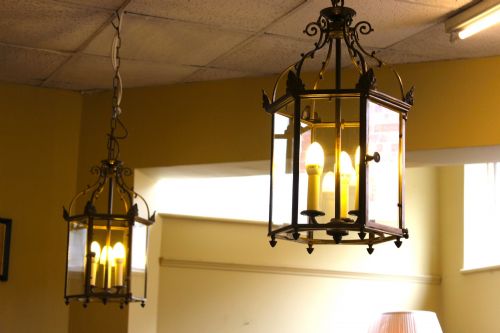


Classic Glass Hall Lantern
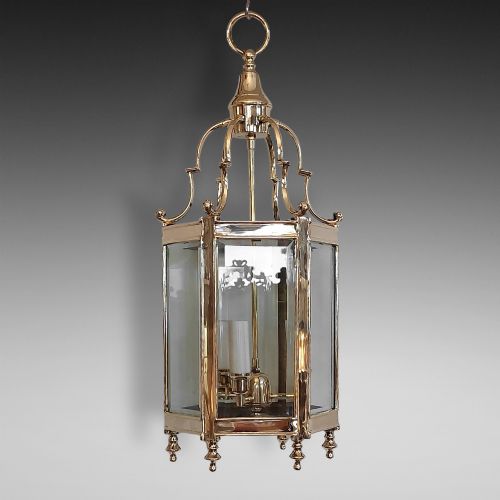
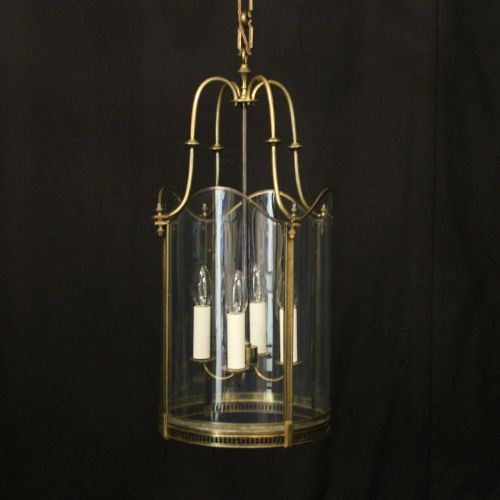
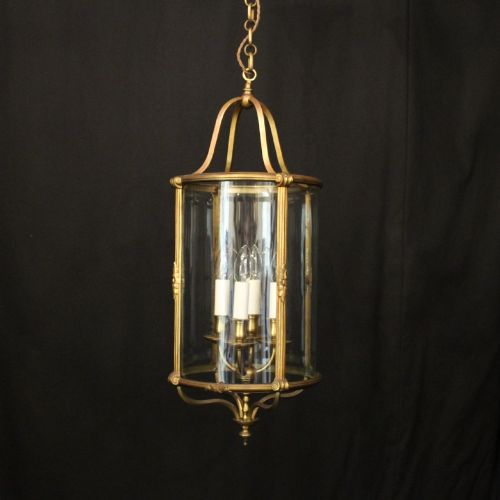
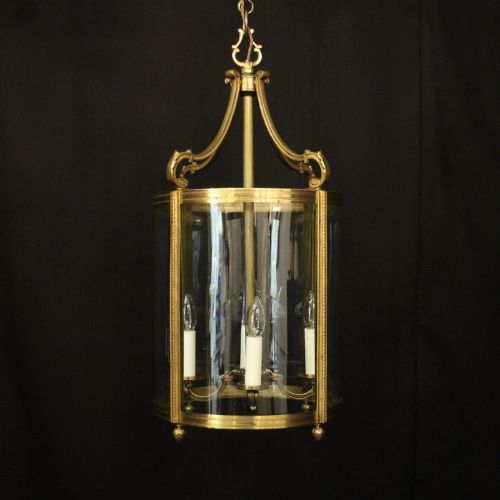
These classic glass hall lanterns bring immediate architectural presence to an entrance, casting clear light through period frames.
Classic Glass Hall Lantern
A classic glass hall lantern serves as the primary overhead illumination for a hallway, vestibule or entryway, shaped as a hanging pendant designed to catch the eye immediately upon entry. Most examples encountered here originate from the Edwardian era and the early twentieth century, alongside nineteenth-century French designs.
The physical form typically takes a hexagonal, oval or simple geometric outline suspended from a ceiling chain or rod. These hanging lanterns bridge utility and decoration, illuminating transitional spaces in homes where first impressions matter greatly.
How they were made
Makers constructed these pieces using a combination of cast metal frames and glazed panels, relying predominantly on brass, gilt bronze and steel. The glass elements are frequently formed with convex or flat planes fitted securely into metal armature.
Surface treatments range from polished brass to gilt bronze and silver gilded metal finishes. Metalwork involves structural casting and joining to support the weight of multiple internal bulb fittings while securing the delicate glass walls.
Listings feature items from the Edwardian era, the nineteenth century and the 1900 to 1930 decades.
What varies in quality
Quality rests upon the weight and fineness of the metal frame, distinguishing heavy cast bronze or brass assemblies from lighter fabricated alternatives. Superior examples display crisp chasing and proportioned decorative motifs rather than plain, unarticulated joints.
The character of the glass panes also dictates distinction, where heavy convex or bevelled glazing creates superior refraction compared to flat, thin panels. Scale plays a role, with larger oversized lanterns requiring more complex structural support to maintain stability.
The Classic Glass Hall Lantern Glossary
- Hall lantern
- A hanging light fixture designed specifically for narrow transitional domestic spaces such as corridors and vestibules. These pieces combine structural metal frames with protective glass panels.
- Gilt bronze
- An alloy of copper and zinc or tin treated with a fine layer of gold to produce a durable golden surface finish. This material resists tarnishing while offering a warm reflective quality.
- Hexagonal
- A geometric shape featuring six sides, commonly utilised in the construction of period lantern frames to distribute light evenly across multiple directions. It provides structural rigidity while allowing ample glass surface area.
- Convex glass
- Curved glass panels that project outward to soften internal light and widen the visual profile of the lantern. This technique requires skilled moulding during production.
- Pendant lighting
- A category of light fixtures suspended from the ceiling by a single rod, cord or chain rather than mounted flush. Hall lanterns belong to this classification.
Classic Glass Hall Lantern: Frequently Asked Questions
Where should a hall lantern hang?
These lanterns hang centrally in an entrance hall or vestibule to provide welcoming illumination from above.
Ensure adequate clearance beneath the fixture so people pass underneath safely without obstruction.
How do I date a brass lantern?
Dating relies upon examining the construction methods of the metal frame and the style of the cast decorative elements.
Edwardian and early twentieth-century examples often exhibit distinct proportions and patination that set them apart from nineteenth-century designs.
What defines French Louis XVI style?
This style draws inspiration from classical antiquity, featuring restrained symmetry, floral garlands and geometric precision.
Lanterns adopting this aesthetic use gilt bronze and crisp detailing to project formal elegance.
How do steel and brass differ?
Steel offers a rigid, industrial strength suited to larger oversized frames, whereas brass provides a softer golden tone associated with domestic reception rooms.
Some twentieth-century designs combine both metals to achieve structural balance.