






Classic Floral Rug
These classic floral rug examples bring traditional Persian, Ottoman, and Indo-Persian designs into a room through enduring patterns and time-tested weaves.
Classic Floral Rug
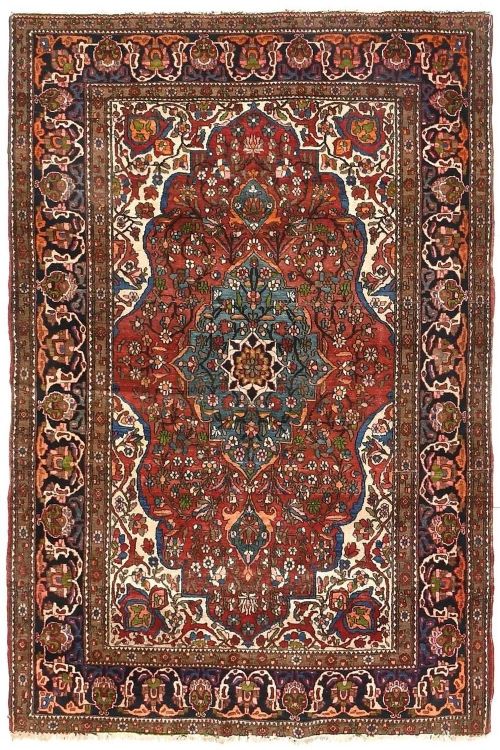
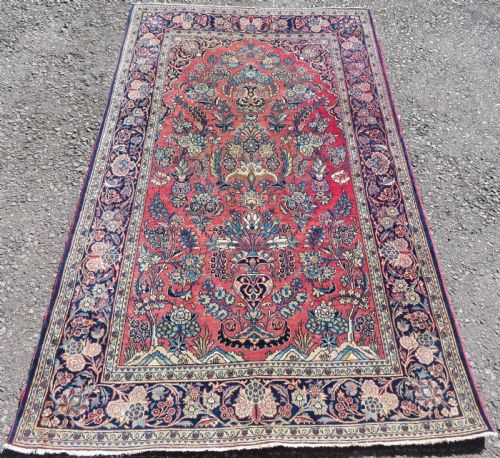
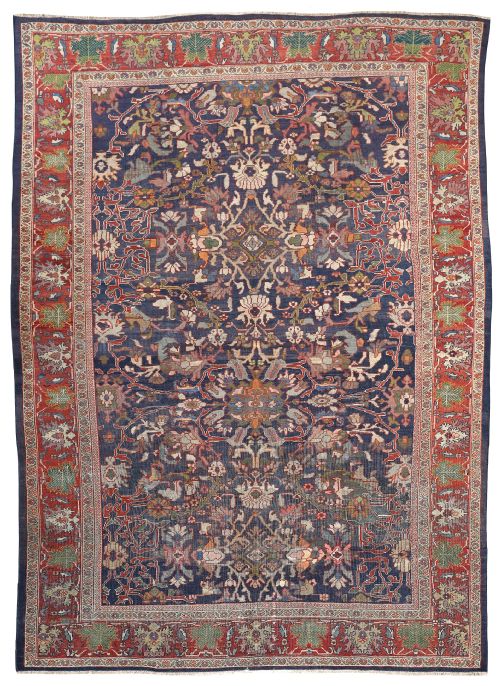
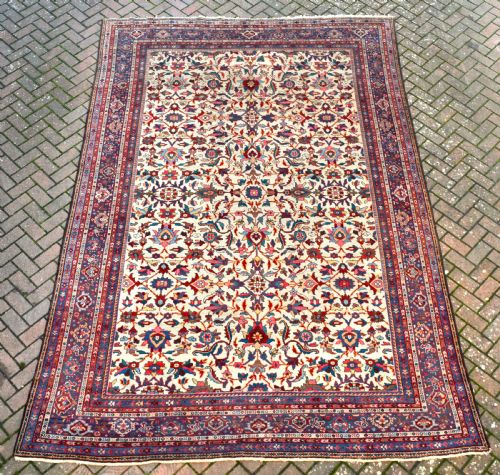
A classic floral rug encompasses room-sized carpets and smaller floor coverings originating from traditions such as Persian, Ottoman, and Indo-Persian workshops. When you search for this phrase, you encounter knotted and woven textiles spanning the late nineteenth century into the early decades of the twentieth century. These pieces display established floral motifs, central medallions, and traditional border arrangements.
The most common examples on this page are Persian carpets from centres like Tabriz, Isfahan, Kashan, and Mahal, alongside Turkish and Indian regional productions. They arrive in various proportions, from compact scatter sizes to large room dimensions suitable for substantial floor spaces. Wool remains the primary material, occasionally paired with cotton foundations or silk elements.
How they were made
Weavers constructed these carpets using natural animal and plant fibres, predominantly working wool pile upon cotton or wool foundations. Certain specialised items incorporate silk and felt applique work to build intricate surface textures. Dyers utilised natural substances to achieve the enduring red grounds, pastel tones, and deep hues seen across the inventory.
The structural integrity relies on hand-knotting techniques executed across regional looms, resulting in varying knot densities that dictate the crispness of the floral patterns. Larger workshops and individual domestic makers alike applied traditional geometric and curvilinear charting to maintain symmetry in the medallion and border layouts.
The listings show pieces originating from 1870 through to 1930, utilising wool, cotton, felt, and silk materials.
What varies in quality
Quality separates through the density of the weave and the precision with which the floral motifs and medallions are resolved. Finer knots permit intricate curves and detailed shading, whereas coarser examples present simpler, bolder interpretations of the traditional design.
The choice of materials and the preservation of the pile significantly influence the integrity of each piece. Pure wool varieties with even wear and sound foundations stand apart from heavily restored or depleted examples.
The Classic Floral Rug Glossary
- Medallion
- A central ornamental design motif placed in the middle of the carpet field. It usually takes a symmetrical geometric or floral form.
- Pile
- The upright yarn loops or cut ends that form the soft surface of the rug. This layer absorbs foot traffic and displays the woven design.
- Applique
- A decorative technique where pieces of fabric such as silk and felt are stitched onto a base textile. This method creates raised surface patterns.
- Foundation
- The structural framework of warp and weft threads that supports the knotted wool or silk pile. It determines the stability and drape of the carpet.
Classic Floral Rug: Frequently Asked Questions
How do I clean an old wool rug?
Professional dusting and gentle surface washing preserve the natural wool fibres and dyes. Avoid harsh chemical immersion.
Keep the rug away from direct continuous sunlight to protect the natural tones of the dyes over years of use.
Where were these carpets made?
Production centres span traditional weaving regions including Persia, Turkey, and India. Specific towns like Tabriz, Isfahan, and Kashan developed distinct regional styles.
Workshop traditions dictated the specific floral arrangements, border styles, and colour palettes associated with each origin.
Can I place furniture on them?
Substantial room-sized carpets handle normal table and chair placements comfortably. Distribute weight evenly across the surface.
Use flat rug underlays to prevent slipping and reduce friction between the foundation and the floorboards.
How do I identify the period?
Stylistic shifts, dye characteristics, and structural evidence help narrow down the decade of manufacture. Nineteenth-century pieces often show distinct structural traits compared to 1930s examples.
Compare the knotting style and palette against documented regional outputs from the same era.