




Classic Brass Carriage Clock
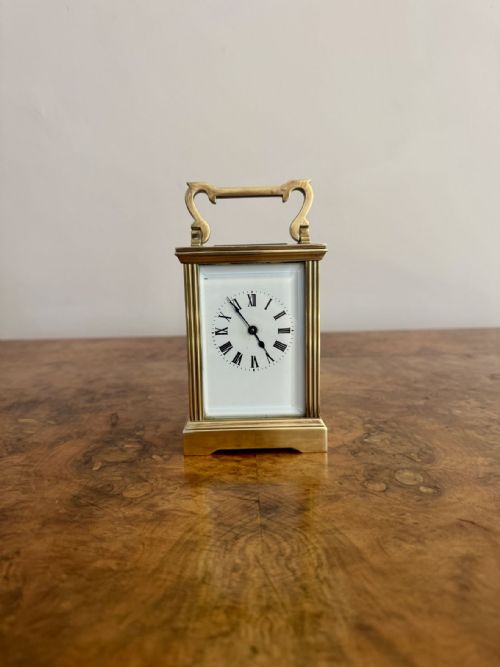
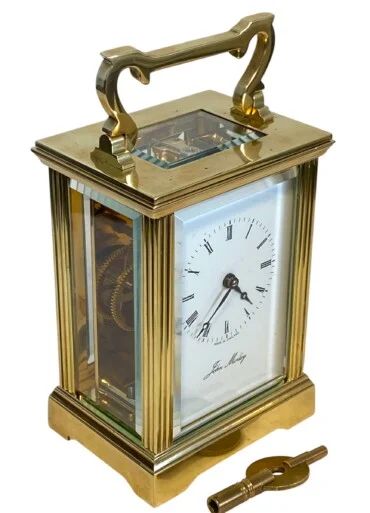
A classic brass carriage clock brings heavy cast metal and bevelled glass together in a portable form built to travel.
Classic Brass Carriage Clock
A classic brass carriage clock is a portable timepiece housed in a heavy metal frame with glass panels on all sides to display the internal movement. These pieces originate across the nineteenth and twentieth centuries, spanning Victorian, Edwardian, and mid-century periods.
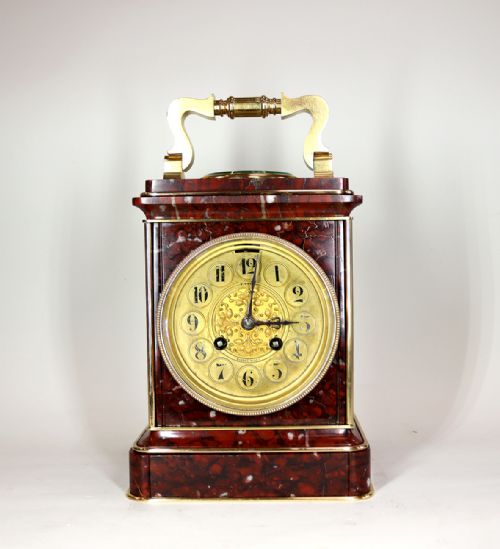
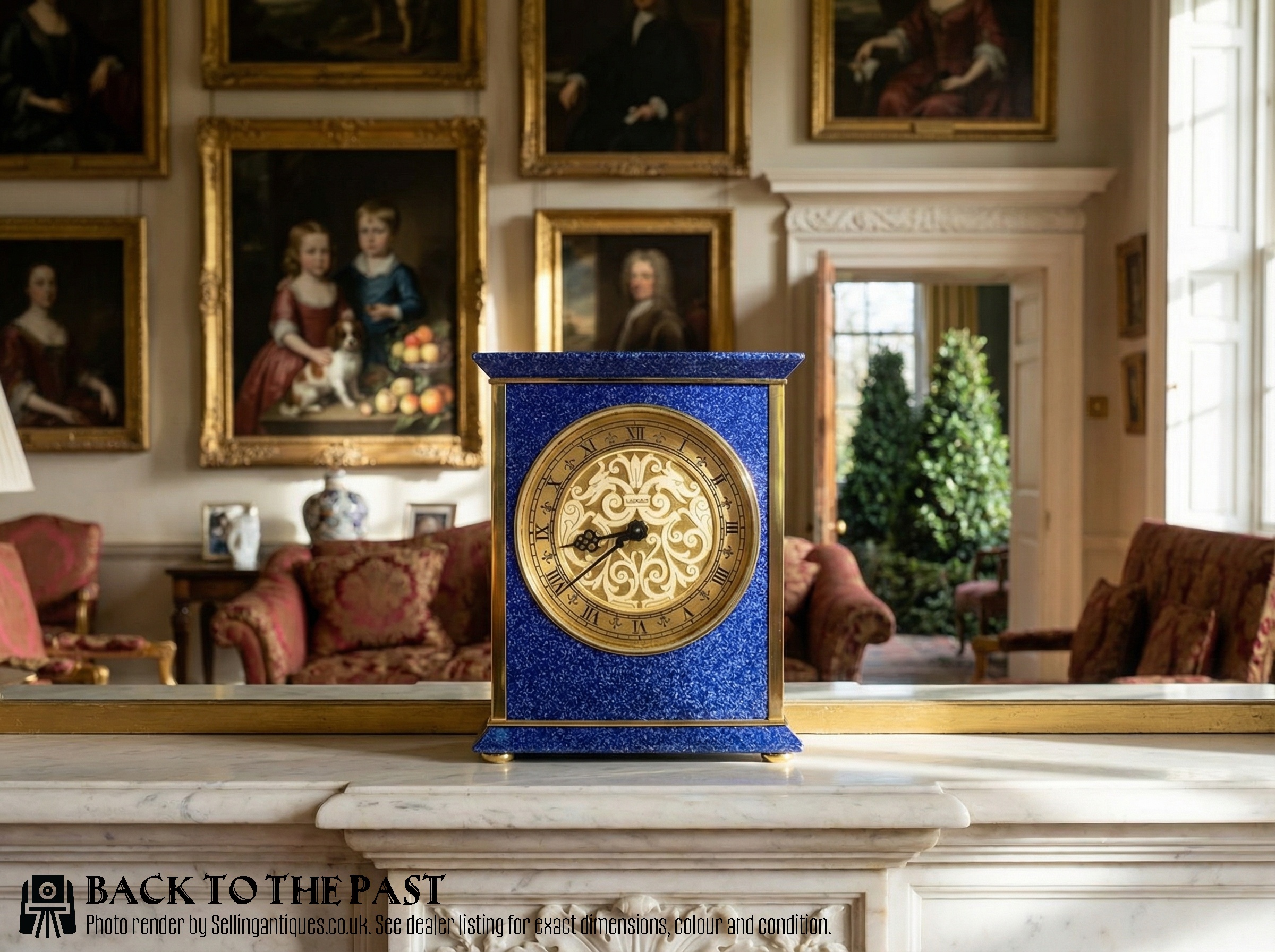
The versions most commonly found here are brass and glass constructions, sometimes finished in gilt or paired with marble and lapis lazuli. They take the form of mantel clocks and carriage clocks, drawing on Georgian, Neoclassical, and French classical styles.
How they were made
Makers built these pieces using heavy brass frames fitted with bevelled glass panels and enamel dials. Many examples incorporate gilt brass finishes or decorative stone elements such as rouge marble and lapis lazuli.
The construction relies on mechanical movements, including eight-day mechanisms and striking complications. Wood and engraved metal details frequently appear on specific nineteenth-century and twentieth-century variants.
Listings feature clocks spanning the nineteenth and twentieth centuries, incorporating materials such as lapis lazuli, rouge marble, and gilt brass.
What varies in quality
The standard of a classic brass carriage clock rests on the crispness of the cast frame and the clarity of the bevelled glass panels. Heavier cases with substantial gilt brass or stone bases generally indicate more ambitious workshop production.
Internal complexity sets apart ordinary examples from superior ones. Repeating mechanisms, engraved plates, and signed enamel dials demonstrate higher levels of horological skill.
John Morley·Charles Frodsham·Holingue Freres·Luxor
The Classic Brass Carriage Clock Glossary
- Carriage clock
- A small, portable spring-driven timepiece originally designed for travellers. These clocks typically feature a rectangular brass case with glass viewing panels and a handle on top.
- Gilt brass
- Brass coated with a thin layer of gold or gold-coloured finish. This treatment gives the metal a brighter sheen and protects the underlying surface from tarnishing.
- Enamel dial
- A clock face made by fusing powdered glass to a metal substrate at high heat. This creates a smooth, glossy, hard-wearing surface that resists discolouration over decades.
- Repeating movement
- A mechanical complication that allows the clock to strike the hours and quarters on demand when a button or lever is pressed. It was particularly useful for telling time in the dark.
Classic Brass Carriage Clock: Frequently Asked Questions
What is a carriage clock?
A carriage clock is a portable mechanical timepiece enclosed in a brass and glass case, fitted with a carrying handle on the top.
Originally made for officers and travellers during the nineteenth century, these clocks relied on robust spring movements rather than pendulums so they could keep time while moving.
How do eight-day movements work?
An eight-day movement uses a mainspring that stores enough power to run the clock continuously for slightly over a week before needing to be wound again.
Owners use a specific key to wind the springs via arbors located on the dial or back plate of the clock.
How do I date a brass carriage clock?
Dating relies on stylistic clues, case proportions, and any maker signatures or registration marks stamped on the movement back plate.
Victorian and Edwardian models often display specific revival styles and handle designs that help narrow down their decade of manufacture.
Where should I place a carriage clock?
These clocks suit stable surfaces such as mantelpieces, desks, or tabletops where they remain level and secure.
Because they contain delicate mechanical gears and glass panels, placement should avoid damp areas and spots exposed to direct sunlight.