


Mid Century Swiss Clock
A mid century swiss clock brings ingenious mechanical precision and sculptural modernism to a desk or mantel.
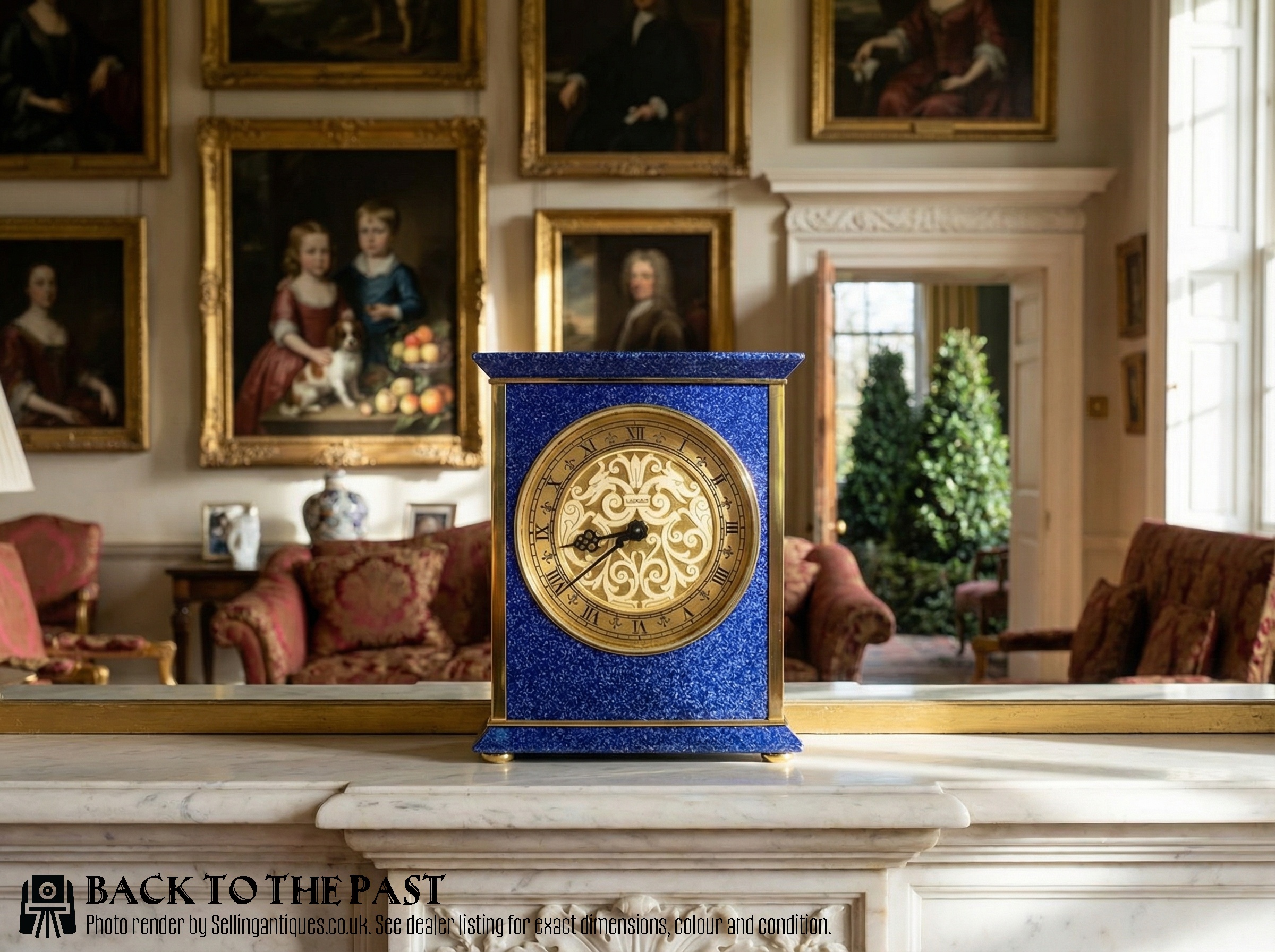
Mid Century Swiss Clock
The most common examples on this page date from the 1950s and 1960s, embodying the clean lines of mid-century modern design. These vary from perpetual motion mantel designs to travel and alarm pieces.
Makers focused on architectural forms, creating items that function as both reliable timekeepers and decorative desk objects. Glass and metal dominate the silhouettes, often revealing the inner workings through skeleton dials.
Materials and construction
Brass, gilt brass, and rhodium-plated metal form the robust structural frameworks for these pieces, offering both durability and a polished finish. Glass is utilised extensively for dials, bell-jar covers, and protective panels.
Movements incorporate jewelled bearings and complex mechanical engineering, including perpetual motion mechanisms and eight-day movements. Details such as gold gilt and gold plate finish the metal surfaces with distinct metallic tones.
The listings on this page span the 1940s, 1950s, and 1960s, alongside nineteenth-century examples, constructed primarily from brass, glass, and rhodium.
Assessing quality in execution
Superior examples display exceptional refinement in movement calibration, such as fifteen-jewel mechanisms and perpetual motion systems that require minimal manual intervention. The integration of specialty cases, including bell-jar models or bicolour finishes, elevates a piece.
The choice of dial treatment distinguishes standard production from finer variants, with black dials, lapis blue cases, and square configurations offering visual distinction. Complete documentation, original boxes, and evidence of recent servicing indicate meticulous preservation.
Imhof·Jaeger LeCoultre·Luxor·Le Coultre
The Mid Century Swiss Clock Glossary
- Atmos clock
- A mechanical clock that powered itself by changes in atmospheric temperature and pressure, requiring no hand winding.
- Skeleton timepiece
- A clock designed with transparent or minimal dial framing to expose the intricate gear train and movement within.
- Bell-jar model
- A clock enclosed beneath a clear glass dome that protects the delicate mechanical components from dust.
- Gilt brass
- Base metal treated with a thin layer of gold or gold-coloured alloy to give a rich, reflective metallic surface.
- Rhodium-plated
- Metal coated with a hard, corrosion-resistant platinum-group element that provides a bright silver-coloured finish.
Mid Century Swiss Clock: Frequently Asked Questions
How do Atmos clocks work without winding?
An Atmos clock operates using a hermetically sealed chamber filled with a gas and liquid mixture that expands and contracts with minor temperature fluctuations. This perpetual motion mechanism winds the mainspring continuously.
Because temperature changes are constant in any room, the movement remains powered indefinitely without human intervention. This engineering feat makes these models highly sought after by collectors.
What maintenance do these mechanical clocks require?
Mechanical timepieces benefit from periodic professional cleaning and oiling to ensure the gear trains operate smoothly over decades. Proper placement away from direct sunlight and drafts protects the exterior finishes and internal balance.
Perpetual motion movements should be handled with care and locked when moved to prevent damage to the delicate torsion pendulum. Following these guidelines preserves both the physical condition and the timekeeping accuracy.
How do I identify a 1950s piece versus a 1960s piece?
Clocks from the 1950s often feature classic round dials and traditional desk formats, sometimes paired with alarm complications or travel cases. Design cues lean toward restrained elegance with polished brass and clear glass.
By the 1960s, aesthetics shifted towards bolder geometries, skeletonised movements, and varied case materials like lapis blue or rhodium plating. Examining the specific calibre numbers and styling helps narrow down the production era.
Where should I display a desk clock?
A desk or mantel clock performs best on a stable, level surface away from vibrations that might disrupt the delicate pendulum or balance wheel. Placing the piece where natural light catches the glass and metal highlights the design.
Many collectors choose prominent positions on office desks, bookshelves, or living room mantels where the mechanical action remains visible. Ensuring a secure spot protects these intricate objects from accidental knocks.