


Cityscape Paper Art
Cityscape paper art brings together historical urban views rendered in watercolour, pastel, ink and etching on paper.
Cityscape Paper Art
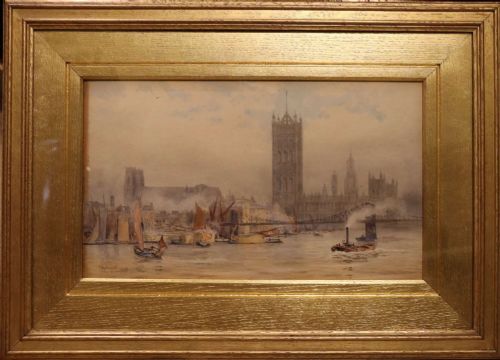
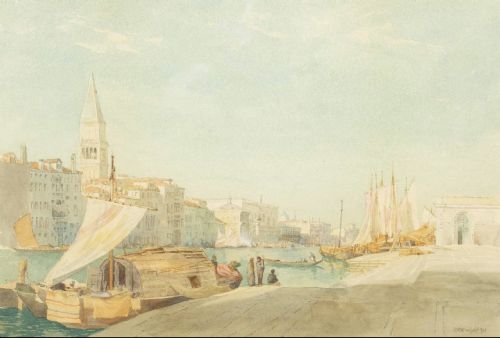
Cityscape paper art captures urban streets, rivers, and architectural landmarks through works executed on paper. These pieces range from detailed nineteenth-century watercolours of London and Venice to twentieth-century pastels and etchings.
Buyers encounter framed watercolours and prints depicting recognizable views such as the Thames, the Grand Canal, and continental city streets. The selection leans heavily towards traditional watercolours and etchings framed under glass.
Materials and technique
Artists relied primarily on paper as the base support, applying watercolour paint, ink, pastel, or utilising etching techniques to build the composition. Many examples incorporate hand colouring over printed lines.
Works are typically preserved behind glass and housed within wooden or gilt wood frames that protect the delicate paper surface from atmospheric moisture and handling.
Listings feature works spanning the nineteenth and twentieth centuries, utilising watercolour, pastel, ink, and glass-fronted frames.
Variations in quality
Quality rests upon the precision of the draughtsmanship and the artist's command of light and perspective within the urban setting. Stronger works convey the atmosphere and architectural detail of the location with fluid confidence.
The condition of the paper surface and the integrity of the pigments also distinguish pieces, as exposure to light can diminish delicate watercolours and pastels over decades.
H Medlycott·Richard Henry Wright·Anton Ignaz Melling·Fred Lawson·Charles James Lauder·T A Prior·Vittore Zanetti Zilla·Claes Jansz Visscher·David Small·Jack Merriott·Walter Duncan·David Law·Noel Harry Leaver·Louis Icart·Ettore Ascenzi·Henry Wimbush·J Tim Macdonald·Matthew Hale·H P Parker·Henry Edridge
The Cityscape Paper Art Glossary
- Etching
- A printmaking process where lines are bitten into a metal plate with acid before being inked and pressed onto paper. This technique allows for fine linear detail in architectural renderings.
- Watercolour
- A paint consisting of pigment suspended in a water-based solution, applied in translucent washes to paper. It remains the dominant medium for these historical views.
- Pastel
- A medium made of powdered pigment bound into a stick form, producing a soft, velvety texture on paper. It suits atmospheric or winter cityscape scenes.
- Lithograph
- A planographic printing method based on the repulsion of oil and water, used to produce multi-coloured or tonal prints. Artists utilised this for reproducing topographical views.
Cityscape Paper Art: Frequently Asked Questions
What is cityscape paper art?
These works are original paintings, watercolours, pastels, and historical prints depicting urban architecture, rivers, and street scenes on a paper support.
They offer a window into past centuries of city life, recorded by artists working directly on location or within the studio.
How should these pieces be framed?
Works on paper require mounting behind glass to protect the delicate medium from dust, moisture, and ultraviolet light damage.
Traditional wood or gilt frames complement the historical nature of nineteenth and early twentieth-century watercolours and etchings.
How do I identify the period?
Dates often appear in the signatures, inscriptions, or documentation accompanying the artwork, alongside stylistic clues from the clothing and vehicles depicted.
Victorian and Edwardian pieces frequently feature detailed architectural studies, while later twentieth-century works adopt more expressive, looser brushwork.
Where were these views created?
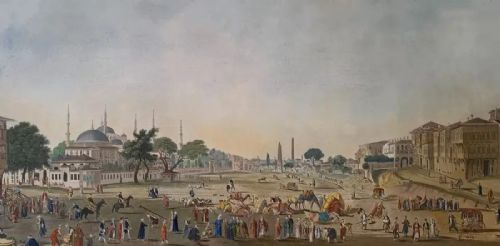
Artists recorded scenes across British and European urban centres, with particular focus on London landmarks, Venetian canals, and continental capitals like Paris and Rome.
These topographical subjects reflect both local commissions and the travels of artists recording the grand tour.