






Historic London Art
Historic london art brings together depictions and plans of the capital across centuries, capturing the changing river, streets, and official buildings.
Historic London Art
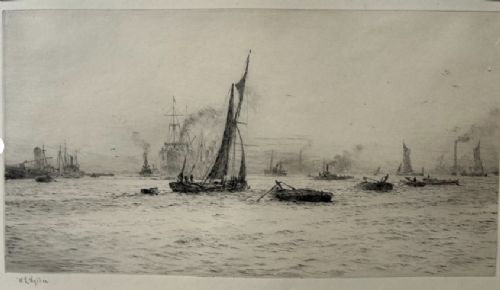
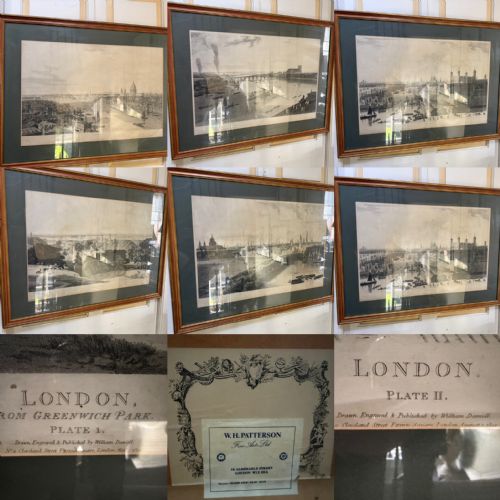
Historic london art comprises framed watercolours, oil paintings, etchings, and antique maps showing views of the capital from the eighteenth century to the early twentieth century. Buyers seeking this subject encounter scenes of the River Thames, maritime traffic, and notable landmarks such as the Tower of London, Whitehall, and St Paul's Cathedral.
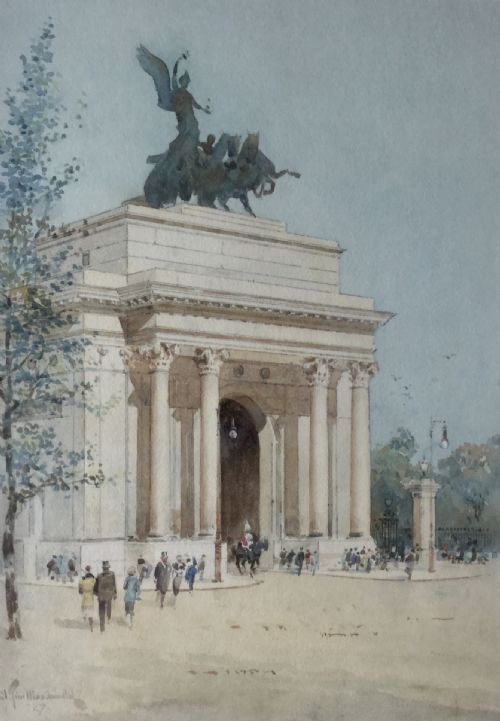
The selection includes works from the Georgian, Victorian, and Edwardian eras, alongside pieces representing British Impressionism and early twentieth-century styles. Depicted locations range from Aldgate and St Martin-in-the-Fields to the Foreign Office and the Wellington Arch, recorded by named artists and regional schools.
Markers of quality
The survival of original framing materials, such as period giltwood frames, contributes to the integrity of the piece. Clarity of cartographic detail and well-preserved paper or canvas condition further distinguish the finer examples from standard decorative items.
Several watercolours specifically capture the capital's birds being fed before historic stone facades.
William Lionel Wyllie·Charles William Wyllie·Rowland Henry Hill·David Small·Beatrice Parsons·J. Tim Macdonald·Edward Fletcher·T Girtin
The Historic London Art Glossary
- Etching
- A printmaking process where lines are bitten into a metal plate with acid before being inked and pressed onto paper. This technique allows for fine, expressive detail.
- Giltwood
- Wood that has been coated with a thin layer of gold leaf or gilt powder. It is frequently found on traditional picture frames from the eighteenth and nineteenth centuries.
- Riverscape
- A painting, drawing, or print depicting a river and its surrounding landscape or built environment. In London art, these typically feature shipping, bridges, and the Thames shoreline.
- Cartography
- The science or practice of drawing maps. Antique examples provide historical documentation of city layouts and boundaries.
Historic London Art: Frequently Asked Questions
What periods do these artworks cover?
The works span from the eighteenth century through the Victorian and Edwardian eras up to the 1930s.
Represented periods include Georgian, Victorian, and early twentieth-century British art.
Which London landmarks appear most frequently?
Common subjects include the River Thames, Tower Bridge, the Tower of London, and Whitehall.
Views also encompass St Paul's Cathedral, the Foreign Office, and the Wellington Arch.
What mediums were used by the artists?
Artists utilised watercolour paint, oil on canvas, ink, and pencil for original works and prints.
Maps from the nineteenth century utilise period engraving and printing techniques on paper.
How should framed pieces be displayed?
Display pieces away from direct sunlight to protect watercolours and paper from fading.
Maintain stable indoor humidity levels to preserve both the canvas or paper and the wooden frames.